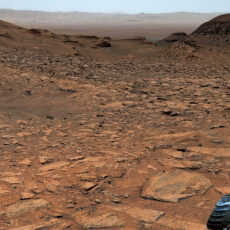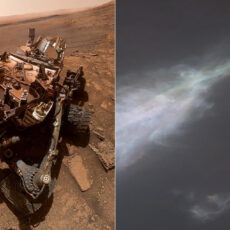

NASA’s Curiosity Mars rover captured these plate-like rocks near the Gediz Vallis channel using its Mars Hand Lens Imager (MAHLI) on Nov. 11, 2024. This resistant platy texture at the top of the layered rock could not yet be examined, as the team found it unsafe to move the arm.

Since Curiosity is over the Gediz Vallis channel, the rover is set to drive on the dark, banded material once again. Mastcam is also being used to image some interesting polygonal textures observed in a few rocks around the rover. All four targets of polygonal rocks have been named “Acrodectes Peak” by the team.

- Feed a passion for science and technology – Kids can learn more about the challenges of space exploration with this LEGO Technic NASA Mars Rover...
- Conduct a test flight – This advanced building kit for kids ages 10 and up includes a buildable toy version of NASA’s Ingenuity helicopter, which...
- AR brings the mission to life – The accompanying augmented reality app experience lets kids dive into the details of the rover and its mission
As Curiosity drives further away from the Gediz Vallis channel, the exploration of the sulfate unit continues. Although the driving is tough at times, the beautiful discoveries and amazing geology make the tough times worth it,” said the NASA Science Editorial Team.