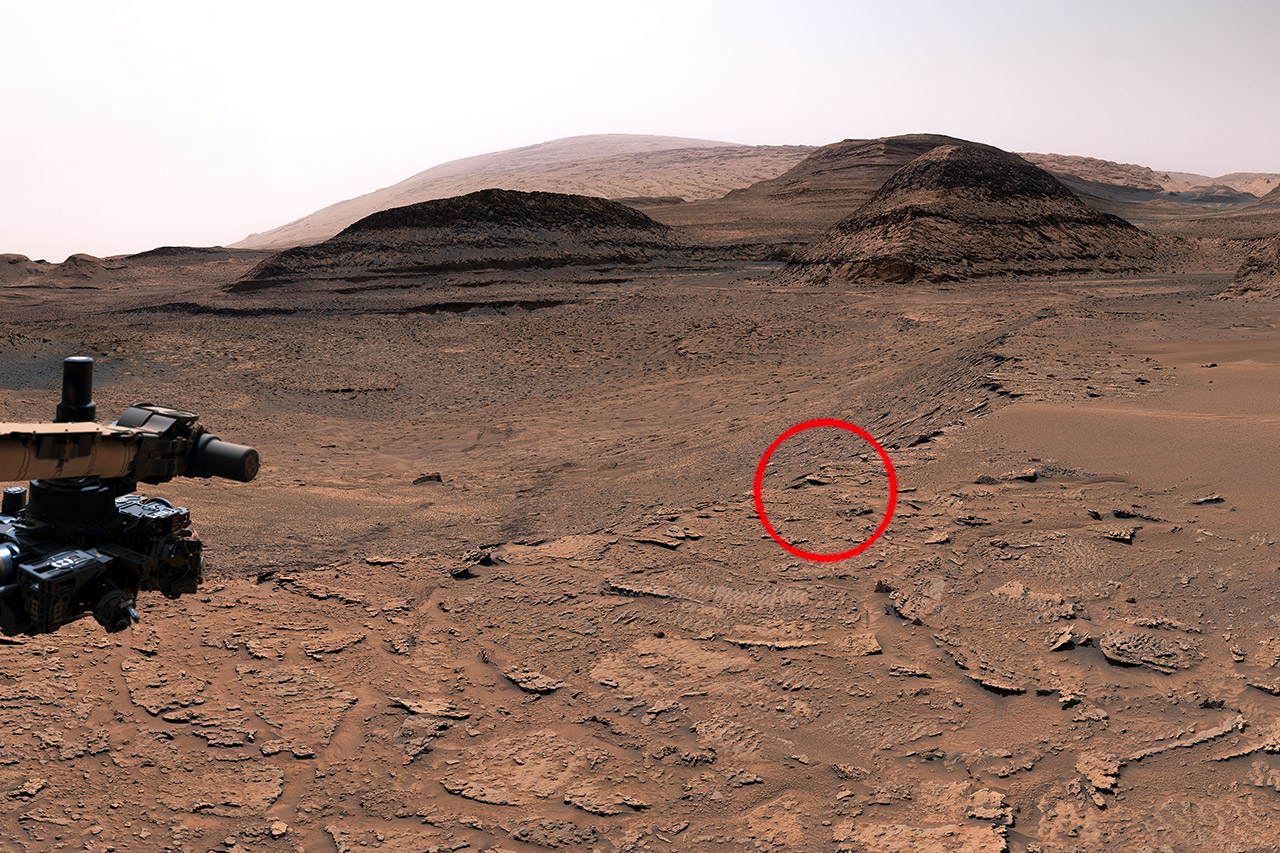
NASA’s Curiosity Mars rover continues trudging on nearly 12-years into its mission, and just recently, it stumbled upon rippled rock textures that provide the best evidence yet of the planet’s watery past. These ancient water ripples are thought to have formed within lakes billions of years ago, when waves on the surface of a shallow lake stirred up sediment at the lake bottom.
More evidence of ancient water can be found in a valley named Gediz Vallis, which has a channel running through it that starts higher up on Mount Sharp. Scientists also believe wet landslides occurred at this location, sending car-size boulders and debris tumbling to the bottom of the valley. Very close to the rippled textures are rocks made of layers regular in spacing and thickness. These rhythmic pattern in rock layers on Earth often result from atmospheric events happening at periodic intervals.

- Detailed Lunar Replica - Features a detailed Eagle lunar lander replica with lunar surface, crater, footprints, and U.S. flag for a realistic space...
- Realistic Modular Model - This modular set includes a descent stage with gold-colored landing pads, panels, opening camera, laser hatches, and movable...
- Ascent Stage Interior - The ascent stage boasts a detailed interior with room for 2 astronaut minifigures, finished with an Apollo 11 Lunar Lander...


This is the best evidence of water and waves that we’ve seen in the entire mission. We climbed through thousands of feet of lake deposits and never saw evidence like this – and now we found it in a place we expected to be dry. The wave ripples, debris flows, and rhythmic layers all tell us that the story of wet-to-dry on Mars wasn’t simple. Mars’ ancient climate had a wonderful complexity to it, much like Earth’s,” said Ashwin Vasavada, Curiosity’s project scientist at NASA’s Jet Propulsion Laboratory.