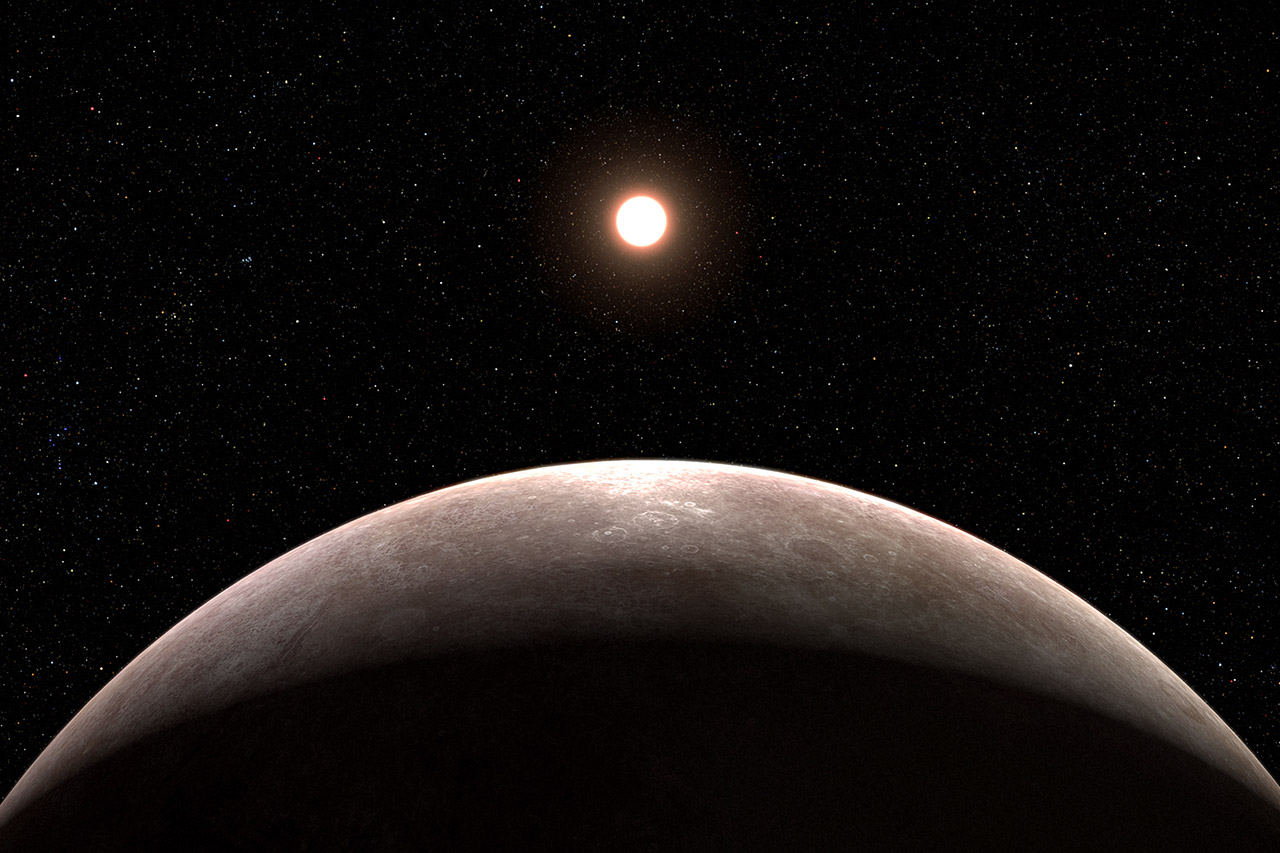
NASA’s James Webb Space Telescope has detected and confirmed its first exoplanet, a rocky Earth-sized world that orbits another star, classified as LHS 475 b. This planet measures in at 99% of Earth’s diameter and is a few hundred degrees warmer than Earth, so if clouds are detected, it could be more like Venus, which has a carbon dioxide atmosphere.

LHS 475 b completes an orbit of its parent star in just two days, thanks to information gathered by Webb’s precise light curve. Even though this rocky exoplanet is closer to its star than any planet in our solar system, its red dwarf star is less than half the temperature of the Sun, so it could potentially still have an atmosphere.

- POWERFUL TELESCOPE FOR ASTRONOMY BEGINNERS: The AstroMaster 130EQ delivers sharp optics, a stable equatorial mount, and smooth manual controls, making...
- HIGH-QUALITY 130MM OPTICS: Enjoy views through the 130mm (5”) Newtonian reflector, which features high-quality aluminum and SiO₂ coatings and...
- SMOOTH, ACCURATE POINTING: Effortlessly aim and center your target using the two slow-motion control knobs for right ascension and declination whether...

These first observational results from an Earth-size, rocky planet open the door to many future possibilities for studying rocky planet atmospheres with Webb. Webb is bringing us closer and closer to a new understanding of Earth-like worlds outside our solar system, and the mission is only just getting started,” said Mark Clampin, Astrophysics Division director at NASA Headquarters in Washington.