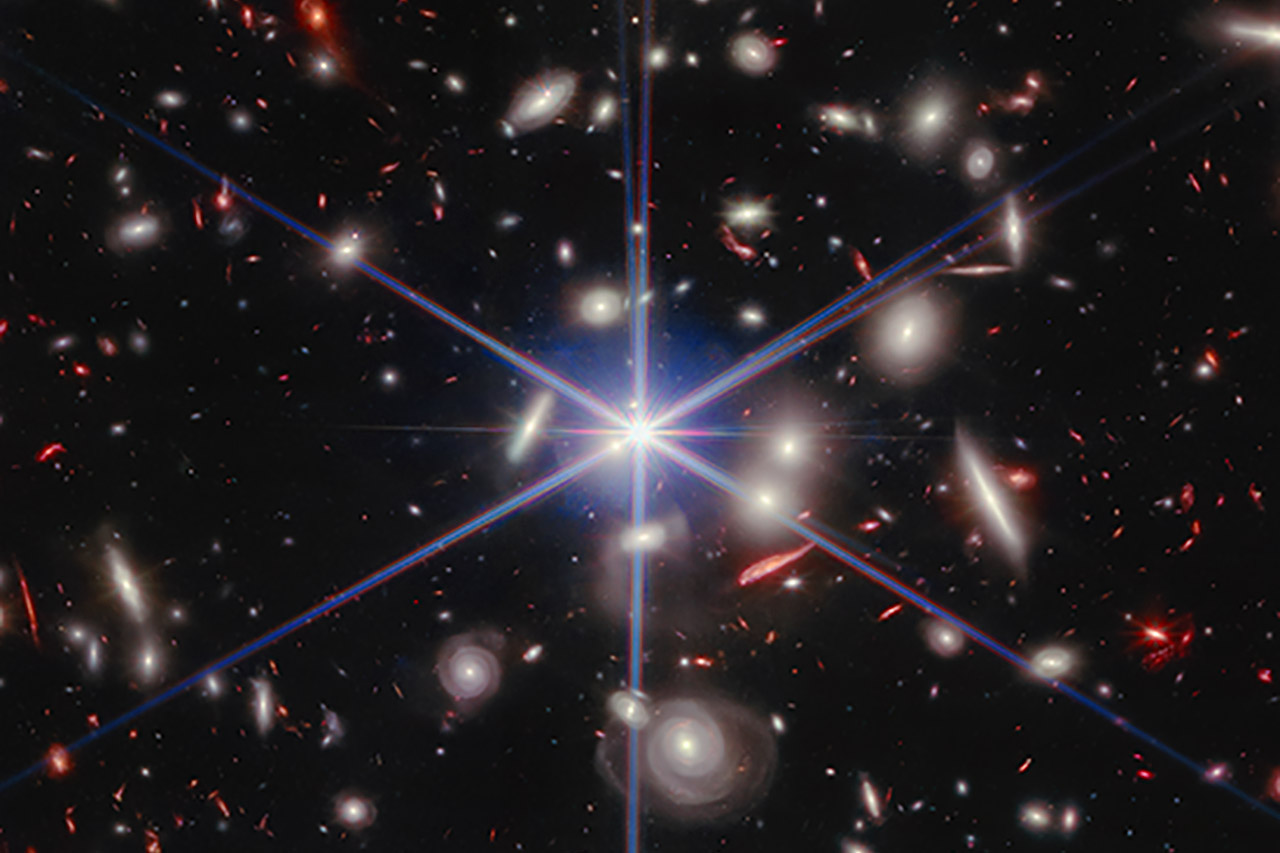
NASA’s James Webb Space Telescope captures a new image of Pandora’s Cluster, classified as Abell 2744, with never before seen details of the galaxies contained within. These three clusters of galaxies come together and form a megacluster, with their combined mass creating a powerful gravitational lens, which is a natural magnification effect of gravity, enabling astronomers to view far more distant galaxies in the early universe by using the cluster like a magnifying glass.

Previously, Hubble was only able to observe the Pandora Cluster’s central core, but when combined with Webb’s infrared instruments, astronomers are able to view the region’s multiple areas of lensing. This megacluster lens is so large that it warps the fabric of space itself, allowing enough light from distant galaxies that pass through that warped space to also take on a distorted appearance.
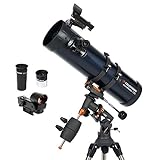
- POWERFUL TELESCOPE FOR ASTRONOMY BEGINNERS: The AstroMaster 114EQ delivers sharp optics, a stable equatorial mount, and smooth manual controls, making...
- HIGH-QUALITY 114MM OPTICS: Enjoy views through the 114mm (4.5”) Newtonian reflector, which features high-quality aluminum and SiO₂ coatings and...
- SMOOTH, ACCURATE POINTING: Effortlessly aim and center your target using the two slow-motion control knobs for right ascension and declination whether...
Pandora’s Cluster, as imaged by Webb, shows us a stronger, wider, deeper, better lens than we have ever seen before. My first reaction to the image was that it was so beautiful, it looked like a galaxy formation simulation. We had to remind ourselves that this was real data, and we are working in a new era of astronomy now,” said Ivo Labbe, Astronomer at the Swinburne University of Technology in Melbourne, Australia.