NASA’s Jet Propulsion Laboratory just finished a punishing test campaign on a piece of hardware smaller and lighter than most people would expect for a Mars mission. In July, engineers put a flexible, fabric-based radar antenna through the equivalent of more than two full prime missions of hard landings on the Red Planet. The antenna came through with its signal strength intact.
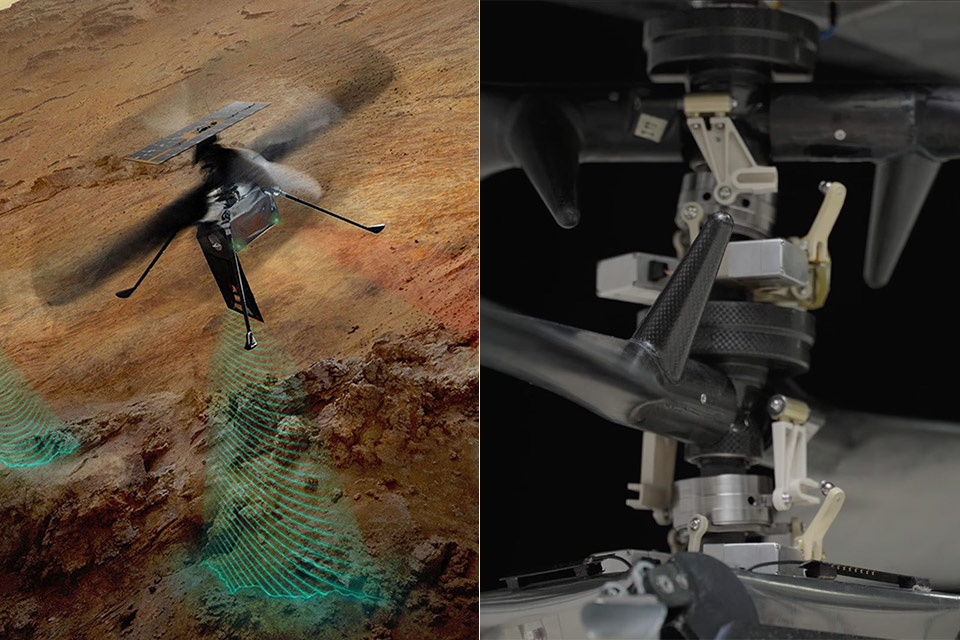
Skyfall plans to send three compact helicopters to Mars in late 2028 aboard the Space Reactor 1 Freedom spacecraft. Each of the miniature choppers will hold four science devices. One of these is a ground-penetrating radar intended to detect shallow spots of frozen water. While orbiting spacecraft can currently calculate the position of ice buried far beneath the surface, they are missing the upper few feet of clay and rock that future astronauts would actually dig in, and that’s exactly what Skyfall’s radar is designed to map: that near-surface zone.

- Feed a passion for science and technology – Kids can learn more about the challenges of space exploration with this LEGO Technic NASA Mars Rover...
- Conduct a test flight – This advanced building kit for kids ages 10 and up includes a buildable toy version of NASA’s Ingenuity helicopter, which...
- AR brings the mission to life – The accompanying augmented reality app experience lets kids dive into the details of the rover and its mission
The issue is not with the radar, but with the geometry of the helicopters. They just do not have adequate ground clearance; the portion that extends out underneath is only 6 inches. On the first touchdown, a typical antenna would be smashed straight off. To get around this, the engineers created a super-compact Vivaldi antenna composed of flexible metalized fabric. It resembles a violin bow, hence the name. The architecture allows it to transmit and receive a wide spectrum of radio frequencies, from 500 to 2,500 megahertz. Longer wavelengths can reach several yards below, whereas shorter ones are ideal for capturing detail in the way dry earth meets ice.
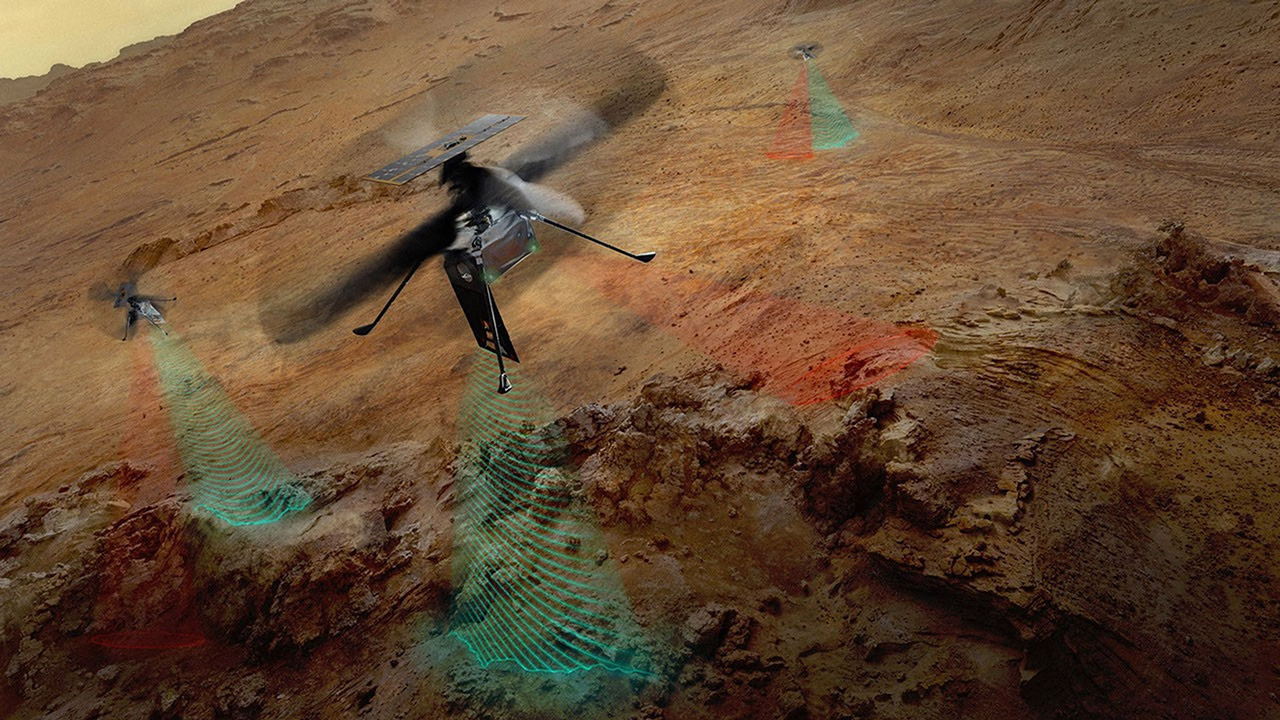
Even after they shortened it, the antenna remained longer than the landing gear. On every landing, it must fold up out of the way before springing back out when the helicopter takes off. If it lands on a rock, the bend becomes much sharper. The finished system weights about 5 ounces, about the same as two violin bows. To protect it from damage, they wrapped it in layers of polyester and Vectran, the same robust material used in the airbags that cushioned the Spirit and Opportunity rovers. Flexible fiberglass adhesive and a lightweight magnesium mount maintain it in shape while flying.
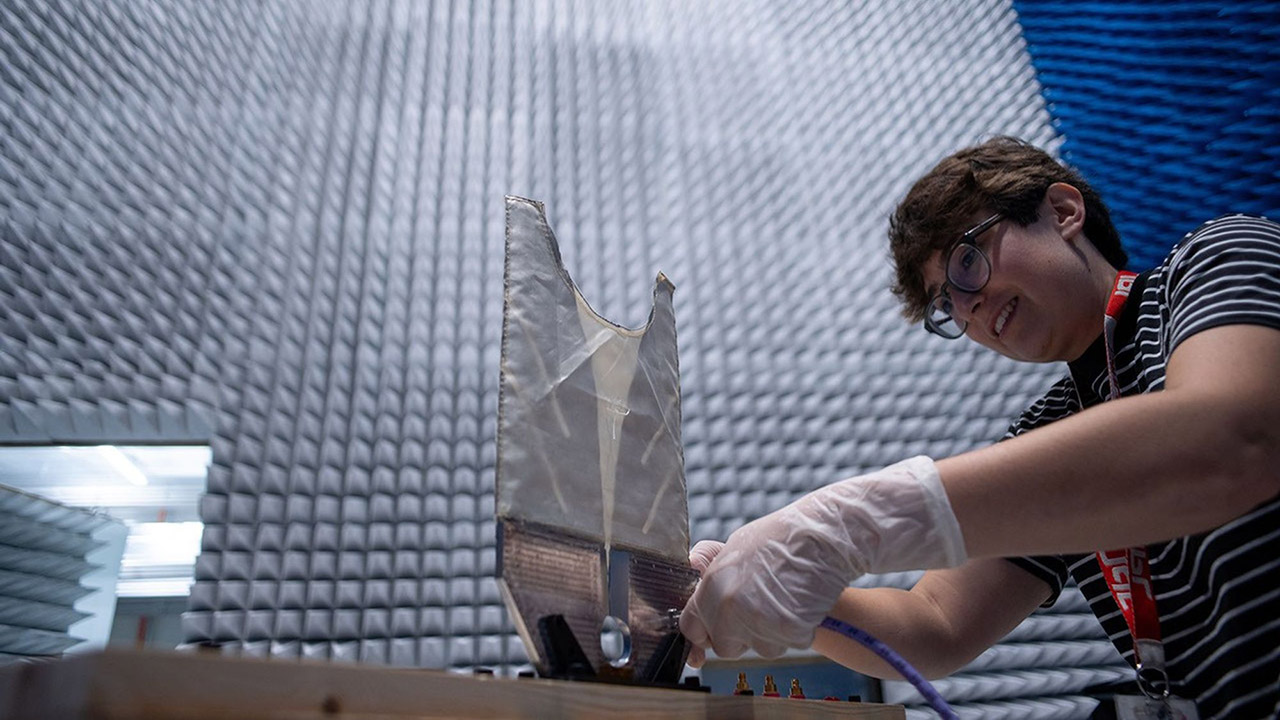
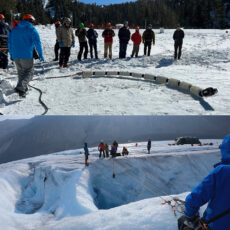
They delivered the prototype to JPL’s Environmental Test Lab, where it was thoroughly tested. Engineers bent it into various post-landing postures and subjected it to the enormous temperature changes that occur on Mars, which may range from 170 degrees between day and night. They even simulated dozens of landings, tossed it around, and then placed it in an electromagnetic laboratory to ensure that the radar signals were still operational. For the radio frequency tests, they even flipped the antenna so it was facing upwards, which is far tougher on the hardware than Martian gravity. By the end of it all, the hardware had withstood 200 simulated landings, more than doubling the number required for a successful primary mission, with no loss of performance.