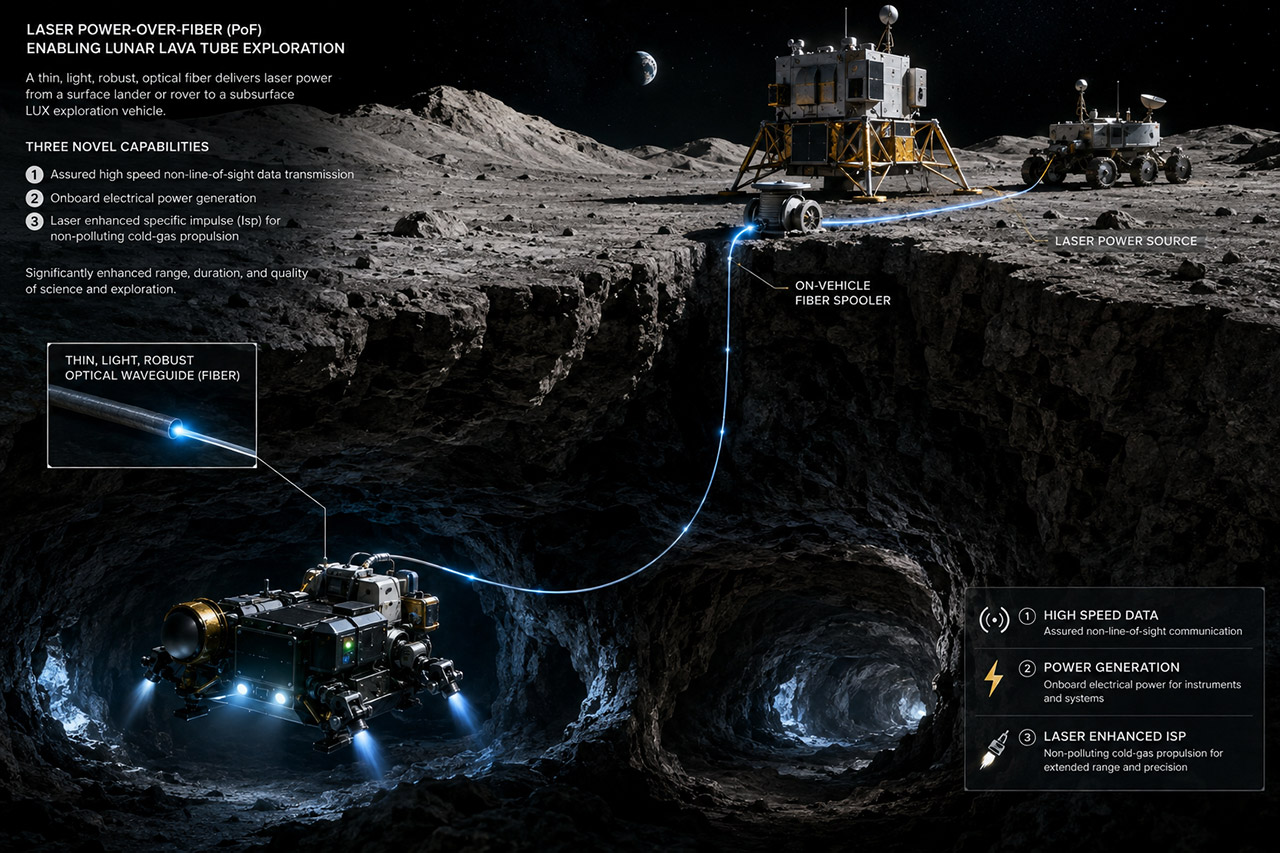
NASA handed Stone Aerospace a $175,000 check in July 2026 to fund a nine-month research on a hovering robot that would have the opportunity to explore one of the Moon’s most intriguing features. The proposal is named the Lunar Underground eXplorer (LUX), and it is based on power-over-fiber technology.
A large hole in the ground can be discovered deep in the Sea of Tranquility, around 250 miles from where the Apollo 11 crew landed. It’s around 100 metres wide and drops 133 meters straight down. However, there’s more to it than meets the eye, as radar data collected by the Lunar Reconnaissance Orbiter years ago shows that there’s a lot more space down there. Scientists predict that this rupture leads to a lava tube that could span kilometers and be hundreds of meters wide in places. The best part is that it’s all hidden beneath a thick layer of rock, which could one day protect against radiation and micrometeorites.

- Build a realistic LEGO Technic lunar rover model – This LRV building kit for adults is packed with authentic details including seats, steering...
- NASA model for adults – Enjoy a mindful project assembling all the details of the rover and equipment including the battery pack, heating and...
- A build for NASA fans – Remember the Apollo 17 mission with a display that features the lunar roving vehicle alongside 3 detailed equipment...
The challenge has always been bringing a robot down there. Solar panels do not work when you are out of sunlight, radio signals do not bounce off rock, and batteries just do not last long when you are firing up thrusters and obtaining numerous sensor readings. Then there’s the issue with standard tethers and copper lines, which add weight and produce a variety of electrical problems. Gilly Elor from Stone Aerospace and his team devised a new approach for the LUX project.
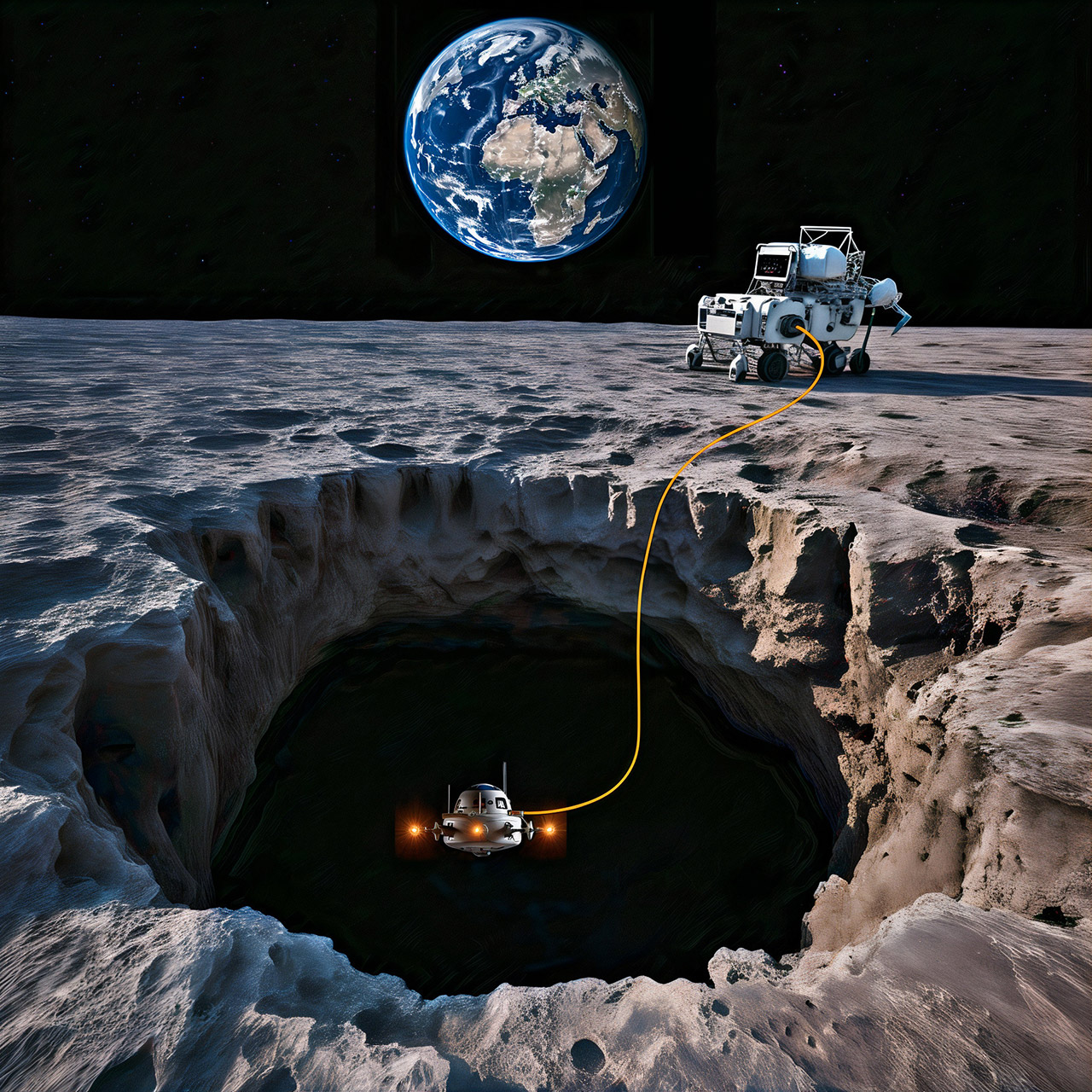
A surface rover or lander carries a laser, and as the hovering robot descends into the pit and then further into the underground tunnels, it spools out a thin, lightweight optical fibre. The laser light travels down the fiber and is transformed into energy at the other end, powering the equipment, computers, and cameras. The same fiber also transmits high-speed data back to the surface, allowing the team to get clear signals even when the robot is around a corner or out of sight.
The laser also heats the propellant in the cold gas thruster system, giving the robot a bit more power for the same quantity of fuel. The exhaust also remains pure, which is beneficial because it does not clog the sensors and disrupt the pristine environment that the scientists team wishes to analyze. In fact, recent studies by the same team demonstrated that even a small laser board in the 1-2 kilowatt range can make a significant impact in data and mission time. The new study will explore at how much additional range the laser heating can provide.
The good news is that the technology already works in real life, as Volta Space Technologies in Montreal successfully sent 72 watts of power down a single kilometer of fiber using a 300-watt laser. They plan to generate tens of watts over distances of more than eight kilometers, which is ideal for a small lunar explorer.