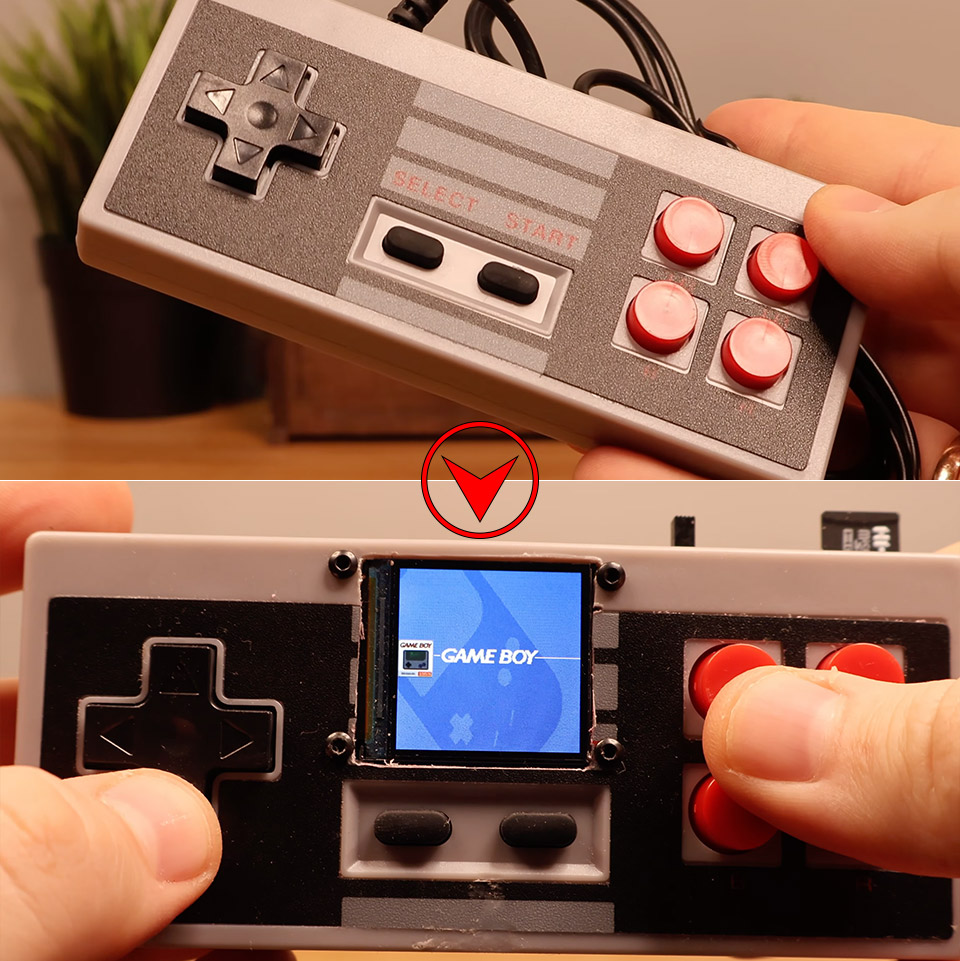
Original NES controllers still feel right. The click of the D-pad, the springy A and B buttons, the solid rectangular shape that fits perfectly in two hands. Most of them now live in drawers or boxes. Logic Gate Labs decided one of those controllers could do more than sit around. They gutted a standard NES-style gamepad and packed a complete retro gaming system inside it, complete with a screen, speaker, storage, and enough power to run dozens of 8-bit games plus a slow but playable version of DOOM.
Space inside the traditional NES shell is really limited, so forget about placing those larger ESP32 boards inside. They simply will not go, as the smaller ones you may have believed would work do not have the memory to do the task properly. The ESP32-S2 was the solution. It has adequate processing power and a couple hundred kilobytes of RAM while yet being compact enough to fit in the remaining space after removing the original PCB.
- [No preload games] Please note that no games are preloaded on Retroid Pocket Flip 2. The Retroid Pocket Flip 2 runs the Android 13 operating system...
- [Perfect Game Console] Equipped with the Qualcomm Snapdragon 865: CPU: 1*[email protected] 3*[email protected] 4*[email protected], GPU: Adreno 650, RAM: 8GB LPDDR4x@2133MHz...
- [Stunning 5.5-inch AMOLED Display] Immerse yourself in vibrant visuals on the 1080p OLED screen (500 nits brightness, 60Hz), optimized for crisp retro...
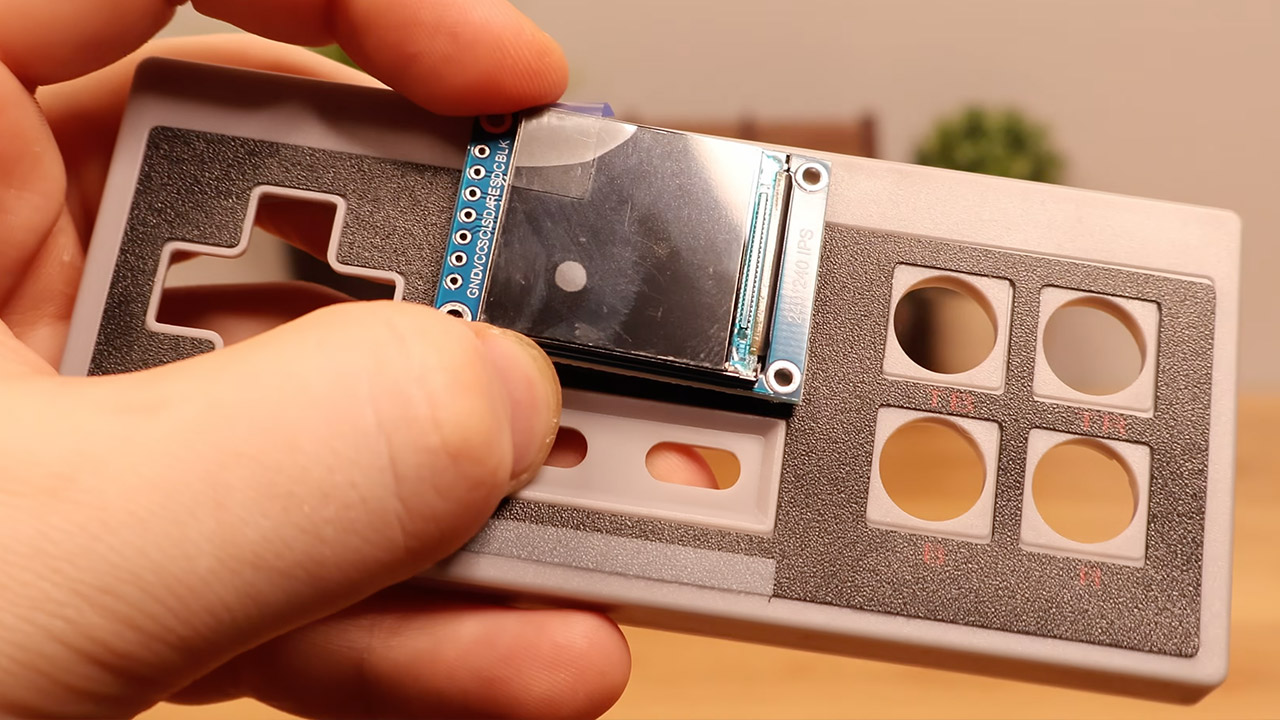
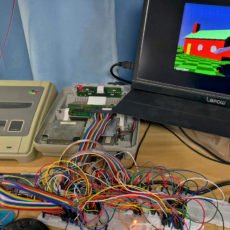
Fitting the display was a hassle because the internal plastic supports had to be removed so that the screen could sit flush with the other components. Fresh drillings were required for the screen, a USB charging connector, a microSD card slot, a small speaker, and a power switch. Keeping the wiring neat was a difficulty. A large piece of bare copper wire serves as the main ground rail, eliminating the need for additional ground wires to connect to the microcontroller. The remaining signals are handled by the narrower signal cables.
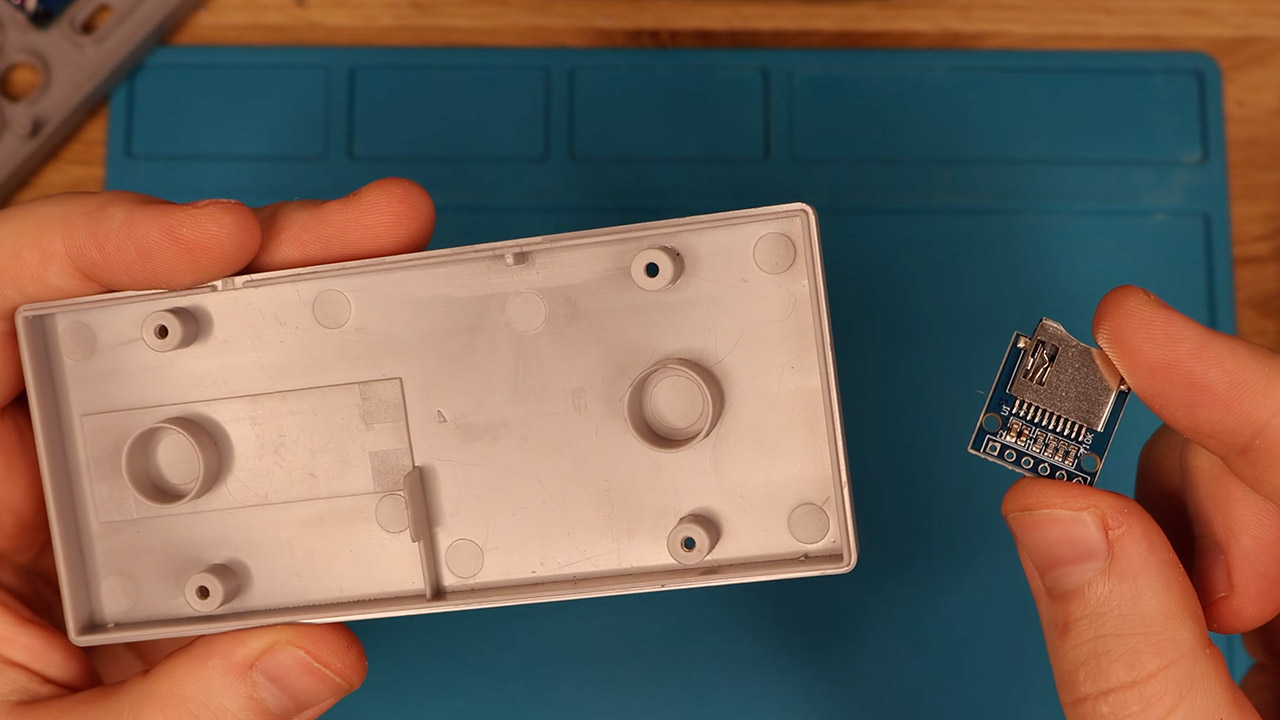
Games load from a microSD card that is inserted in there, and the firmware’s Retro-Go emulator framework is running, which was created specifically for the ESP32-S2 using the ESP-IDF and CMake because it is not a standard target. 8-bit classics operate smoothly. If you want to try something a little more difficult, PrBoom-Go supports DOOM via a Freedoom WAD file loaded on the card. The frame rate ranges from 5 to 15fps, which is adequate for a fast blast, though it will never be as smooth as a recent port.
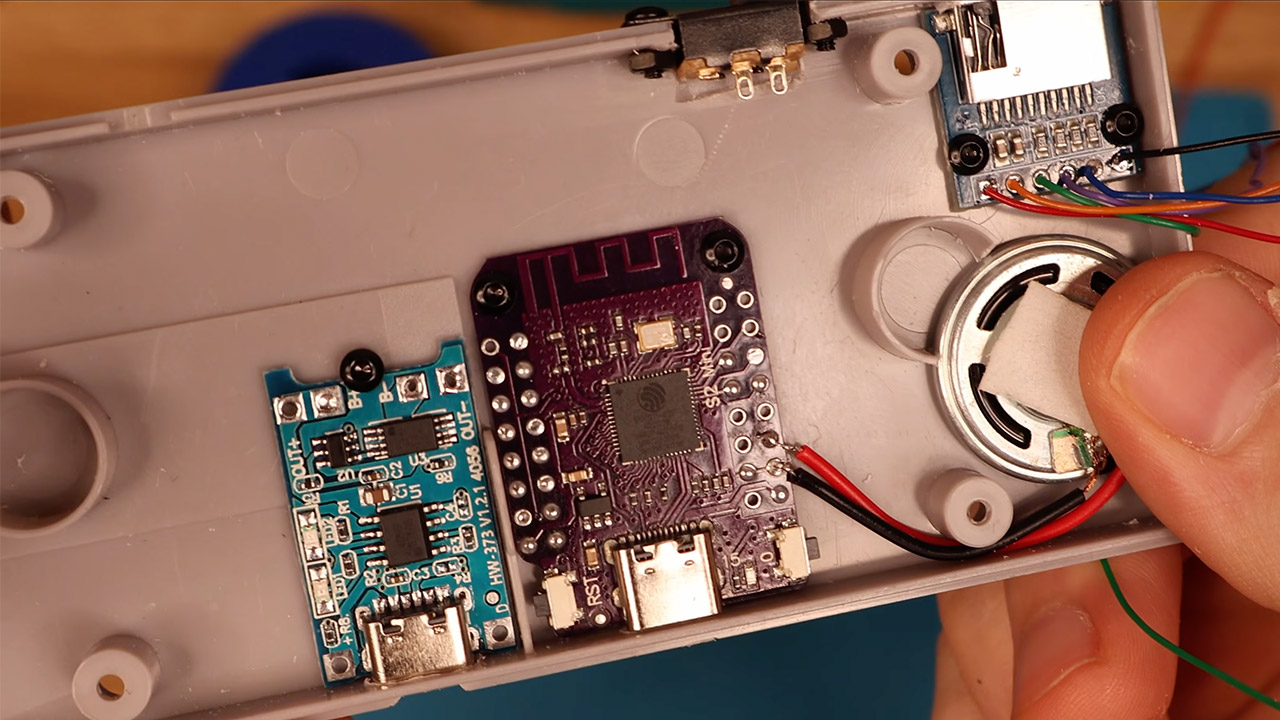
You can obtain all of the parts you need for less than seventeen dollars from common suppliers on Aliexpress. Overseas markets are more cheaper if you can find what you need. A microcontroller, a small color screen, a rudimentary amplifier and speaker, a charging circuit, a battery, and a few switches and connectors are all readily available.
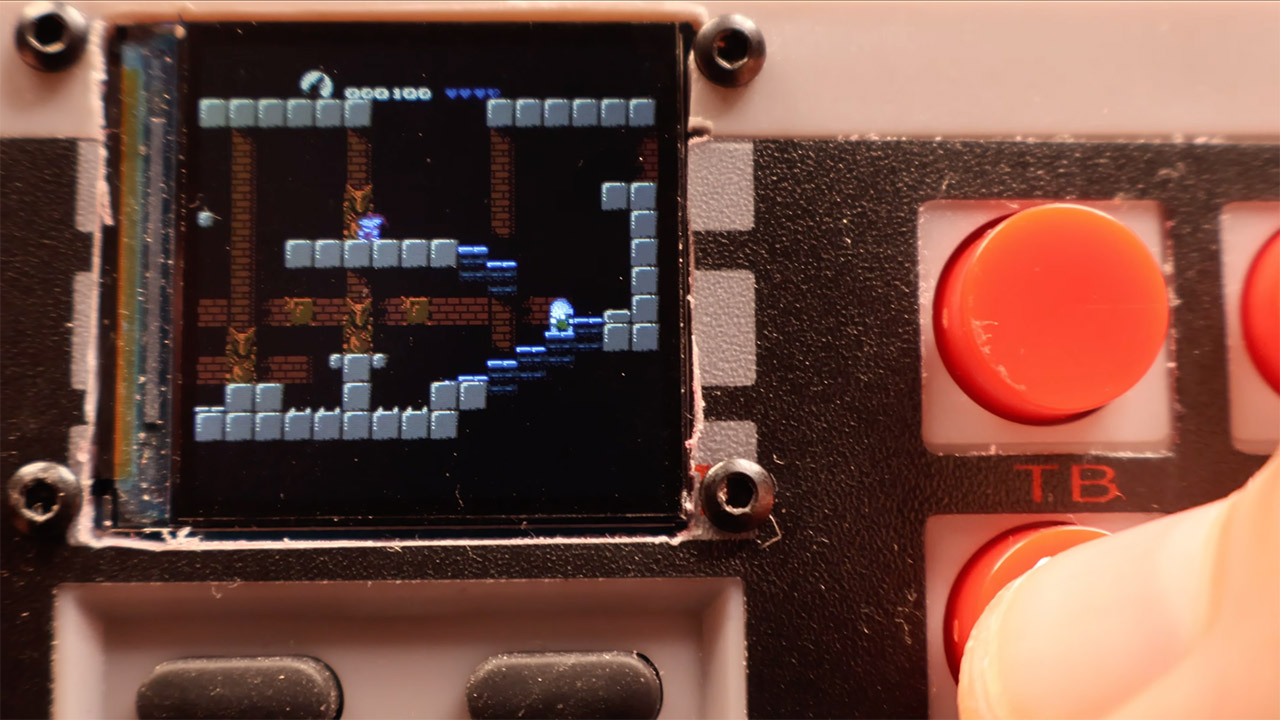
It still appears like a NES controller on the outside since the buttons are all in the appropriate places and feel the same way you remember them. Flip the power button, load a ROM, and the small screen comes alive with games that used to require a whole console and television to run. It’s a self-contained portable that costs less than one modern game while fitting a lot of history into a form factor that most people are already familiar with.
[Source]