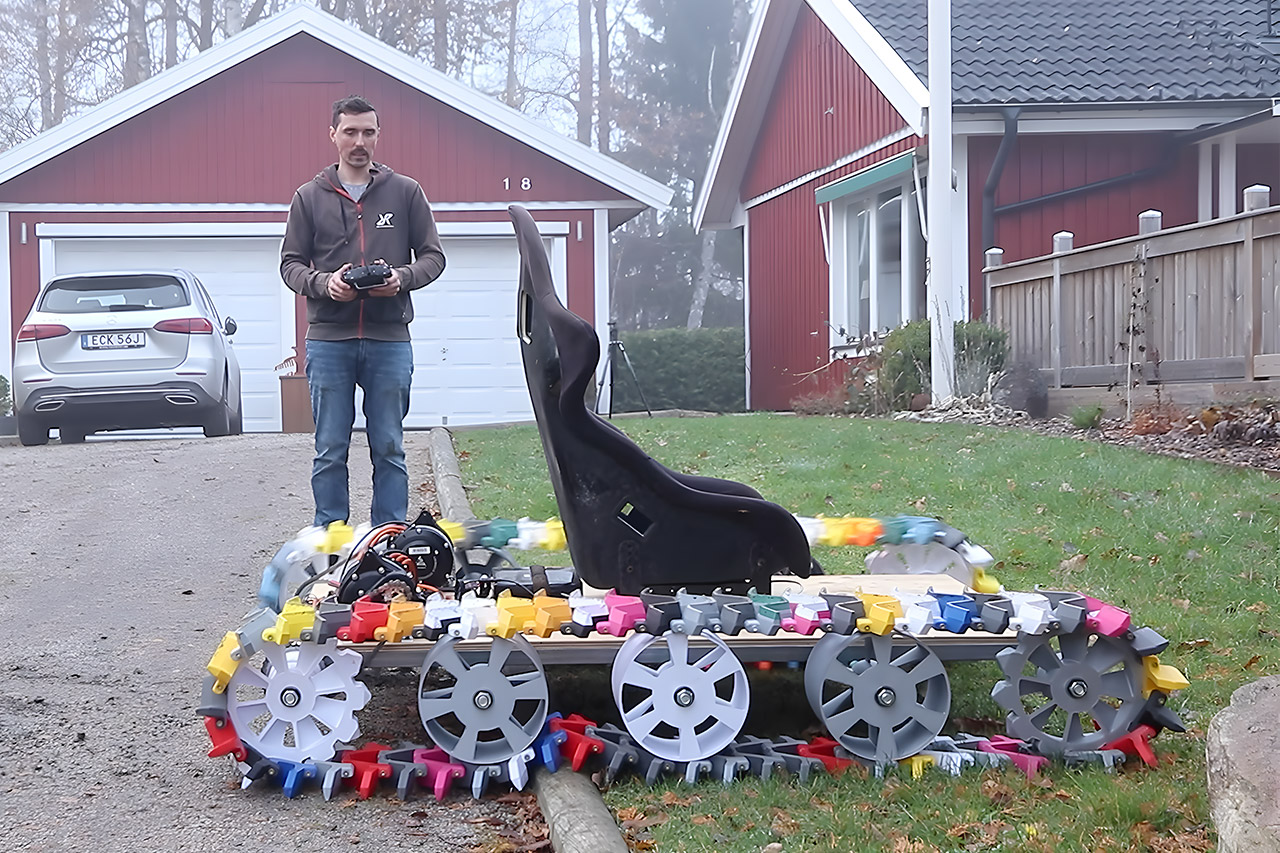
Simon Sörensen is all too familiar with turning filament into machines that move on his RCLifeOn channel, so building a full size tracked vehicle a person could sit on and drive became the logical next step (or so we think) to see where ordinary plastic starts to fail under real weight and power.
The structure is made of square metal tubing, while the seat and electronics are supported by a plywood sheet. PLA from a regular printer was used to create the track links, drive sprockets, and six support wheels. Each of these linkages took about 2 1/2 hours to print, and the tracks and related parts alone accounted for over 11 kg of plastic. As it occurs, the links are attached using 80mm screws, and the bearings slip into place after a fast application of heat. To keep the strain from concentrating on the driving sprockets, some extra long screws were added.

- A1 mini + LED Lamp Kit for Creative Light Projects: Bring your ideas to life with the included LED Lamp Kit. Simply print compatible lamp models and...
- The Perfect 3D Printer for Beginners: A1 mini 3D Printer is designed to make 3D printing easy from day one with automatic calibration, simple setup...
- Experience the Bambu Lab Ecosystem: Access MakerWorld’s huge library of ready-to-print models, manage prints through the Bambu Handy app, and enjoy...
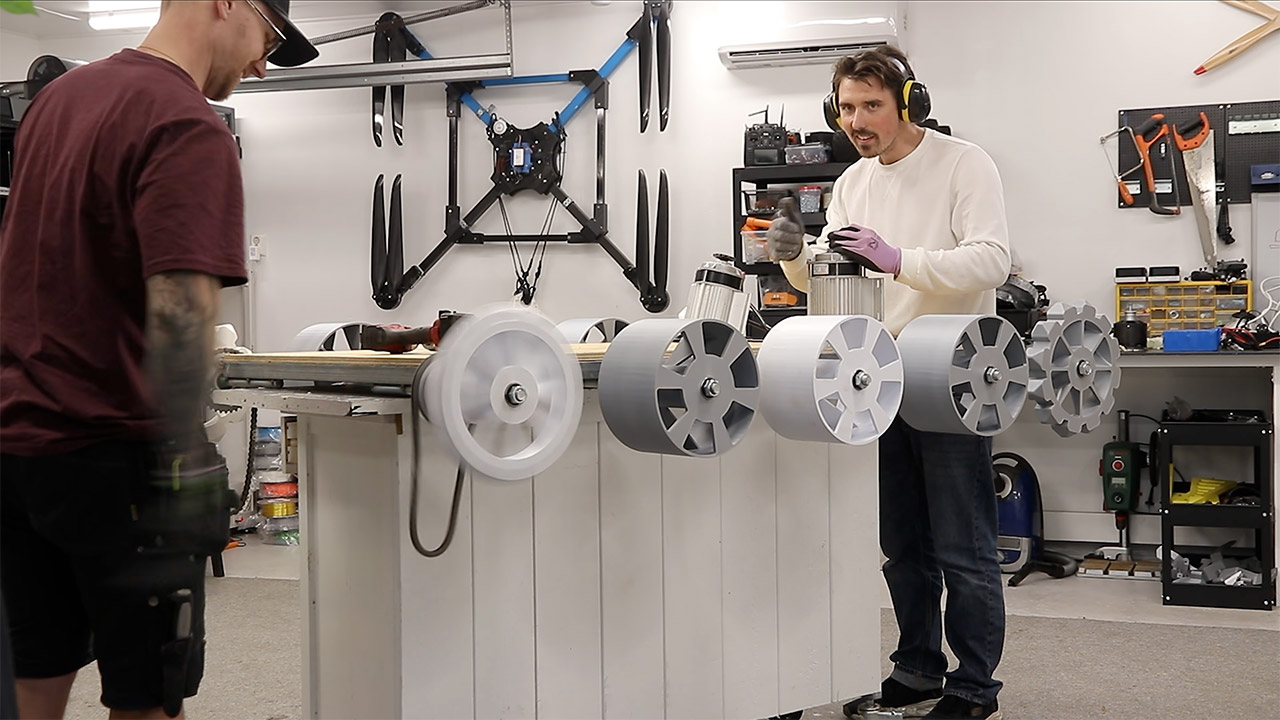
Initially, 48-volt brushless motors with built-in gearboxes were sufficient. A 200W lab supply and a rudimentary controller were sufficient to get the machine running. Breakages began to develop on a test path when we started printing links from a 10 kilogram batch of ultra inexpensive filament that cost less than $70. He was able to replace spares immediately, and as fate would have it, some later modifications helped to alleviate the issue before he could snag some better filament.
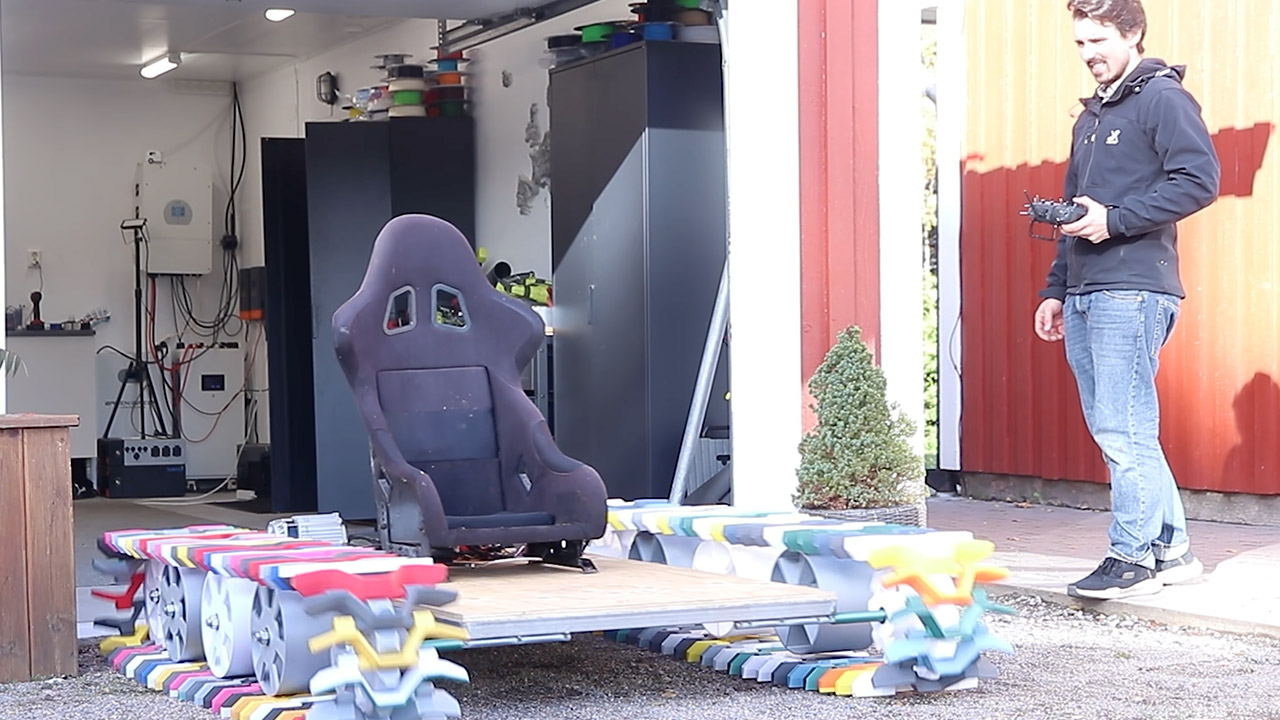
One element that was missing at the start was brakes. Control was provided by a normal radio transmitter and tank-style inputs, as forward meant moving the sticks together, while twisting the sticks in the other direction caused the vehicle to spin. They were fortunate that the transition from forward to reverse was practically instantaneous. Once he had the car indoors for some tests, he noted that the motors were pushing a lot of air around, and once we had sorted out the power supply, things began to seem a little smoother outside.
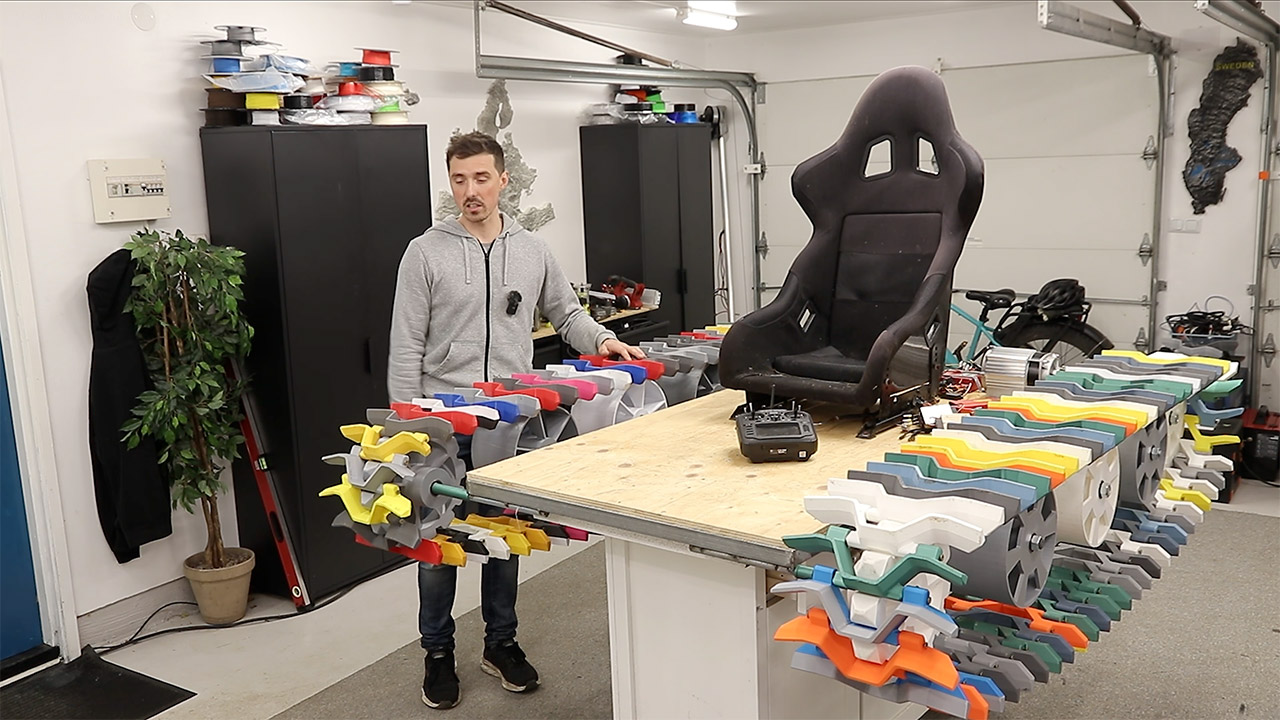
The uneven ground indicated that the layout’s stiffness was a problem. The support wheels were just sitting there with no give, the end sprockets were just sitting there with no lift, and any bumps we struck appeared to go straight through the plastic. Links that had previously been loose began to fall off in sections, even after he added some more walls and 20% infill to strengthen them. He also tried printing with a tougher PLA at a higher temperature for a period, but it only worked temporarily. To be honest, he should have used flexible filament in the first place, which would have absorbed the stress far better. However, printing hundreds of links in that manner would have extended an already lengthy production schedule and made it into a full-time job.
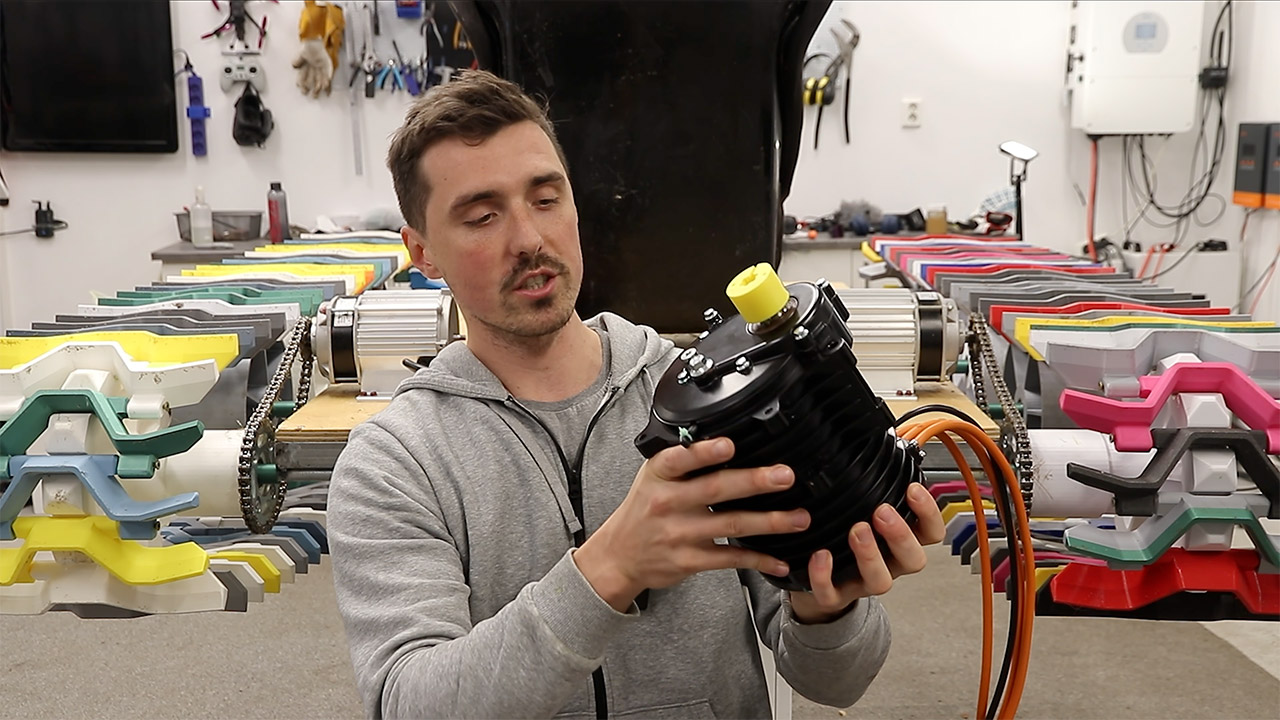
It took a few tries to locate a controller that could drive the motors cleanly, but some QS138 motorcycle motors from a buddy finally did the trick. These motors are far more powerful than what a light tracked vehicle requires, yet they provided the torque and responsiveness that our design demanded. The finished hardware includes two VESC Maxim 120 controllers rated at 400 amps continuous, a 2 kwh 48v battery pack, and a small screen on the side. A printed portion that was securing one drive sprocket to the motor shaft ultimately sheared under stress, serving as a stark reminder that, despite all of the motor enhancements, plastic remains the limit.
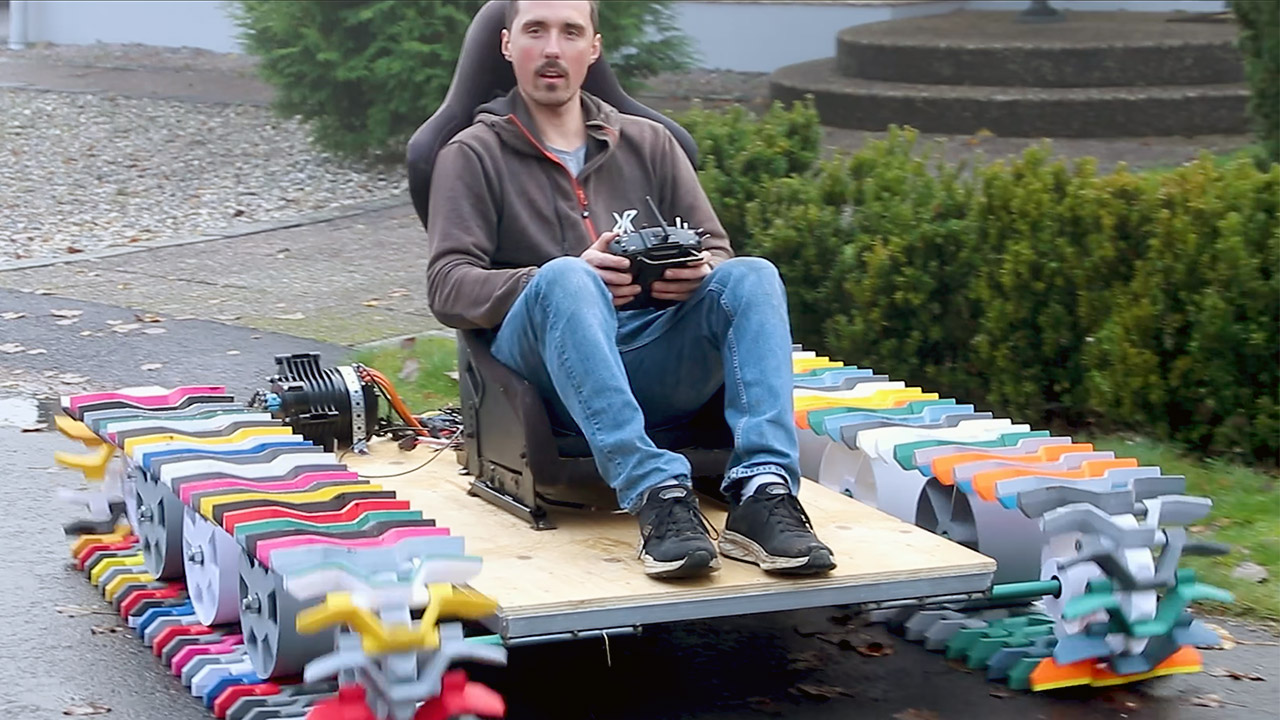
They had to borrow certain concepts from a small RC vehicle that had functioned well at model scale but proven excessively rigid when scaled up and loaded with a rider. For the time being, the tank rolls, rotates, and does what is asked of it, thus the core concept remains viable. Simon has previously stated that the next generation will be shorter, with fewer links, and will use a more appropriate material so that the tracks do not need to be replaced as frequently.
[Source]