Daniel Riley is no stranger to converting radio-controlled experiments into full-size watercraft. This includes creating homemade propellers, constructing larger hydrofoils, and pushing electric systems far beyond their intended boundaries. When social media continued showing him videos of powered paddleboards, usually Russian designs with bolt heads hanging in the water, square edges facing the flow, exposed wiring, and thick shrouds around the props, he spotted an opportunity. These configurations appeared to be ready for a revamp that stressed speed above caution.
Riley began with an e-foil paddleboard that he built years before, a true beast with a massive high-lift hydrofoil that was ideal for cruising but far too large for racing. Now he stripped it down, reducing the masts and removing the old foil to replace it with a new mast profile. He installed a couple of Flipsky 65220 motors, each rated at 6000 watts, with the speed controller integrated into the housing. The only cables flowing up the masts now were power and data, making for a cleaner job than his previous setups, which required a full wiring harness. He had replaced the default propellers with some custom 3D printed ones, which he had to do a series of tests on to determine which one was the most efficient. The results were quite interesting, as it came out that the best of the lot provided him an 11 percent increase in efficiency at full throttle, and the fastest runs were with a smaller three-bladed version.

- POWERFUL MOTOR AND LONG BATTERY LIFE - The 350W electric brushless hub motor allows for speeds up to 18mph. High capacity battery with a Max. travel...
- STABLE AND DURABLE FOR COMMUTING - Extremely smooth when accelerating and turning, Hiboy electric scooters have been made solid and durable quality...
- BEING SAFER WITH TECHNOLOGY - Hiboy E-Scooter S2 are made with front, middle and rear 3 lights. And double braking system features a disc braking and...
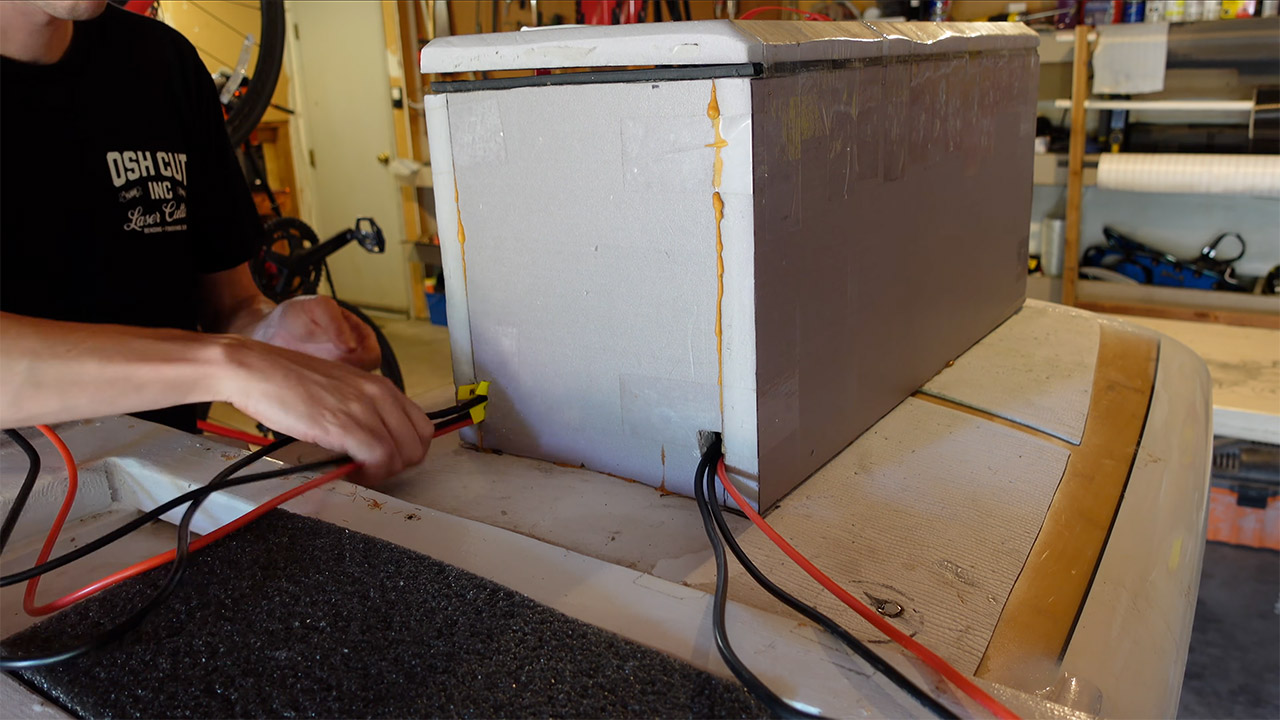
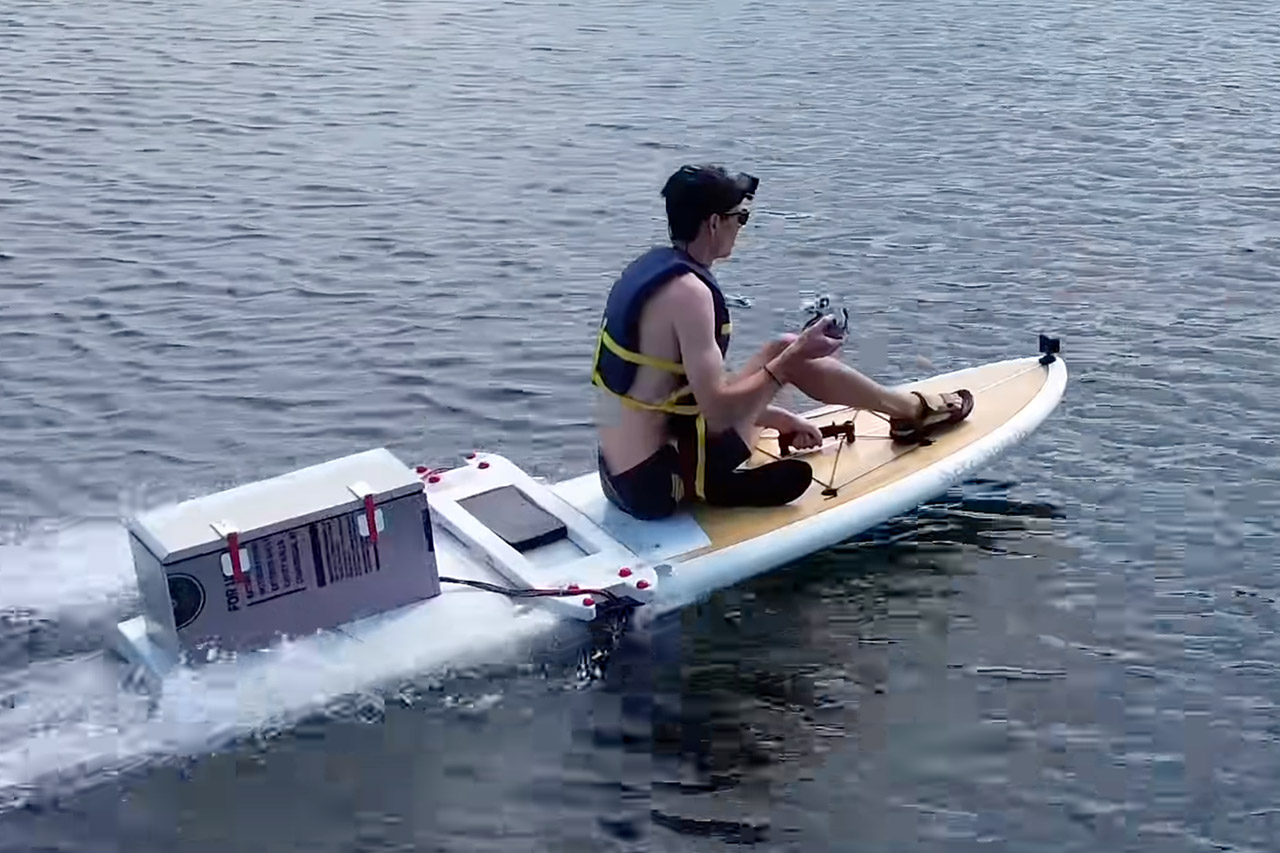
The power for the system was supplied via a watertight battery compartment located at the bottom of the board. At the other end, a radio throttle was in use, and as Riley shifted forward, the board pushed up onto the plane and began to move. He was just getting started when he increased the current limit on the controller to 140 amps, much above the 100 amp limit on the data sheet, and embarked on a measured run. He reached a speed of 25.6 mph (41.3 kph). With each motor using about 5900 watts of power, you can assume it was producing a considerable amount of power after accounting for shaft losses, which was approximately 16 horsepower.
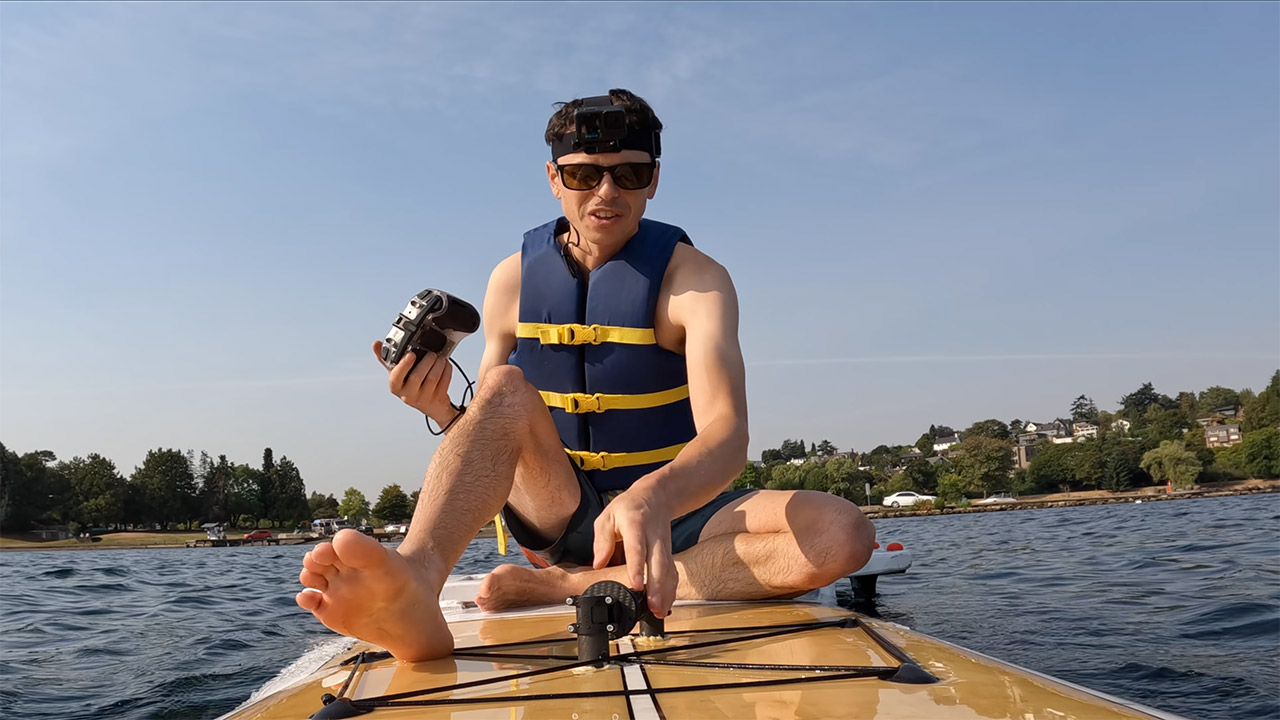
The craft reached speeds of more than 40 km/h (24.9 mph), outpacing most other paddleboards on record and certainly the fastest of its sort. If you put a dozen kilowatt motors on a board and start blasting off at tremendous speeds, it’s no longer a paddleboard, is it? Riley confirmed it with Google and came to the same conclusion, and he also believed that 25 miles per hour seemed slow when compared to Thai long-tail boats, which can travel at speeds of over 100 mph. Now since the actual speed hasn’t been validated by any governmental authority, it’s stuck with being measured and just one of those anomalies you find sprinkled around on the internet.
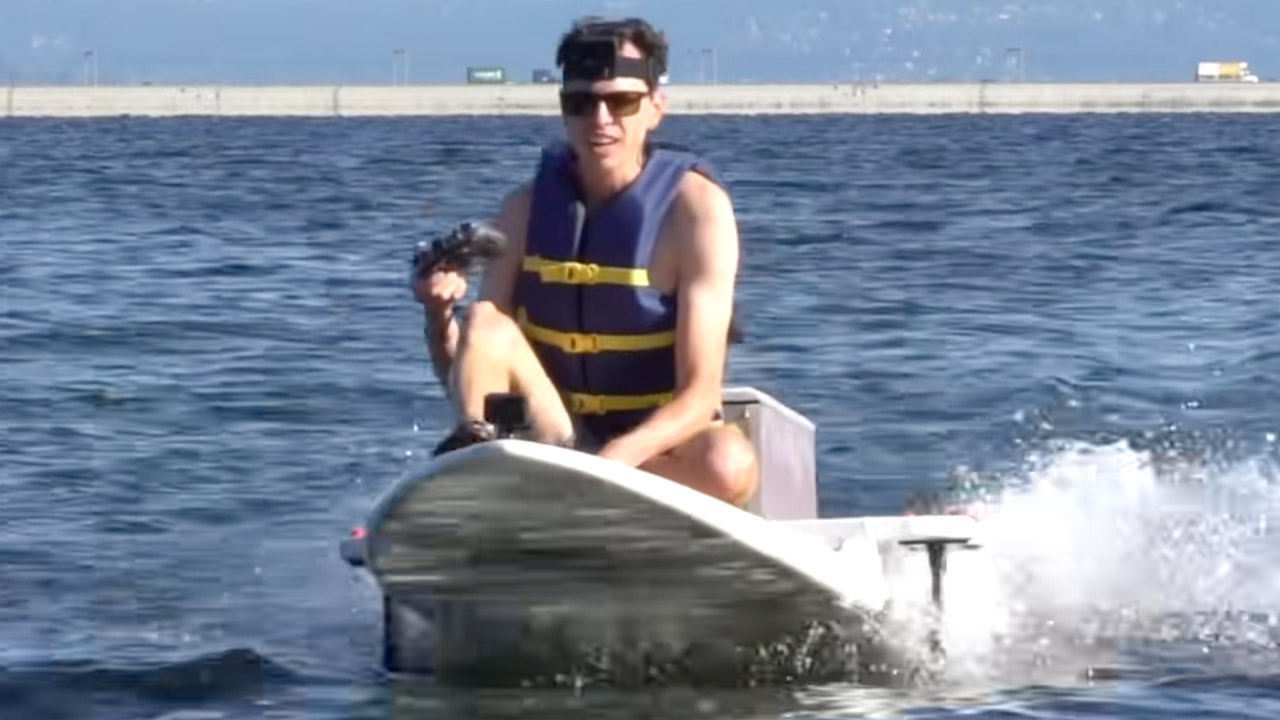
The next day, he reinstalled a new set of hydrofoils on the board, but this time his goal was to smooth out the ride rather than get the board airborne. On Lake Union in Seattle, the redesigned configuration felt slightly better in small chop conditions, but the radio controller itself was immersed in the water whenever things became nasty. After the speed runs were completed, one motor began ticking ominously and becoming heated as it idled at the dock, before simply giving out.

Riley disassembled it and discovered a blown transistor hidden deep within the potting compound. He believes a rogue electrical spike may have struck the already hot electronics and destroyed them. He notes that a few other Flipsky controllers have acted up in similar ways in the past, which makes him question if the spike problem can be fixed, the hardware could be able to withstand a 140 amp hit without issue, but for the time being, he recommends staying to the rated 100-amp limit. Unsurprisingly, the motors are not cheap, and one of them is already on backorder.
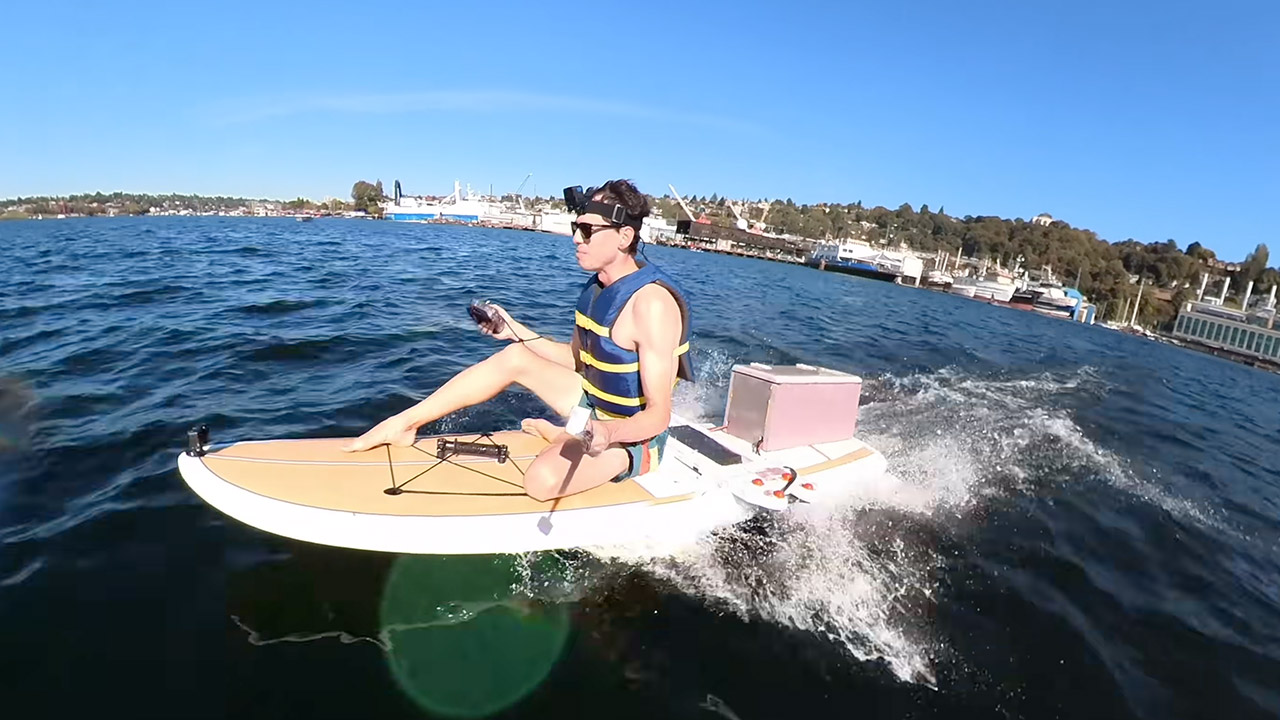
Riley’s approach has always been iterative. Propeller shapes came from long earlier test series. The mast and mount geometry were revised once the new motors arrived. That same hit-or-miss strategy had gotten him to 25.6 mph in the first place, and it also revealed that the controller was maxed out. Future iterations of the board will most certainly have alternative current settings, altered props, or a tweaked mast profile; for now, however, it is the fastest doc’d electric paddleboard ever made by someone who views every project as a stepping stone to the next thing.
[Source]