

Google just added 50 new AR animals for you to interact with on Search. Some of them include a bulldog, cane corso, coyote, dachshund, donkey, milk cow, hamster, giraffe, welsh corgi, red panda, pitbull, zebra, ox, doberman, kitten, and lots more. How does this work? Simply search for these animals on a mobile browser or through the official Google app, and just scroll down until you see “View in 3D” to start the adventure. Read more for a video and additional information.


Photo credit: Simone Giertz
Inventor Simone Giertz is known for her wacky robotic creations, and her latest project is no exception. This selfie booth for dogs was made using a LEGO Mindstorms Robot Inventor Building Kit and several other parts. When a dog presses a pedal, a GoPro camera is triggered to take the selfie. Afterwards a treat is dispensed to ensure the perfect shot. This was accomplished by linking several different linked modules and works like a charm as you’re about to see.


In the military, working dogs are mainly used to scout areas for explosives devices and hazardous materials when assisting in rescue operations. The one caveat is having to giving these dogs the necessary commands to perform these missions, as this can put a soldier in harm’s way. Command Sight, Inc. wants to change that using augmented goggles that allow a dog’s handler to give it specific directional commands while keeping the soldier remote and out of sight.

Most of us have probably seen flamingos at some point in our lives, but very few have watched them feed. Thanks to an underwater camera at the San Diego Zoo, we get to see just that. Put simply, these animals feed by sucking in water and mud at the front of their bills before pumping it out at the sides. Briny plates., called lamellae, then act like tiny filters, trapping shrimp as well as other small water creatures for the flamingos to eat. Read more for the video and additional information.


Ocean engineer Brennan Phillips and a team of researchers traveled to the Solomon Islands in search of hydrothermal activity, and what they found was completely unexpected. Kavachi, a very active underwater submarine volcano located 60-feet below the ocean’s surface, is home to two species of shark – hammerheads and silky sharks – living in the hot, highly acidic waters within the crater.

This segment from Spy in the Wild 2 – The North, a British nature documentary television series that is produced by BBC Natural History Unit, John Downer Productions and PBS, shows a robot spy macaque trying to blend in with the others. For those most part, the spy remains unnoticed, and thanks to waterproofing technologies, it’s able to take a dip safely without any malfunction. Read more for the video and additional information.


Murder hornets are bad enough, but researchers at West Virginia University have discovered “zombie cicadas,” caused by a parasitic fungus, called Massospora, that can play mind games on cicadas to spread the infection. Simply put, t his psychedelic fungus is capable of manipulating male cicadas into flicking their wings like females, similar to a mating call, to draw in other unsuspecting male cicadas and infect them.


Octopuses are known to camouflage themselves when hunting and to avoid predators, but when it spotted a GoPro action camera recording, this creature had other plans. While it takes specialized skin cells that change the appearance of the skin by adjusting its color, opacity, or reflectivity, to camouflage itself, grabbing onto this gadget only took its tentacles.

San Francisco-based Edge Innovations reveals an ultra realistic dolphin robot that can last over 10-years in salt water without any maintenance. Unfortunately (or fortunately), the current vision still does need to be remotely operated by a human, but one the bright side, itcan swim for up to 10-hours on a single charge of its battery. Read more for a video and additional information.

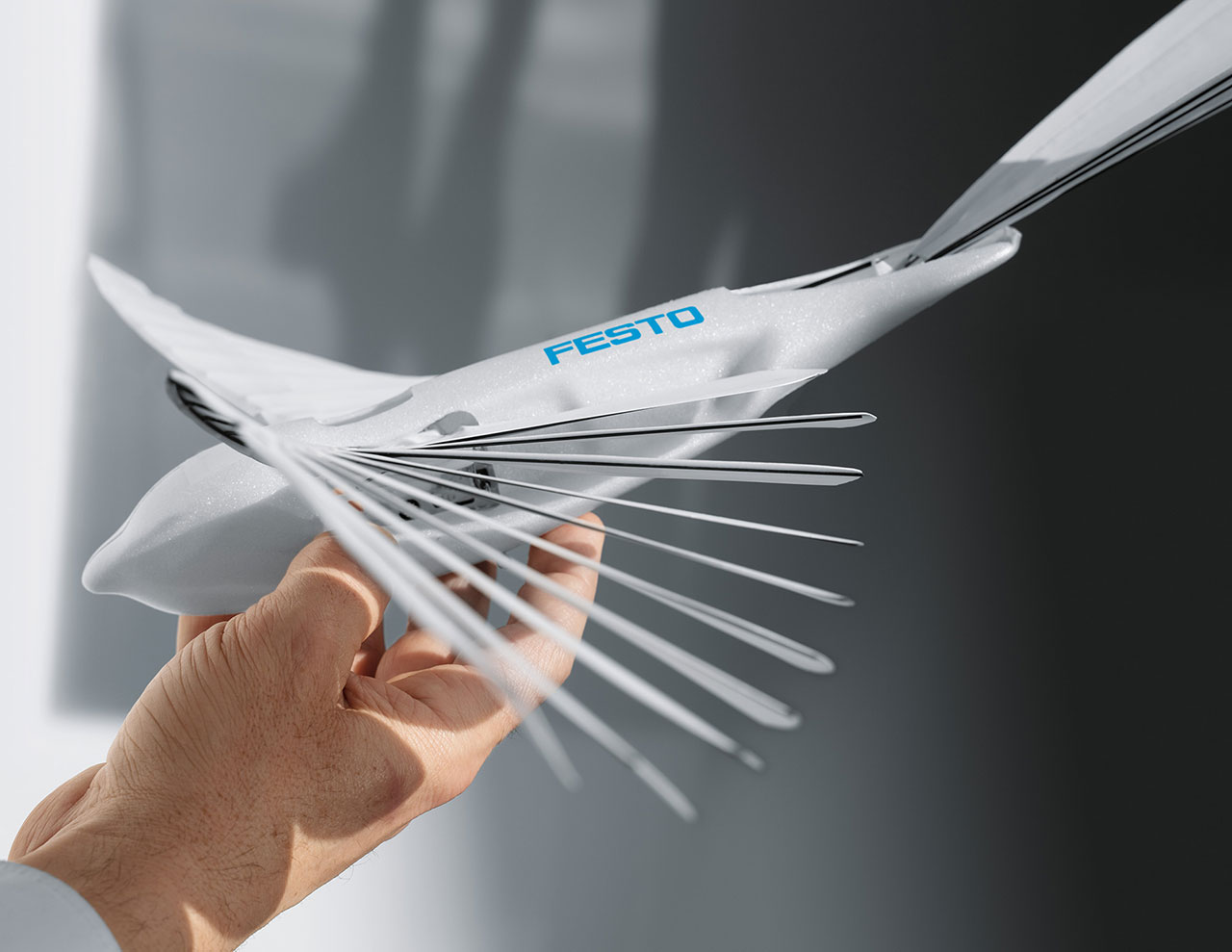
Unlike other robotic birds, Festo’s BionicSwift has a radio-based indoor GPS with ultra-wideband technology (UWB) to allow it to fly safely and in a coordinated pattern in a defined airspace. Its wings are modeled after the plumage of real birds and weighs just 42 grams despite having a body length of 44.5 centimeters as well as a wingspan of 68 centimeters.