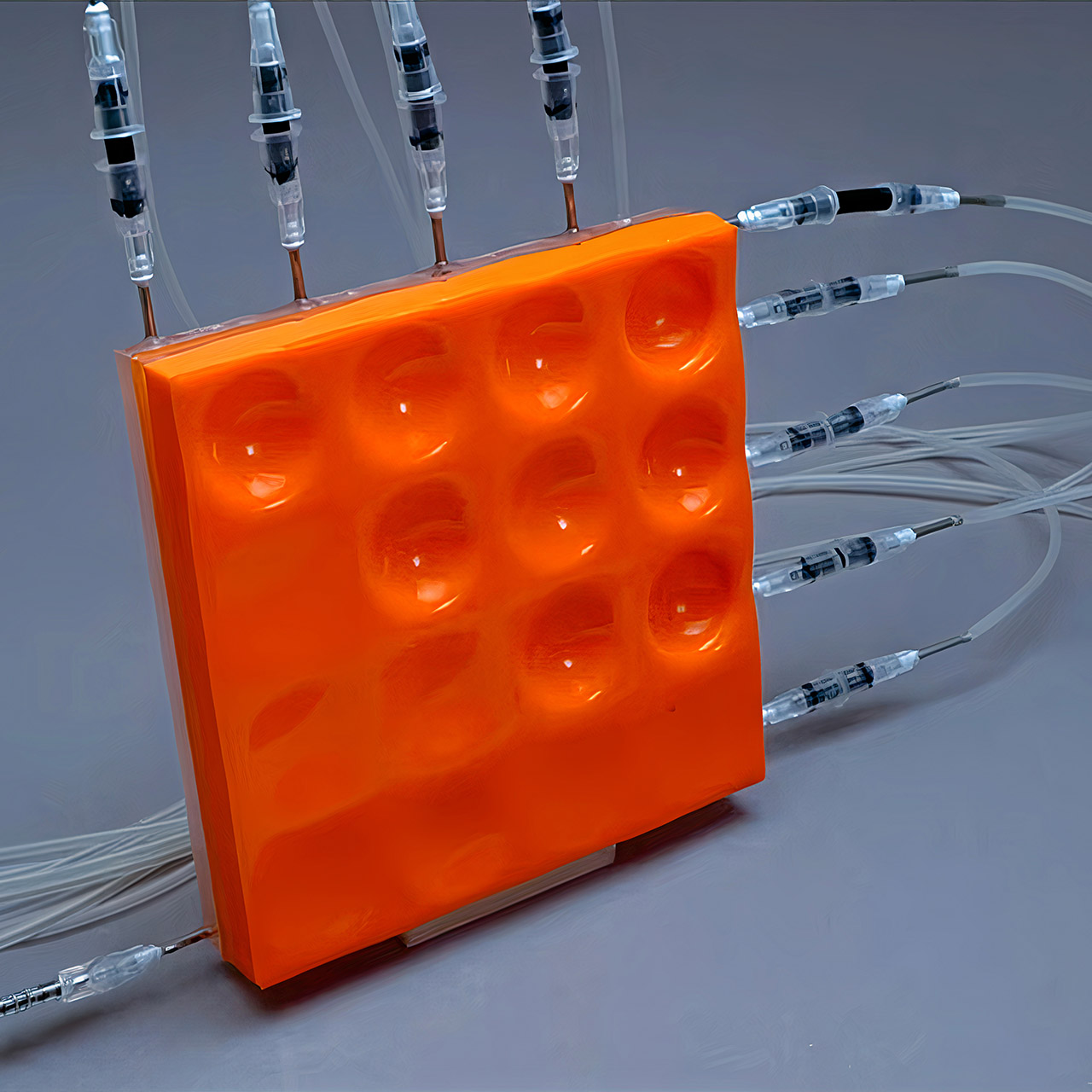
A display that uses air power to transform our perceptions of screens is a novel concept. Maker Soiboi Soft set out to create one using only 3D printing, a small amount of soft silicone, and the difference in air pressure between normal and vacuum. The end result is a 4×4 grid of pixels that light up various patterns and games, letters, numbers, and even a rudimentary snake game animation, all without the use of electricity.
This device is based on small logic channels carved into clear 3D-printed parts utilizing microfluidics. Each of the 16 pixels consists of a flexible silicone membrane covering a small chamber. When a vacuum pushes on the membrane, it drops down, causing a noticeable change on the flat surface. In contrast, air pressure just causes the membrane to hang loosely.

- One-Click Automatic Printing: Experience hassle-free 3D printing with the Adventurer 5M Series. Enjoy automatic bed leveling for flawless first...
- 12X Ultra Fast Printing: Featuring a CoreXY structure with 600mm/s travel speed and 20000mm/s² acceleration, the AD5M maximizes efficiency, reduces...
- Smart and Efficient Design: Quick 3-second nozzle changes, a high-flow 32mm³/s nozzle, and fast 35-second warm-up to 200°C deliver stable high-speed...
The tricky part is figuring out how to manage 16 pixels with fewer connections than you’d assume necessary. Normally, a full grid would require a separate valve for each pixel, resulting in 16 valves and a tangled mess of tubes. However, the creator discovered a much simpler way to do so by borrowing from electronic displays and use multiplexing. Rows and columns are handled by four lines each, for a total of eight control lines. To ensure that only the correct pixel lights up, each one has an AND gate created from vacuum transistors.
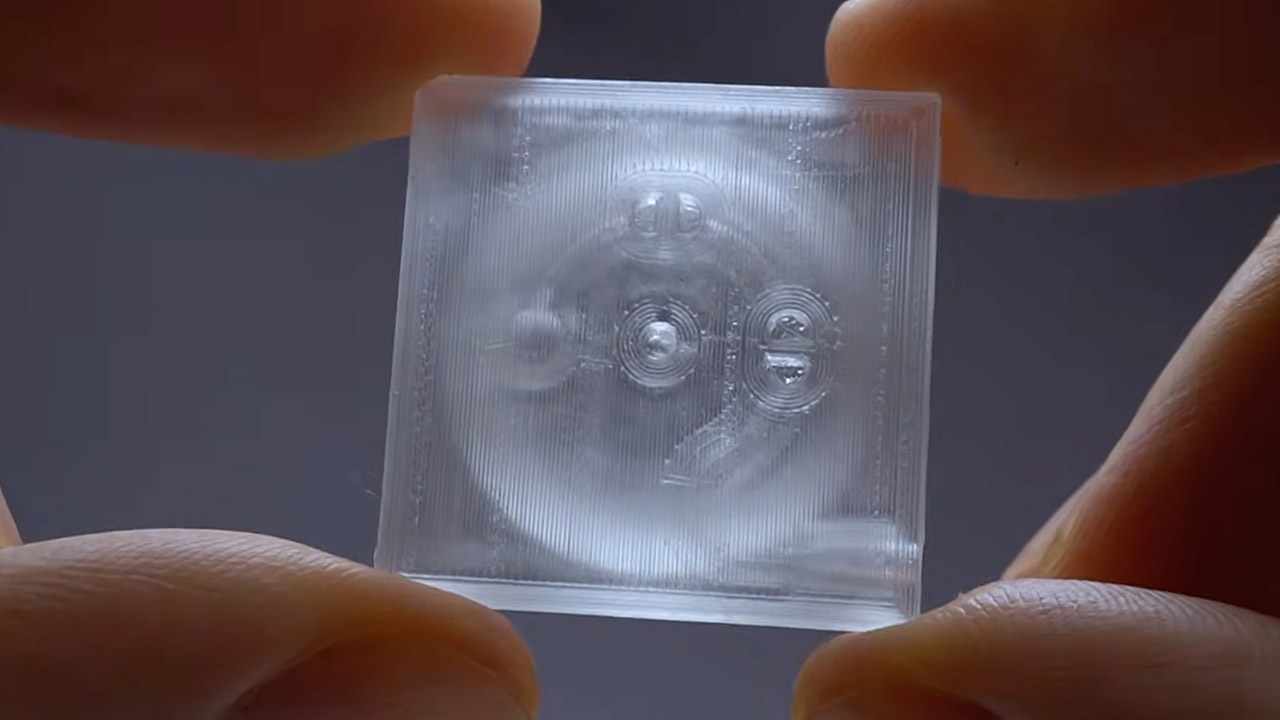
These transistors function similarly to tiny valves in the channels, with three layers: a flow layer with two independent channels leading to the pixel, a soft silicone membrane in the center, and a control layer on top. When you apply a vacuum to the control side, the membrane slips down, allowing the vacuum to pass through. Leave it at normal pressure, and the path will remain tightly shut. Each pixel has two transistors connected in series, one to the row line and one to the column. Vacuum only reaches the pixel membrane when both lines pull vacuum simultaneously.
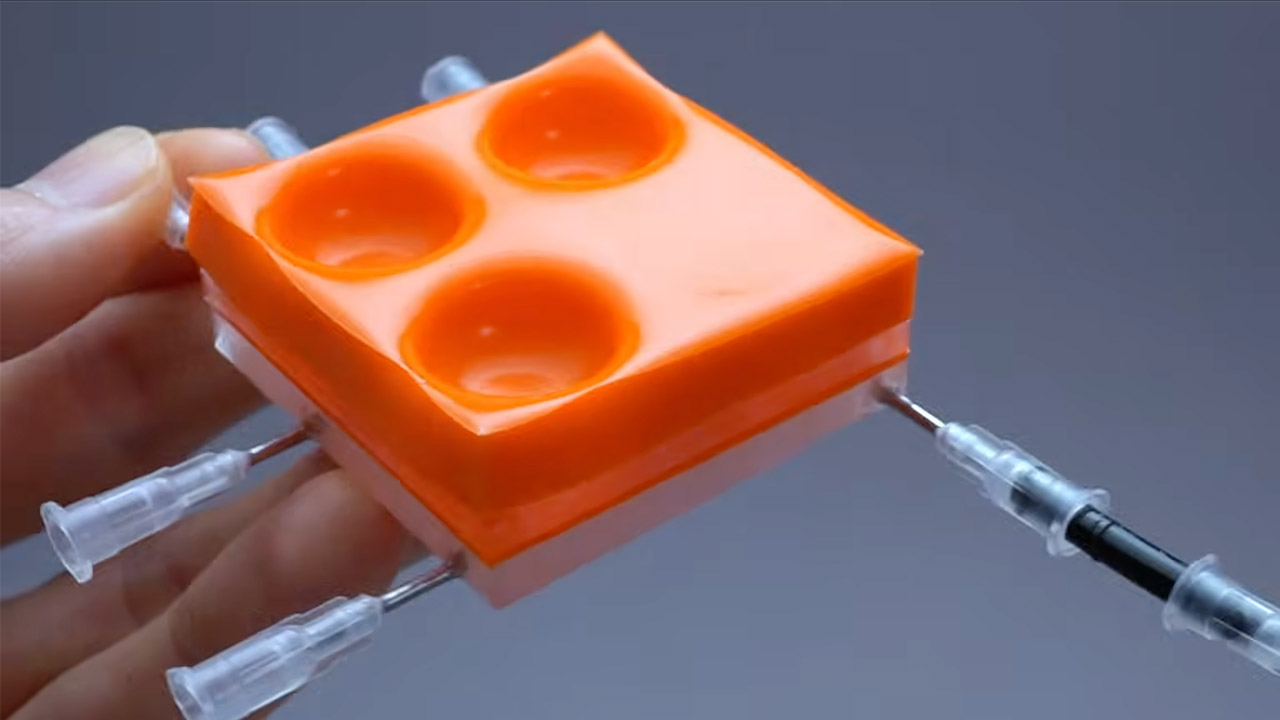
Once triggered, a pixel maintains its state because the vacuum pulls the membrane down, acting as built-in memory that does not require constant power. To clear the display, a third transistor per pixel unites with atmosphere, and all of those release lines connect. A brief one-off pulse restores everything to normal and resets the grid for the following pattern.
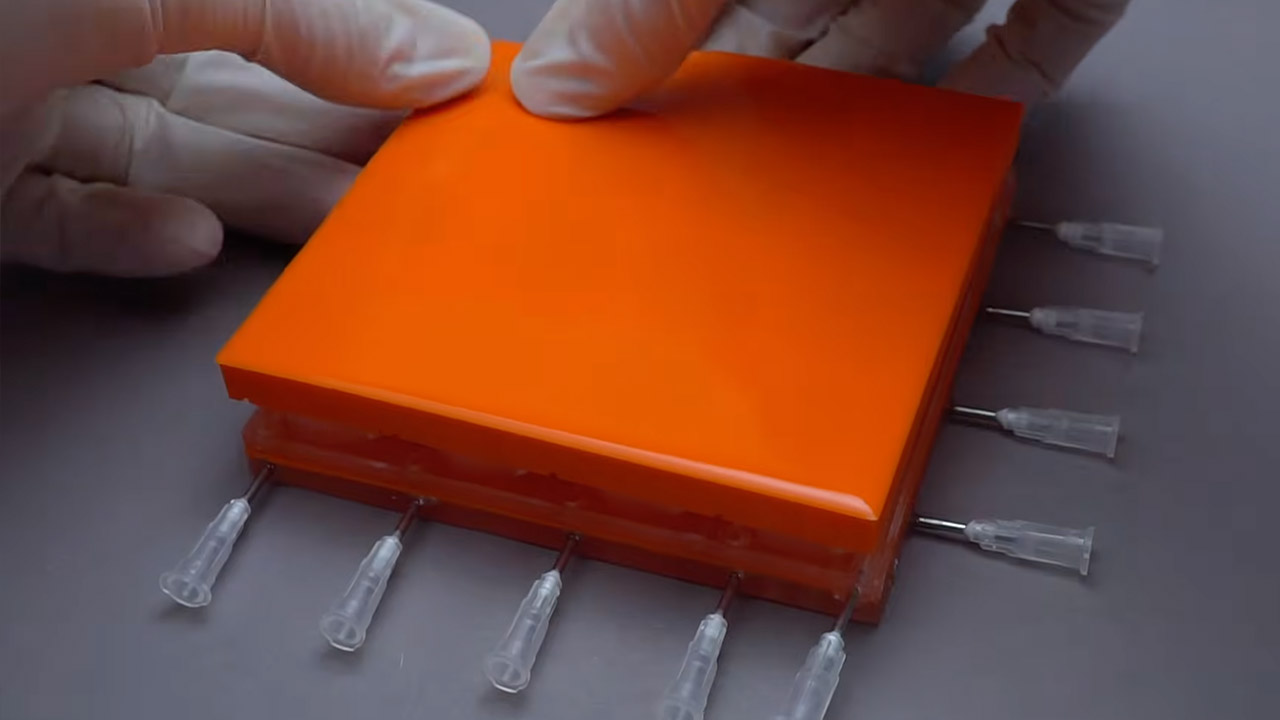
Building the full 4×4 version took some time because he had to carefully adjust settings such as 100% infill, slower print speeds, and aligned patterns. Blunt needles were hammered into the ports to join the tubing, and silicone membranes were molded in frames, cut to form, and punched to fit between the layers. A central screw strengthens the clamping pressure, keeping everything airtight, and UV glue seals the input ports.
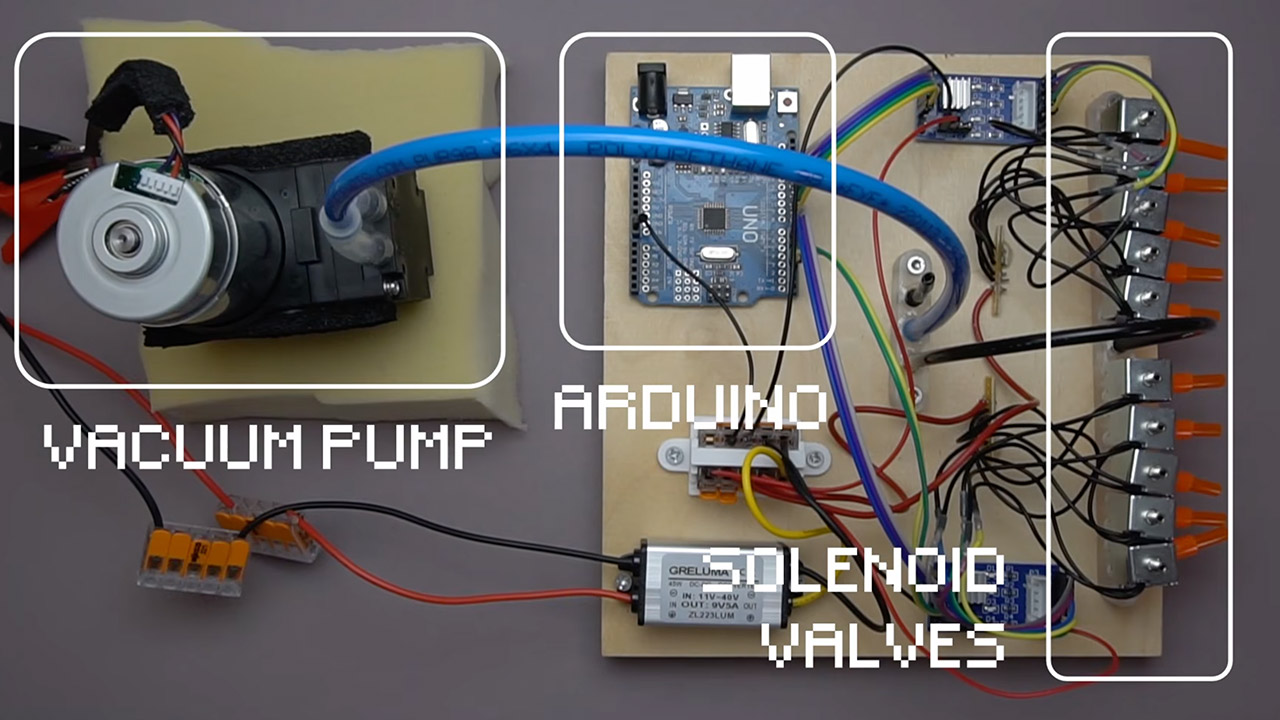
An Arduino outside the display controls the solenoid valves that switch each line between air and a vacuum pump, with simple programming sequencing the pulses to create the required patterns. Early testing on a smaller 2×2 grid helped to smooth out difficulties such as latching, and this is eventually how they resolved the global release patch.