
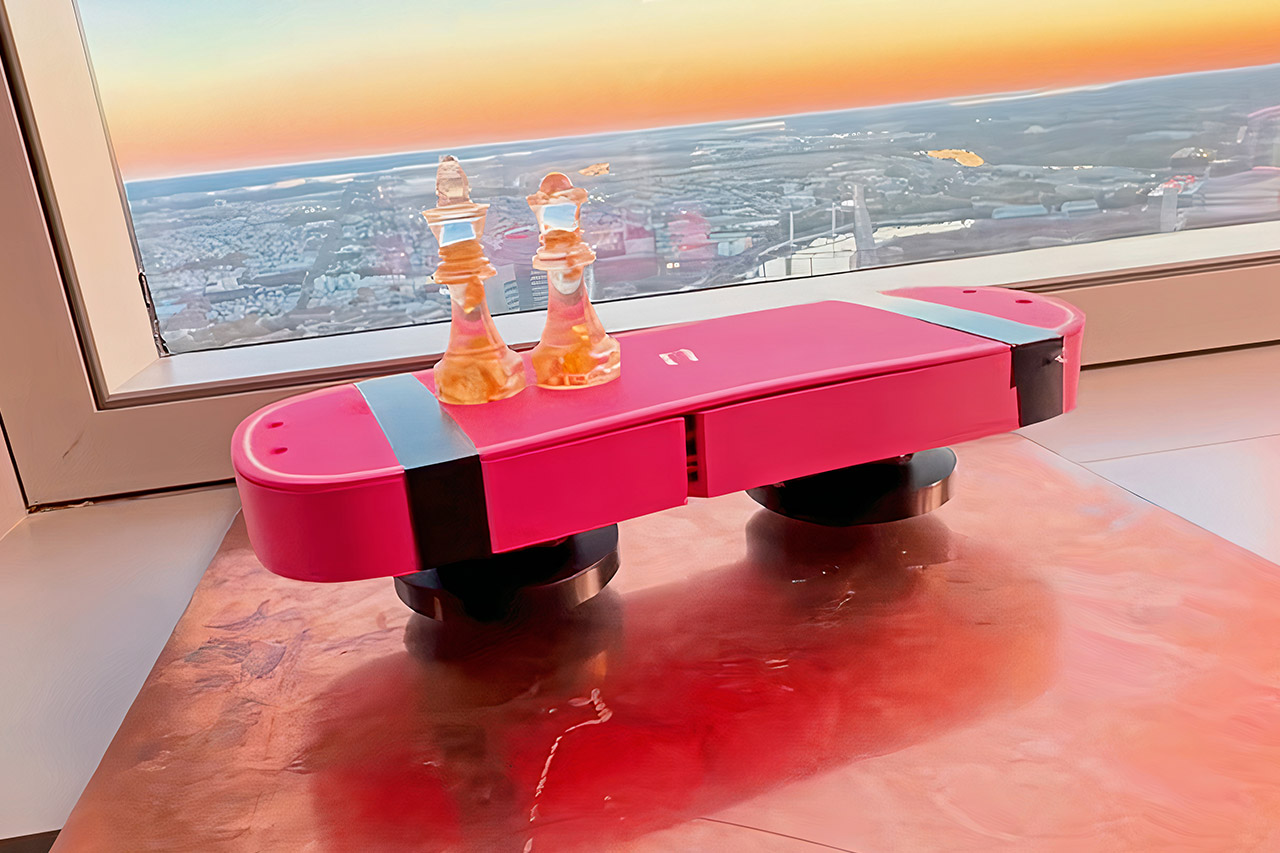
Jake Rogers spent weeks in a garage turning permanent magnets and brushless motors into a palm-sized hoverboard that actually floats. His miniature board sits a few millimeters above a thick copper plate with no wheels, no air cushion, and no external power cable once the batteries are clipped in.
Two rotors spin in opposing directions, each containing a ring of twelve N52 neodymium magnets organized in a Halbach configuration such that the strong field points downward and the weak field above remains weak. As the magnets sweep across the copper, they create swirling eddy currents, which generate their own magnetic field, pushing back against the rotors and holding the entire device afloat.
Sale

LEGO Speed Champions Time Machine from Back to the Future 77256 | Building Toys for Boys & Girls, Ages...
- MODEL CAR BUILDING TOY – The LEGO Speed Champions Time Machine from Back to the Future (77256) building toy for kids 9 years old and up lets young...
- 2 MINIFIGURES – Kids can place the Doc Brown and Marty McFly minifigures inside the cockpit for creative storytelling and pretend play adventures
- BUILD 2 WAYS – Kids can construct the DeLorean from the first Back to the Future movie with lightning rod and California license plate, then rebuild...
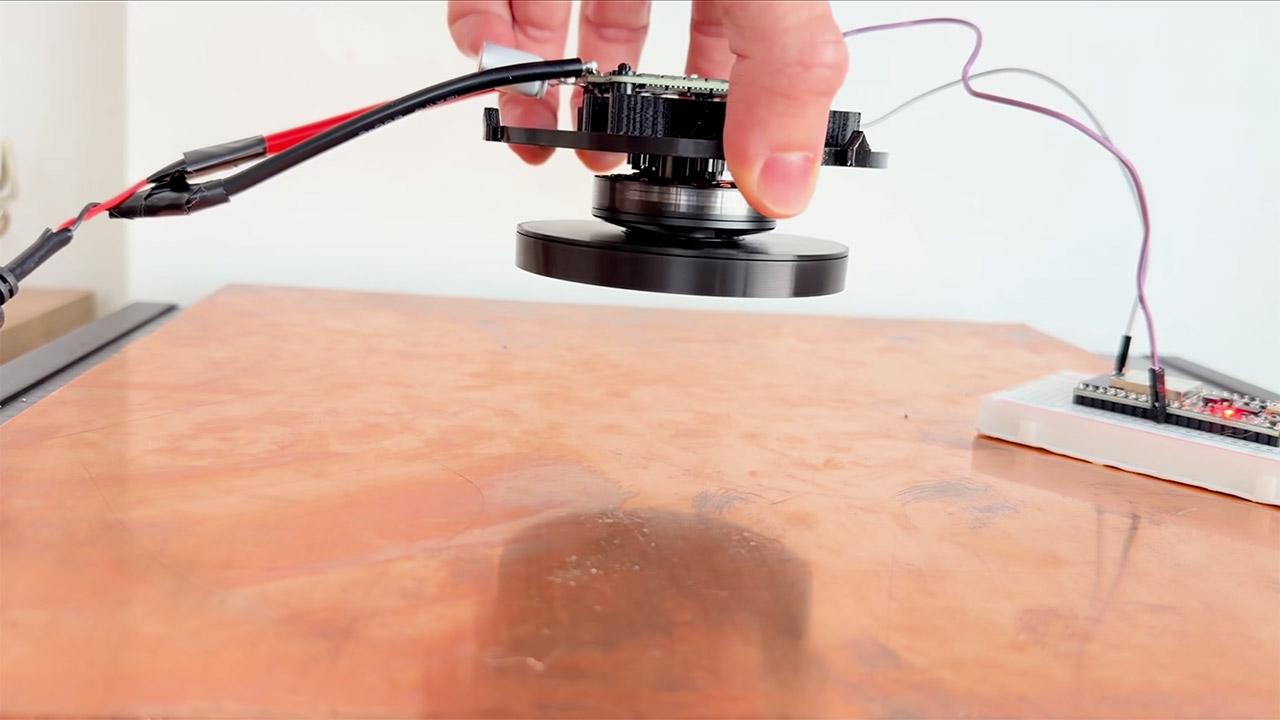
Early single-motor testing lifted a lightweight frame off the ground, but the outcome was odd, as it twisted around erratically due to response torque. It quickly became clear that adding a second motor and spinning the pair in the other direction eliminated all of the twisting, but first Rogers had to determine that the wiring was so jumbled up that both motors were set to turn the same way. As for the magnets, he had to reduce the number from sixteen to twelve per rotor because they kept flinging themselves outward due to centrifugal force. This reduced the outward force by around 40% while maintaining the same speed, which was rather significant.
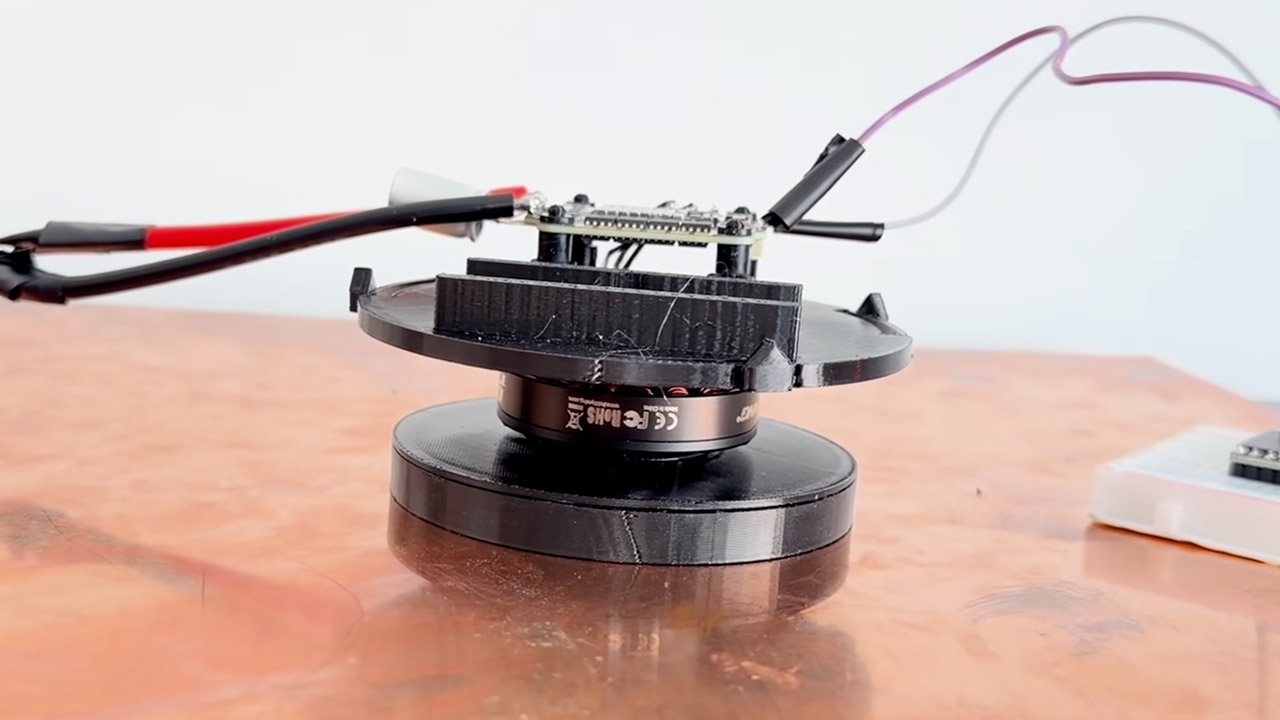
Of course, there were the usual issues, such as soldering bridges frying one ESP32, the entire thing vibrating and shrugging the onboard IMU, and the batteries adding so much weight that he had to use dead packs as counterweights at first before redesigning the chassis to balance out the live 3S packs sitting between the motors.
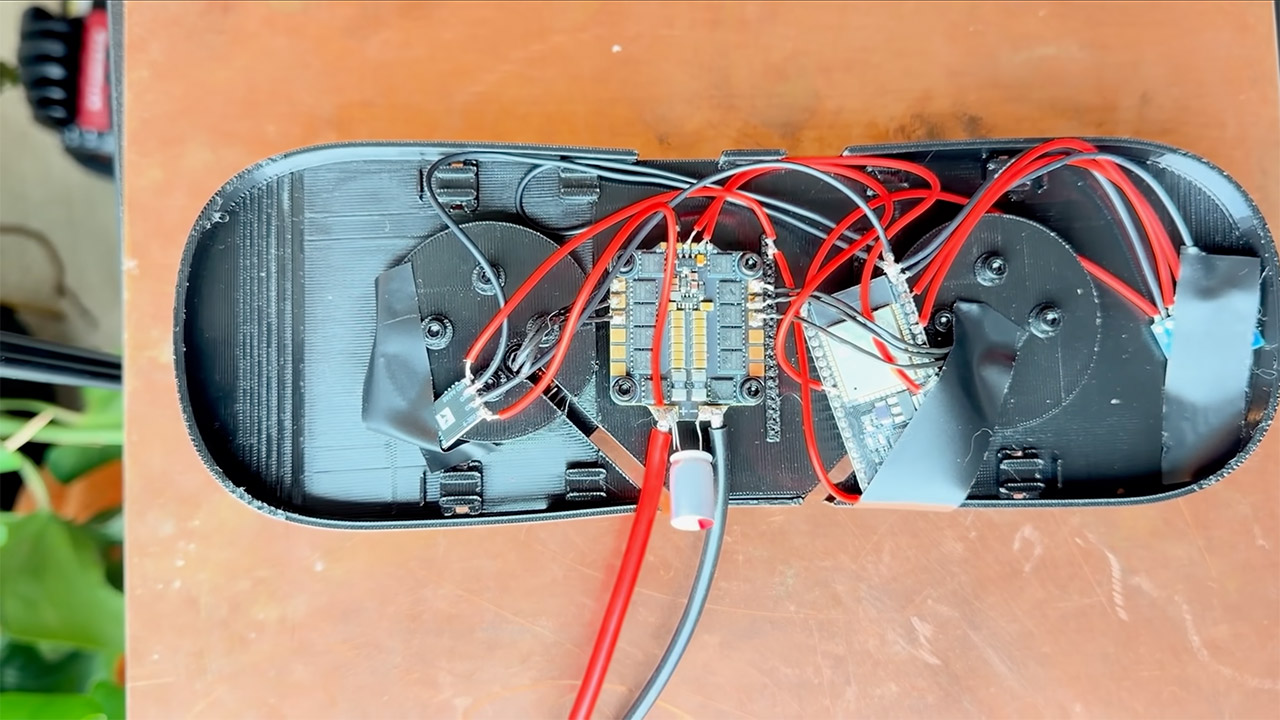
The finished product is 3D printed, sealed, and painted a soft pink with Polymaker filament. Inside is the ESP32, electronic speed controllers, a buck converter that drops the voltage for the board, and two batteries that supply around 22.2 volts when powered on. The little board can now glide around on the copper on its own, however it isn’t completely steady yet and requires a little help to stay level. Rogers points out that the lift force on a single magnet increases with the square of the rotational speed, which according to his calculations is around 61 newtons on a 3.84-gram magnet rotating at 8,000 rpm, and a staggering 941 grams-force from one entire rotor at 3,000 rpm with a 5mm gap. Those statistics are all simulated, not clocked on the finished board, and the real device still rattles so much that you can’t trust the sensor readings.
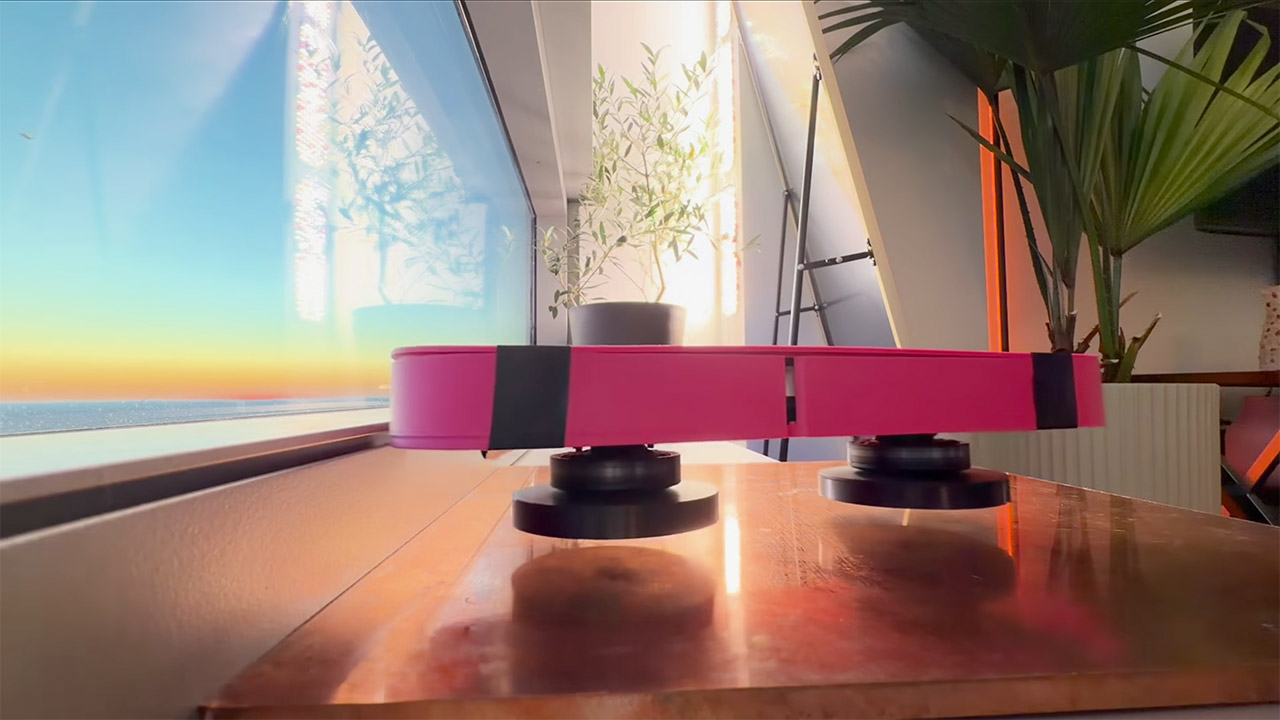
Rogers posted a DIY video earlier this week that shows the entire process, from the first working hover motor to the final shell. He regards the device as a working prototype, not a finished product, and has already stated that the next thing he wants to try out is a pocket-size fingerboard toy and a full-size eight-motor board named HALO-1, both of which would require a conductive surface to ride on. Rideability and payload are still unknowns; nevertheless, the current board demonstrates that a battery-powered pair of spinning magnet rotors can stay upright and travel without a tether.
[Source]