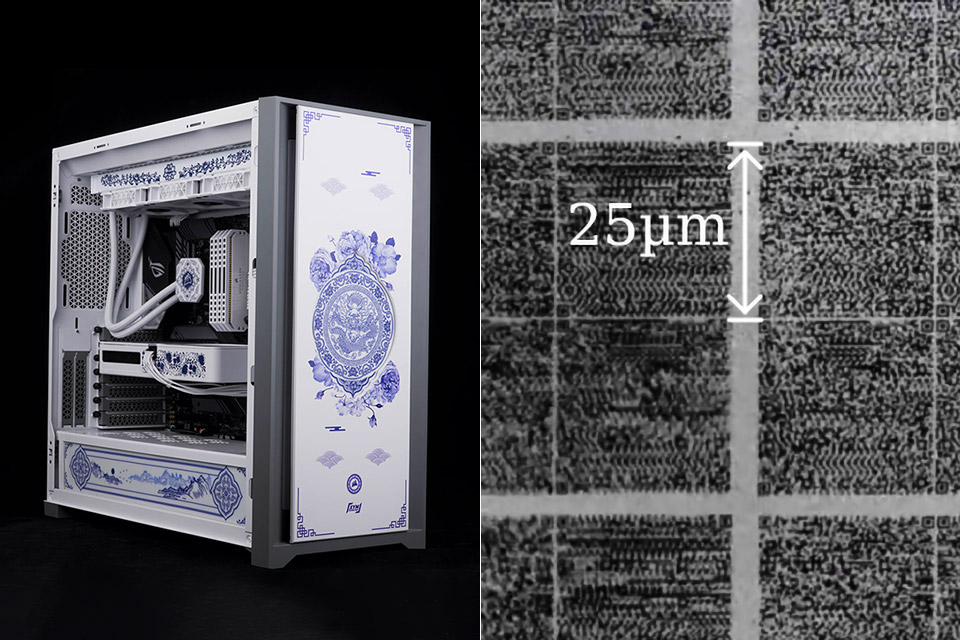
There’s the self-destructing Ovrdrive, and then CeraByte ceramic nanolayer-based storage. Put simply as possible, it utilizes inorganic ceramic nanolayers, measuring just 50-100 atoms thick, to store information. Called CeraMemory, a rack of these innovative cartridges will have capacities ranging from 10 PB to 100 PB by 2025-30.
A second offering, called CeraTape, is expected to have a capacity of up to 1 EB per tape by 2030-35, but both formats are designed to address density, performance, as well as access paradigms, all the while meeting the cost demands of data centers. How does CeraMemory work? Laser or particle beams essentially structure the data matrices similar to QR codes and then uses high-resolution microscopic imaging techniques or electron beam microscopy to read them. The company claims that their technology can achieve read and write speeds in excess of gigabytes per second range.
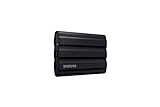
- GO THE DISTANCE: Withstand whatever adventure with the wildly reliable T7 Shield; It’s designed for the elements with water1, dust2 and drop...
- YOUR CONTENT CAPTURED: Take on the project, then transfer all your heavy files within seconds with the USB 3.2 Gen 2 Portable Solid-State Drive...
- SHARE IDEAS IN A FLASH: The T7 is embedded with PCIe NVME technology that brings you fast read and write speeds up to 1,050/1,000 MB/s4, making it...
Data is turning cold in a matter of weeks and is kept with no intention of ever being deleted. Science data, business data and data of individuals is kept for decades for eventual later use. 300+ million companies, 100 000+ governmental bodies, 7 billion internet users need secure and reliable storage of all their data,” said the company.