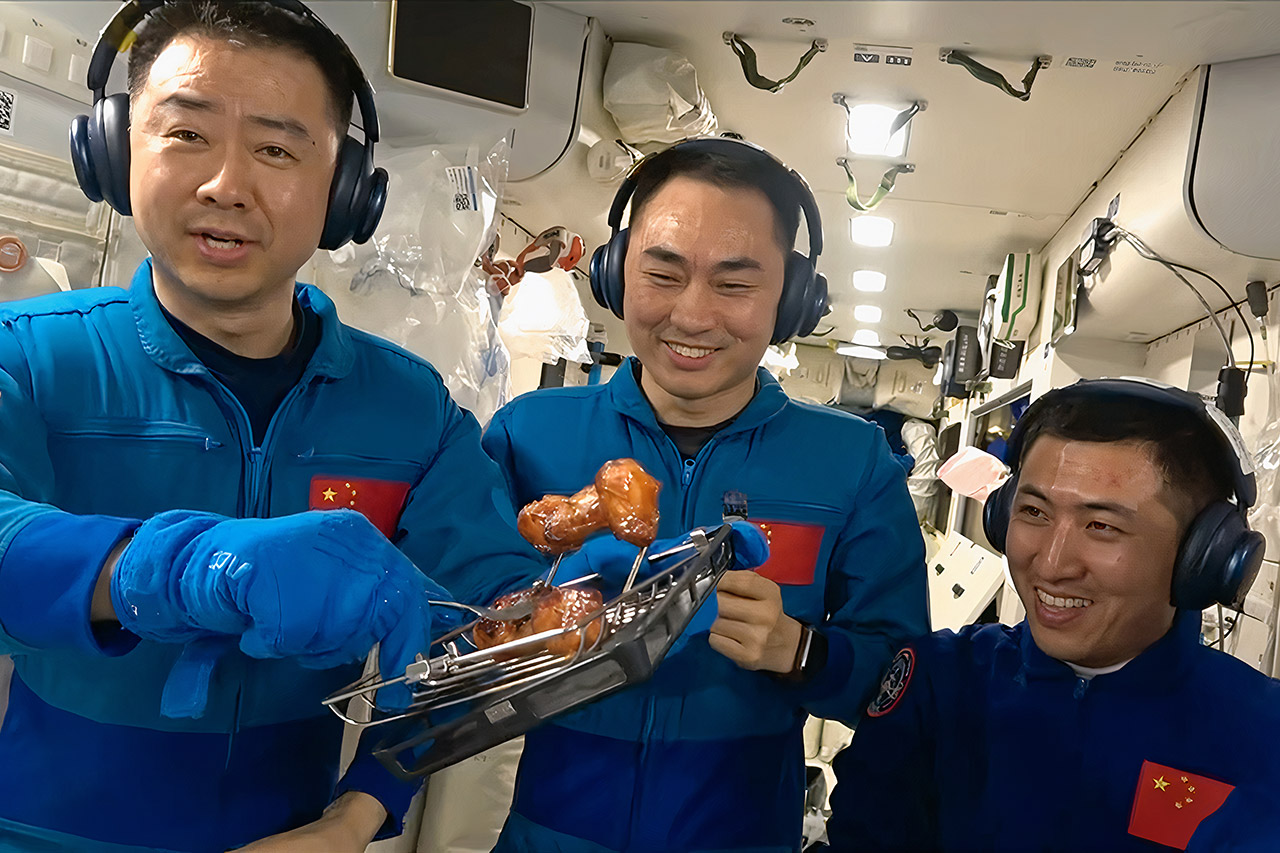
Six astronauts float inside a metal tube traveling 17,500 miles per hour around the planet, and the loudest sound heard is the click of a folding grill cage closing. On October 31, the Shenzhou-21 capsule delivered more than just three new crew members; it also delivered a 30-pound hot air oven, which is currently fastened to the wall of the Tiangong space station’s core module. Four days later, the station smelled like Sunday barbecue.
Wu Fei, the flight engineer who used to test fighter jets over the Gobi, puts on quilted mitts thick enough to handle rocket exhaust. He threads six marinated chicken wings onto a wire rack, flips the top grid down like a fisherman closing a trout basket, and slides the whole thing into a slot no bigger than a microwave. A soft chime starts counting down to 28 minutes – nothing dramatic, just a gentle countdown to the moment when dinner’s ready. But of course, no gravity means no drips, no flare-ups, no smoke drifting to the ceiling – because, let’s be honest, there is no ceiling to worry about. The fans whir along at 3,000 rpm, blowing air at a nice and toasty 190 degrees in tight little loops until every wing is nice and golden brown, just like you’d see in one of those New Orleans take-out boxes.

- 2 AVIATION LEGENDS, 1 BUILD – Recreate the iconic Boeing 747 and NASA Space Shuttle Enterprise with the LEGO Icons Shuttle Carrier Aircraft...
- DEPLOY LANDING GEAR – Turn the dial to extend the massive 18-wheel landing system on your airplane model, just like real flight operations
- AUTHENTIC FEATURES & DETAILS – Remove the tail cone, engines, and landing gear from the NASA shuttle and stow them in the cargo bay during flight
Across the node, Commander Chen Dong of the Shenzhou-20 crew is hanging out, waiting for the incoming crew to arrive. He’s got a second cage already loaded up with black-pepper steak cubes waiting for them – just one of the little ways he’s making the handover a bit more special. The two crews – the old guard saying goodbye, and the new kids on the block saying hello – have five days to overlap, and they’ve decided to spend one of them cooking up a storm in the earth ovens (which are actually working just fine, because hot air rises and cool air sinks… you get the idea).
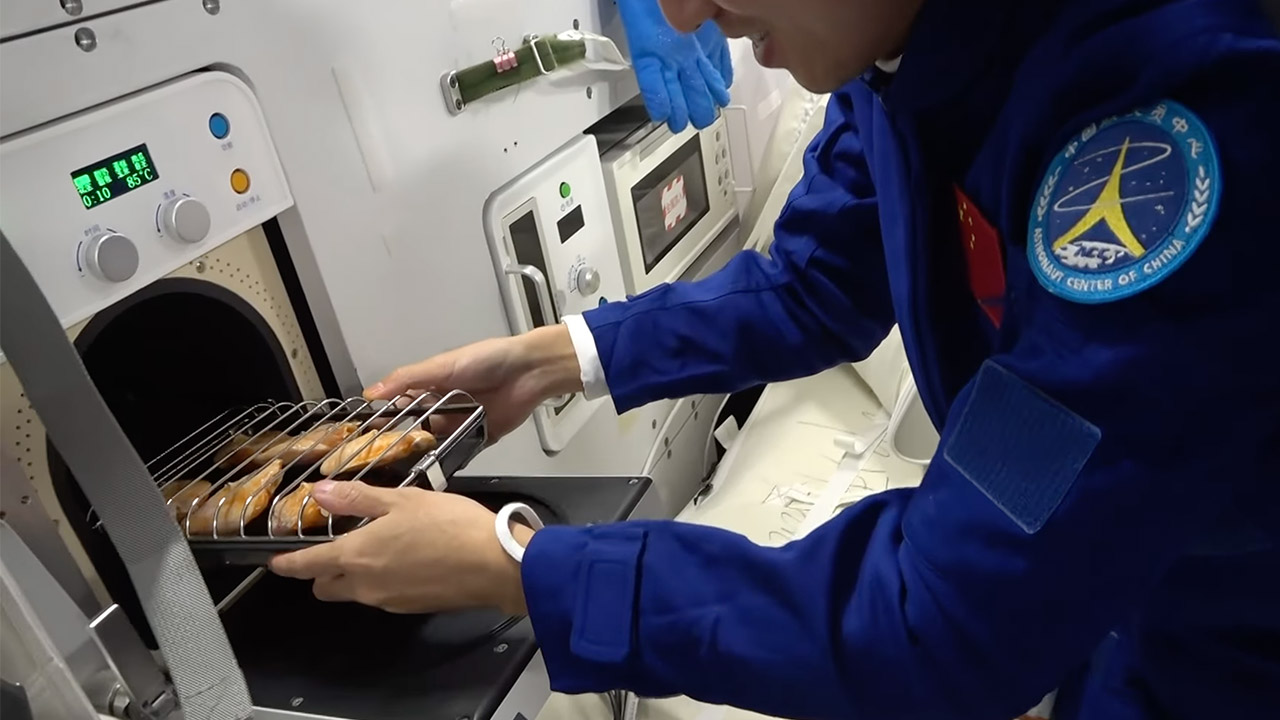
Dinner actually is kind of cooking itself, albeit in a pretty high-tech way. Because in space, air just kind of… sits there. Not exactly a fan of activity, is it? NASA’s solution involved a big ol’ stainless steel sphere, but the Chinese response is a bit more low-key – all you need is two squirrel cage blowers and a ceramic heating element to get convection going. And if you’re worried about the air getting all greasy from cooking up a storm, don’t be – a triple-layer charcoal-and-HEPA filter is on the job, catching every last grease molecule before it can mess with the air scrubbers keeping everyone alive.
When you open the door, nothing does that “floats all over the place” thing, because the cage keeps the meat firmly in place. The juices stay inside the meat, the Maillard reaction takes place (y’know, “tastes like barbecue” in fancy science terms) at 190°C… and you know what? Not a single drop of food ever hits the floor. Until last week, Tiangong meals came in nice silver foil blocks. Tear, squeeze and try to herd the floating globs of food with a straw. Nutritional value? Top-notch. But the oven has just changed the game, by the way – it can take in raw wings and steak, all wrapped up in vacuum packs (which are incidentally half the weight of pre-cooked pouches) and turn them into restaurant-quality meals in just 30 minutes. Suddenly, one flight can feed six people for ten whole days, without ever running out of new dishes to try (corn on the cob, sponge cake, whole fish… you get the idea).
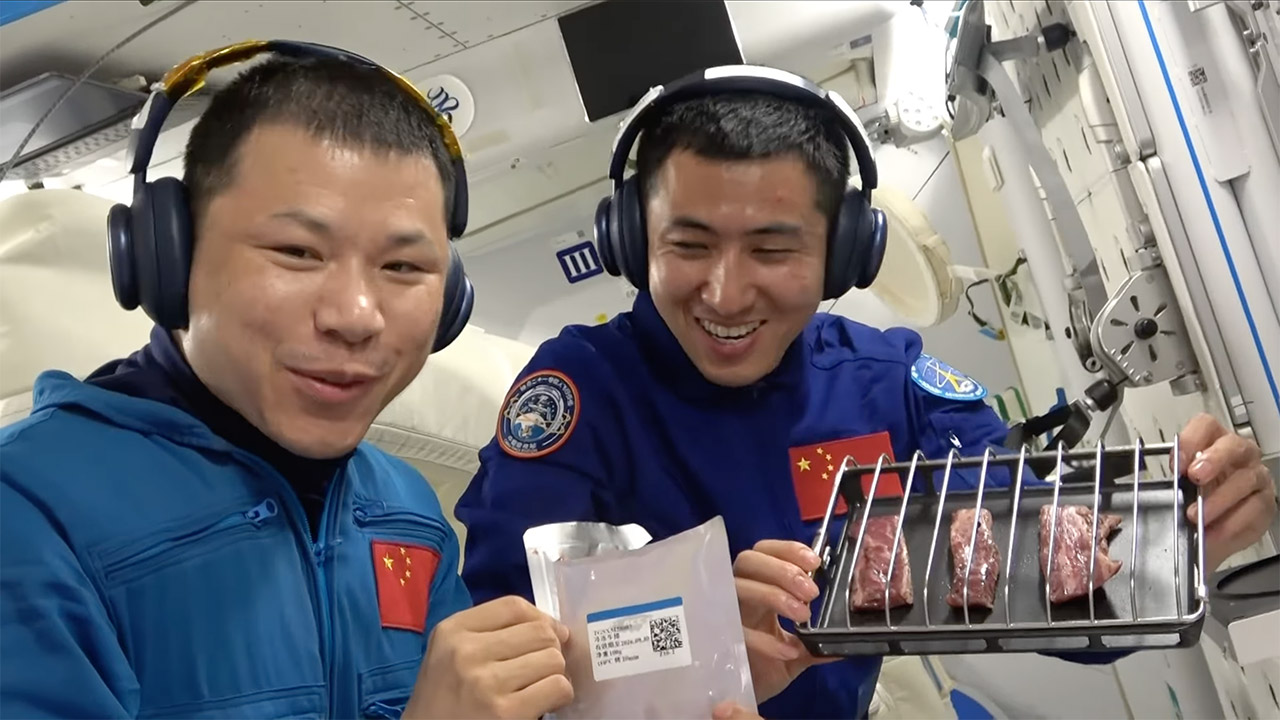
Video from the Astronaut Center of China shows the timer going off, and Wu Fei opening the cage to reveal a bunch of perfectly cooked wings. Steam starts rising, and then just… disappears into the filters. Chen Dong rips one of the wings in half over the intercom, and the skin cracks satisfyingly. No hot sauce yet – let’s be fair, logistics says that’s still on the next cargo run – but salt, pepper and the pure joy of a crunchy bite all seem to be traveling just fine.
The engineers are testing the oven for 500 cycles – that’s enough for four whole crews. And check out the buttons on the menu – “sweet potato”, “egg tart”… and two blank buttons with question marks next to them. Someone back on the ground is clearly planning breakfast for real.
[Source]