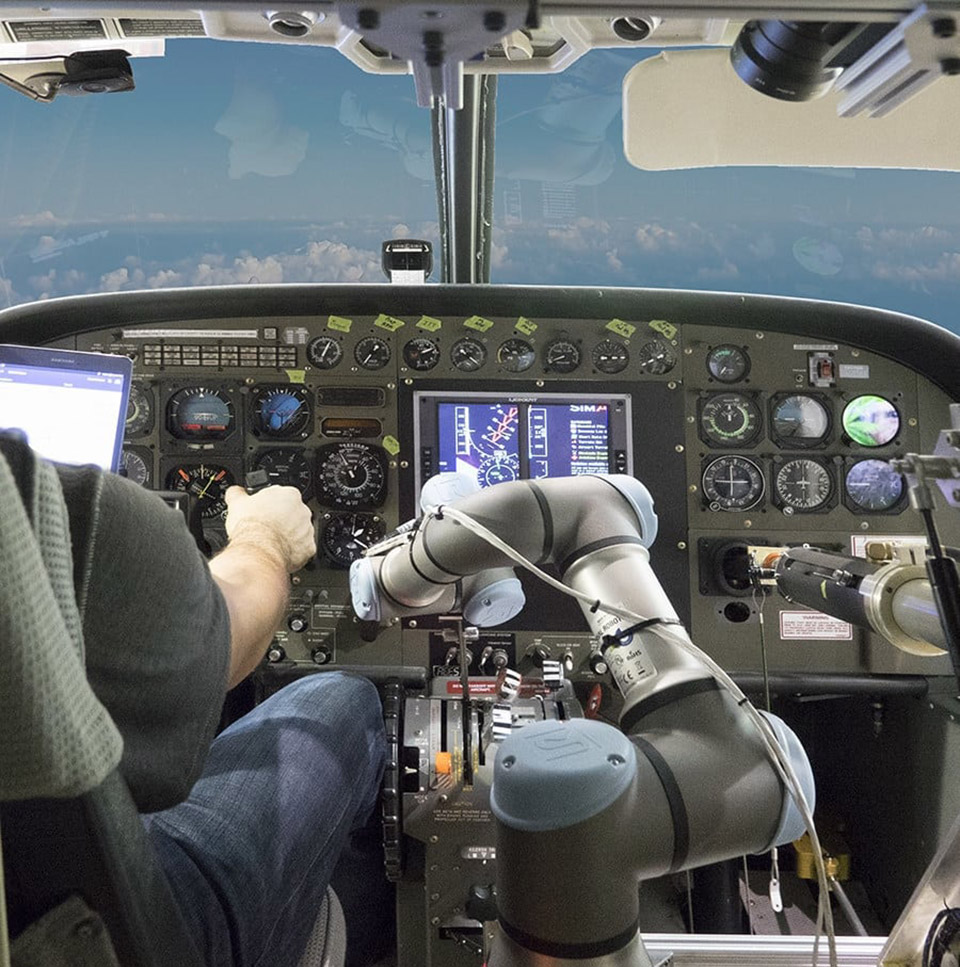

DARPA’s Aircrew Labor In-Cockpit Automation System (ALIAS) robot consists of a single arm capable of operating a plane’s controls, and not only doubles as an onboard trainer, but as a co-pilot as well. It’s currently designed as a drop-in avionics and mechanics package that can be quickly deployed to a wide variety of fixed / rotor aircraft, whether it be a Cessna or B-52.
Once installed, the robot is capable of analyzing the aircraft and adapting itself to the job of second-pilot. It also incorporates an advanced tablet-based user interface, speech recognition and machine learning. Future models will drop the robotic arm and provide support directly to the pilot by tracking the aircraft’s physical, procedural, and mission state.

- Due to platform compatibility issue, the DJI Fly app has been removed from Google Play. DJI Neo must be activated in the DJI Fly App, to ensure a...
- Lightweight and Regulation Friendly - At just 135g, this drone with camera for adults 4K may be even lighter than your phone and does not require FAA...
- Palm Takeoff & Landing, Go Controller-Free [1] - Neo takes off from your hand with just a push of a button. The safe and easy operation of this drone...
Having successfully demonstrated on a variety of aircraft, ALIAS has proven its versatile automated flight capabilities. As we move towards fully automated flight from take-off to landing, we can reliably say that we have developed an automation system that enables significant reduction of crew workload,” said John Wissler, Aurora’s Vice President of Research and Development.