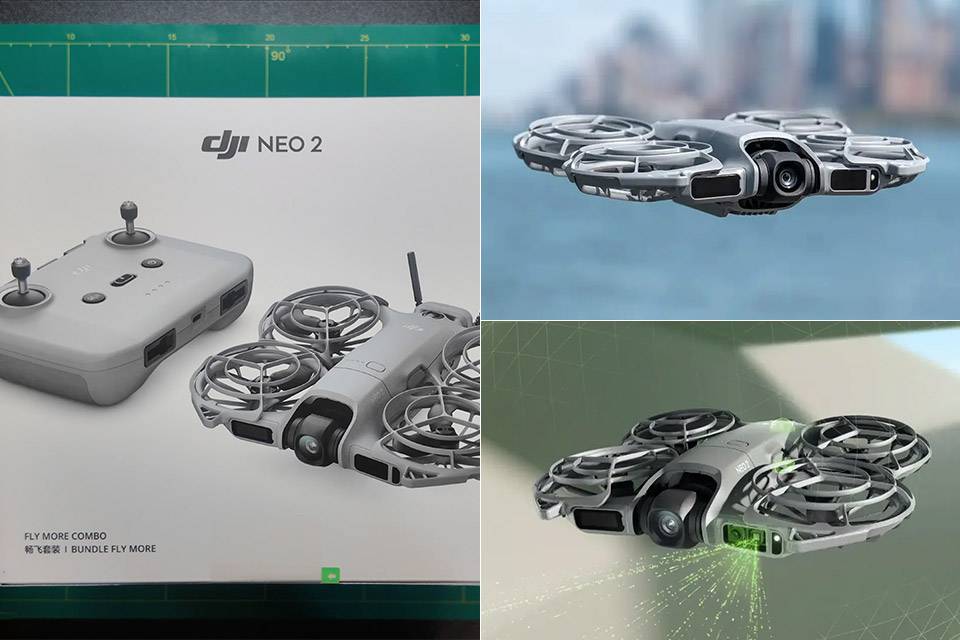
DJI launched the Neo 2 drone in China today, a subtle update for anyone who uses a drone to capture quick footage on the fly. Last year’s original Neo cost $199, and new one fills in the holes without increasing the price or size too significantly. China has first dibs, Europe on November 13, and the United States is in limbo owing to regulatory uncertainty.
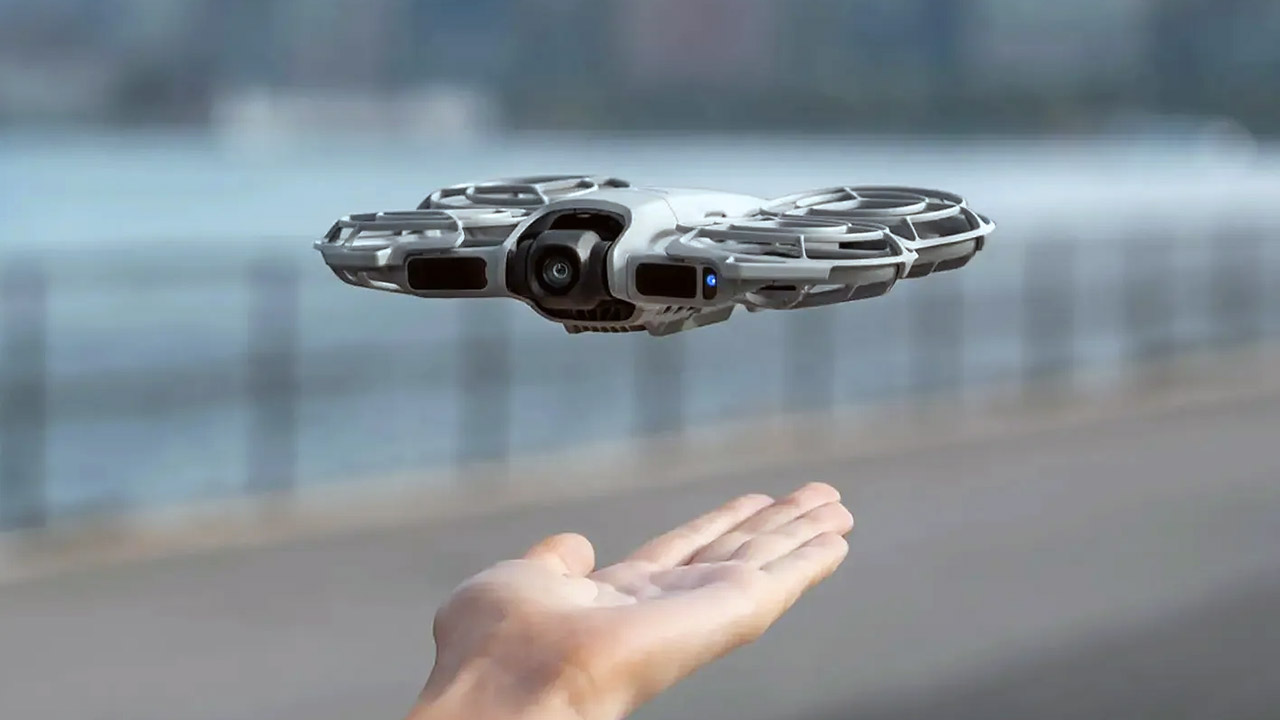
The Neo 2 weighs 16 grams more than its predecessor, owing primarily to a larger battery and improved sensors, but it retains its pocketable design. Four propellers lurk behind full guards, ready to withstand bumps if avoidance fails, but the big alteration occurs up front. LIDAR scans ahead like a delicate laser net, using infrared to detect ground dangers. Forward chases and side glides can now avoid obstacles from half a meter to 15 meters at speeds of up to 17 mph. Slower paths around the sides, top, and bottom cover the same distance but peak at 6.7 mph. An infrared beam analyzes gaps ranging from 0.3 to 8 meters in a 60-degree sweep from front to rear. Crashes fall off the radar here; the original Neo relied significantly on its robust design, and accounts of surprising drifts in breezes drew attention.

- Due to platform compatibility issue, the DJI Fly app has been removed from Google Play. DJI Neo must be activated in the DJI Fly App, to ensure a...
- Lightweight and Regulation Friendly - At just 135g, this drone with camera for adults 4K may be even lighter than your phone and does not require FAA...
- Palm Takeoff & Landing, Go Controller-Free [1] - Neo takes off from your hand with just a push of a button. The safe and easy operation of this drone...
Speeds match the activity, with Follow mode at 12 meters per second (27 mph), which is 9 mph quicker than the original even after the firmware upgrade last fall. Sports mode is the same as manual flight. What about the winds that pushed the first Neo off course? No match for the drone, which can hover at speeds of up to 24 mph and has a resistance level of 5. A small LED panel on the body displays battery levels, link status, and mode hints, replacing the previous blink-and-guess game. Palm launches and voice commands are still available, but hands now control additional gestures. While the drone hovers nearby, wave them to nudge it into position or draw it closer in midair. AI improves tracking for rides, close-ups, and circles, among other modes for selfies, zooms and instant clips that stitch footage on the fly.
The 12-megapixel half-inch sensor is the same as the original, but it works with a dual-axis gimbal to keep footage stable even in twists and gusts. The single-axis on the earlier model smoothed out the fundamentals but buckled in rougher parts; this one doubles down for pro-level video without the weight. The field of view is widened to catch more of the scene, and 4K rolls at 60 frames per second (up from 30). Manual pilots can achieve 100-frame slow motion in 4K and 2.7K on phone displays (think TikTok verticals or Instagram reels). Low-light images are also clearer, thanks to improved processing that extracts details from shadows. Storage has been increased to 49GB, which is adequate for hours of raw film, but there is no card slot, so plan ahead of time. The battery can hold up to 1,606mAh for 19 minutes in the air (up from 18, but not by much).
Modular components expand the possibilities, including a snap-on OcuSync 4.0 module at the back that extends range to 10km with goggles or remotes such as the RC-N3, and provides live video at 1080p and 60 or 100 frames per second, depending on the gear. Remove it for short flights, and WiFi will cover 500m via a phone connection. Compatibility is with DJI’s motion sticks and headsets, so older kits will work just fine. The weight with the add-on is 160g, which is still within the critical limitations. Gesture modes build on palm tricks, allowing for mid-flight adjustments without the use of a controller for those who prefer simplicity.
China launches today at 1,499 yuan, about $211, Taiwan is close behind at $195 for the base kit. Europe is $229 to $259, bundles up to $599. Fly More packs with extras are $429 to $449. November 13 is the official European release, global waves follow mid-month but U.S. shelves are empty. FCC rules loom large—a December 23 cutoff could block new gear unless DJI passes a security check and ten months in, no agency has bitten.
[Source]