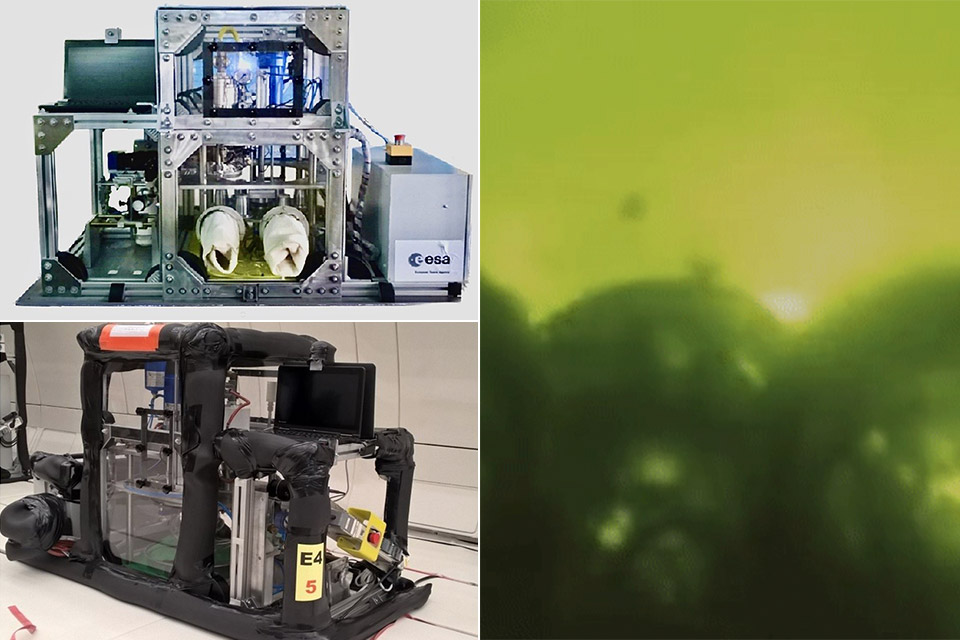
European Space Agency (ESA) researchers wanted to see what happens when you try frying potatoes in microgravity using an experimental carousel-type machine that was designed to be safe while operating in weightlessness. A total of two experiments were conducted on parabolic flight campaigns, where an aircraft flies in repeated arcs to recreate brief moments of zero gravity.
They then filmed the frying process using a high-speed, high-resolution camera to observe the bubble dynamics including growth rate, size and distribution, as well as the escape velocity from the potato. The bubbles’ speed and direction of travel in the oil were also measured as well as temperatures inside the potato. What they discovered was that after the potatoes were added to the oil in low gravity conditions, vapor bubbles easily detached from its surface, similar to on Earth. The team hopes that future research will one day allow astronauts to have real foods rather than re-hydrated items.

- LEGO NASA Space Set - This adult LEGO set features the Space Shuttle Discovery and the Hubble Space Telescope from NASA’s 1990 STS-31 mission...
- Solar System Exploration - Unlock the mysteries of our solar system with this engaging 2,354-piece project, packed with authentic details and...
- Shuttle Features Galore - The space shuttle model has an opening payload bay, retractable landing gear, opening cockpit, moving elevons, space arm...

Apart from nutrition and comfort, studying the process of frying in space could also lead to advancements in various fields, from traditional boiling to producing hydrogen from solar energy in microgravity. Ask any chef and they will confirm that the physics and chemistry behind food is a complex and fascinating subject that bubbles over to other science disciplines,” said Thodoris Karapantsios, Professor from the Aristotle University of Thessaloniki.