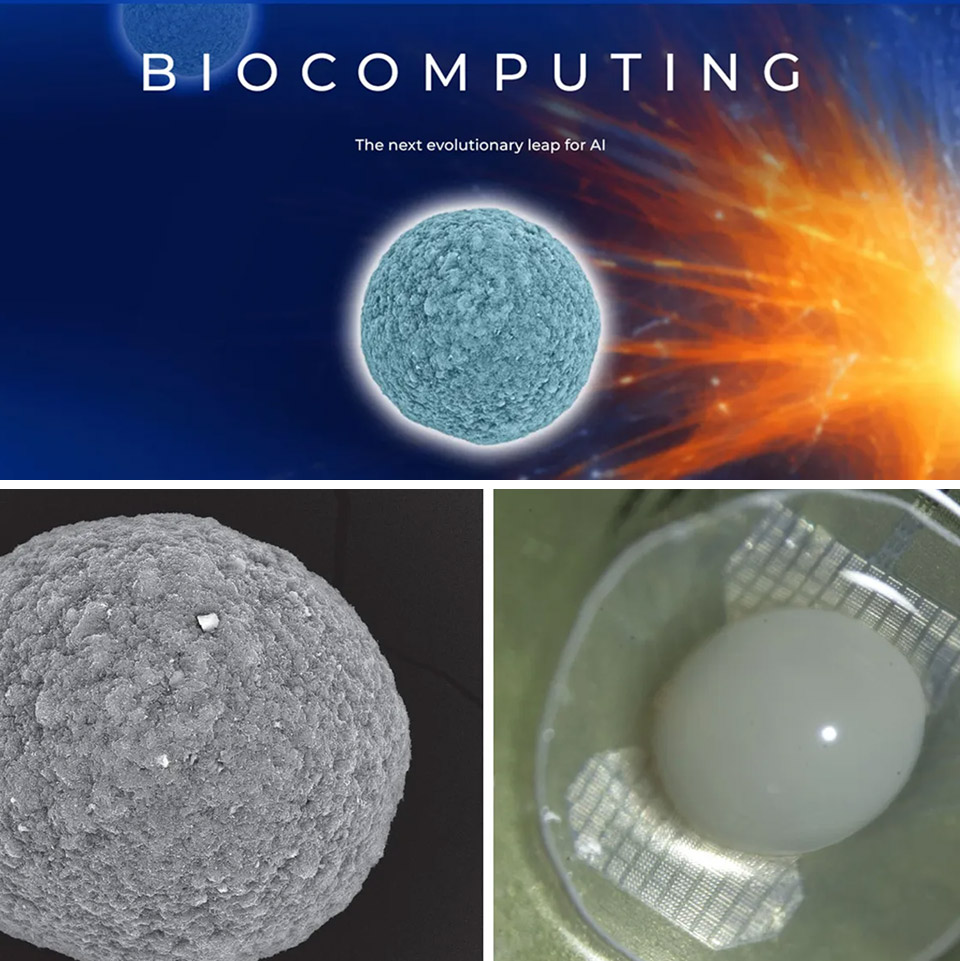
Photo credit: FinalSpark
A light shines through the windows of a small facility in Vevey, Switzerland where a team of scientists is bringing to life something that blurs the line between biology and technology. FinalSpark’s lab is growing the seeds of a new kind of computer made from human skin and attached to electrodes, like students waiting for their first lesson. Dr. Fred Jordan, one of the lab’s co-founders, explains why this matters.
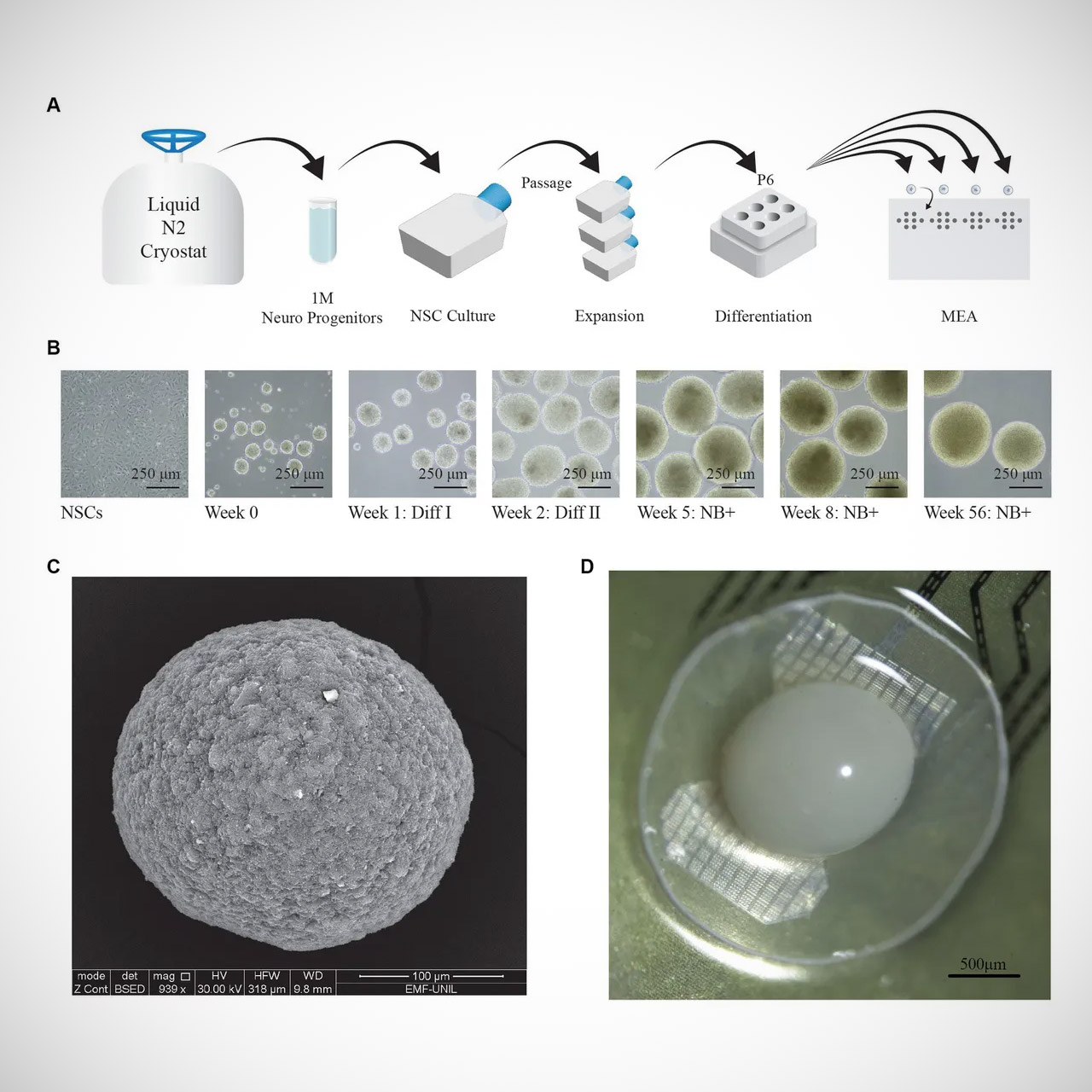
In these dishes, technicians start with stem cells extracted from anonymous donors’ skin and obtained from a reputable facility in Japan. Jordan stresses the importance of quality, saying while many volunteers provide samples, only the best are chosen. Over several weeks the stem cells shift and multiply and form dense clusters of neurons surrounded by supporting cells. Months later the clusters grow into organoids no bigger than a few millimeters, pale and spherical against the dish’s smooth floor. These mini-brains lack the folds of a whole human organ but have the same basic components: neurons that fire, connect and respond.

- Next-Gen Performance in a Compact Powerhouse: Meet the KAMRUI Pinova P1 Mini PC—powered by the AMD Ryzen 4300U processor (4 cores / 4 threads, base...
- Memory & Storage That Grows With You: Equipped with 16GB DDR4 RAM (single-channel) and a fast 256GB M.2 SSD. It supports dual-channel DDR4-3200 when...
- Triple 4K Display Support – Not Just Dual: Why settle for dual monitors when you can go triple 4K? The Pinova P1 Mini Desktop PC delivers what most...
Wiring them together creates the first sparks of functionality. Electrodes bridge the organic and digital worlds by slipping into nutrient pools where the organoids float. A keyboard press sends an electrical nudge through the setup and if everything goes well a graph appears on the next screen, like the jagged peaks of a dream EEG. Enter a simple prompt and the result should evolve over time, like finding shapes in photographs.
Traditional computers get their power from a wall outlet and can run indefinitely, these living arrangements require constant monitoring. Blood vessels, the complex paths of food in a living brain, are beyond our knowledge. Without them the organoids can only live for about four months – a quiet victory after years of work. Technicians have recorded over a thousand ends, each with a dramatic spike of activity in the final seconds, like the rhythms seen in human dying moments.
[Source]