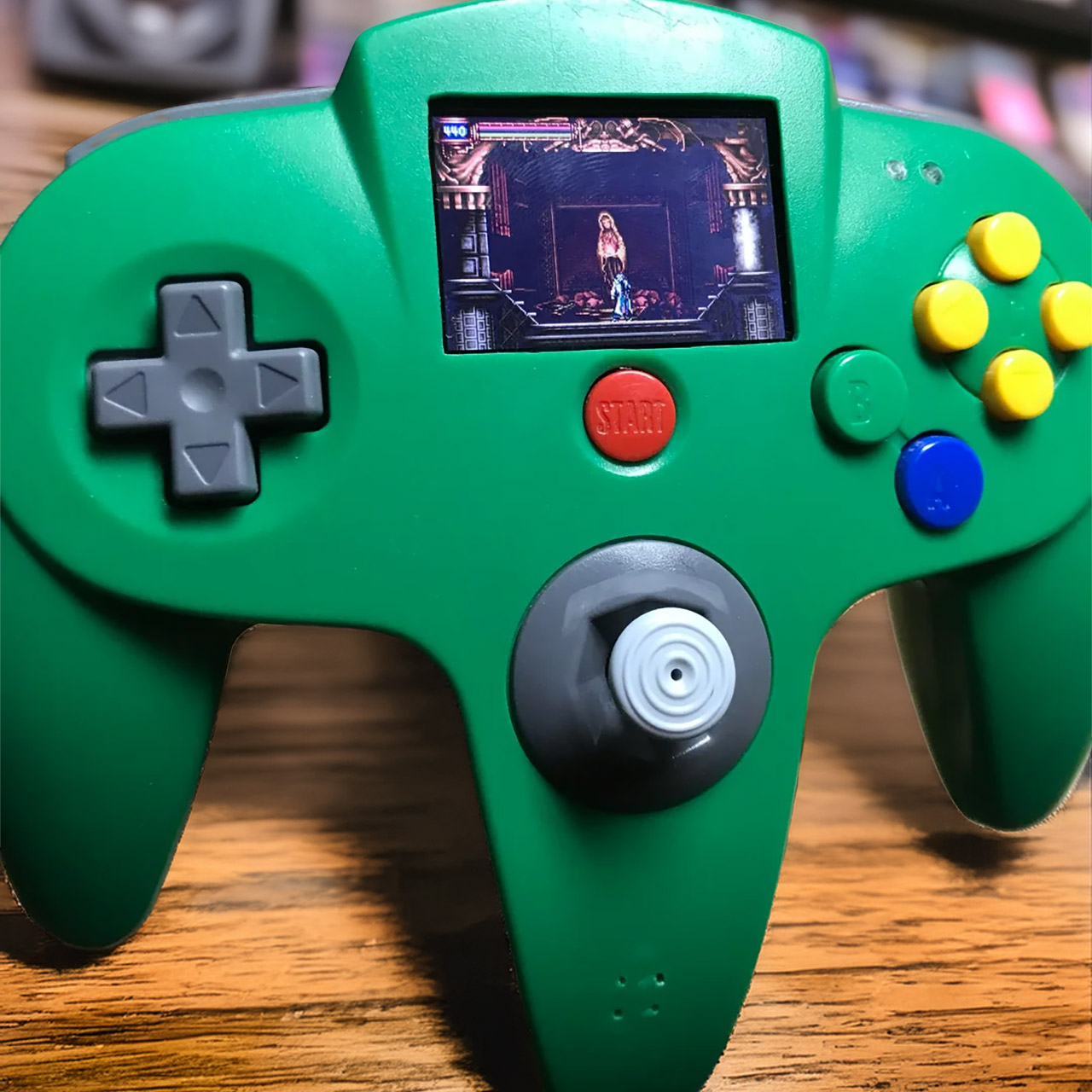
Photo credit: MaSaKee
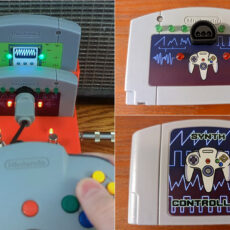
Modder MaSaKee has managed to cram the guts of a Game Boy Micro into an N64 controller. This is a fully functional device that works with original Game Boy Advance cartridges and has a control system that makes the Micro’s tiny buttons obsolete.
His design starts with the Game Boy Micro’s 2-inch screen, which is nestled in the heart of the N64 controller where the Nintendo logo used to be. This is intentional; it pays homage to the original design while allowing for the Micro’s sharp, backlit screen. MaSaKee addresses one of the Micro’s biggest weaknesses, the ergonomics, by incorporating it into the larger body of the N64 controller.
Sale

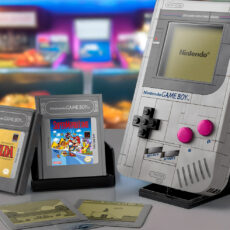
LEGO Super Mario Game Boy - Retro Building Sets for Adults, Ages 18+ - Gifts for Birthdays - Collectible...
- BUILD AN ICON – Build the ultimate retro gaming display with the LEGO Game Boy (72046) model kit for adults ages 18 and up
- RELIVE THE EXCITEMENT – Remember powering up your Game Boy for the first time? Experience the thrill again with this authentic of the handheld...
- DISCOVER AUTHENTIC DETAILS – The instantly-recognizable Game Boy features classic button layout, contrast dial, and interchangeable Game Pak and...
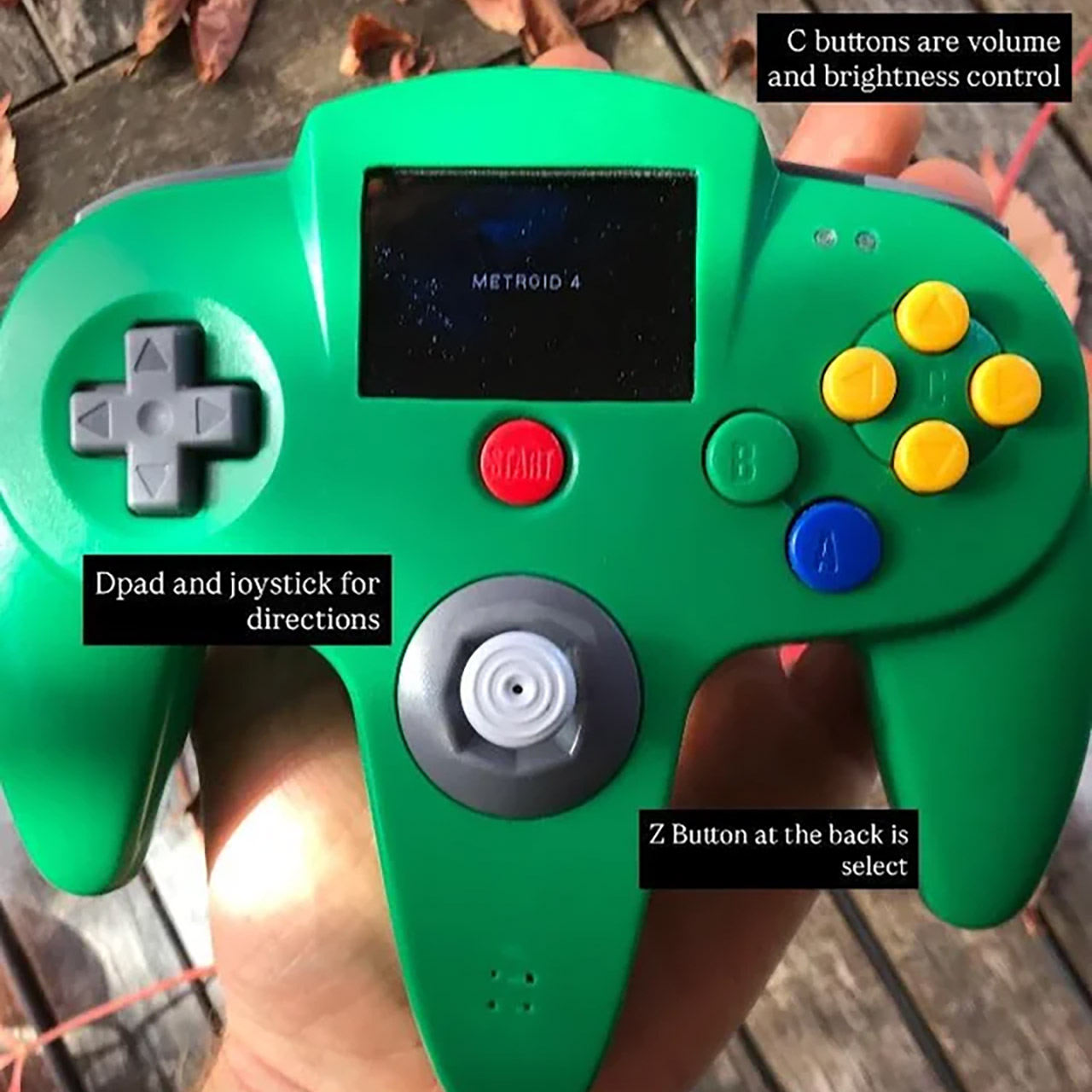
In GBA games, movement is controlled by the D-pad and analog stick, you have many options. A and B buttons are the same as their GBA counterparts, L and R are shoulder buttons, Start is Start, and Z is Select. Most interestingly, the four yellow C buttons which were never used in N64 games now control screen brightness and system volume.
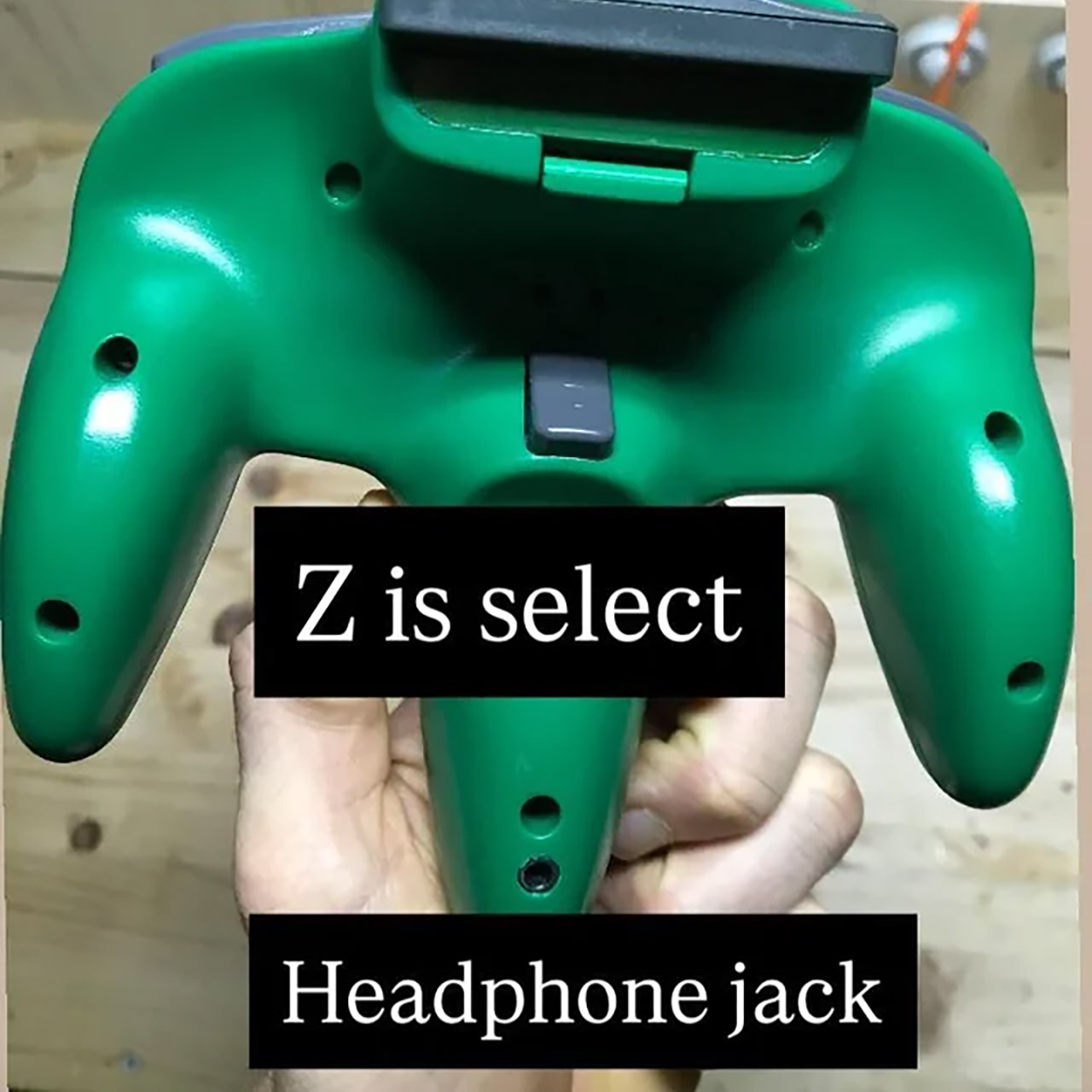
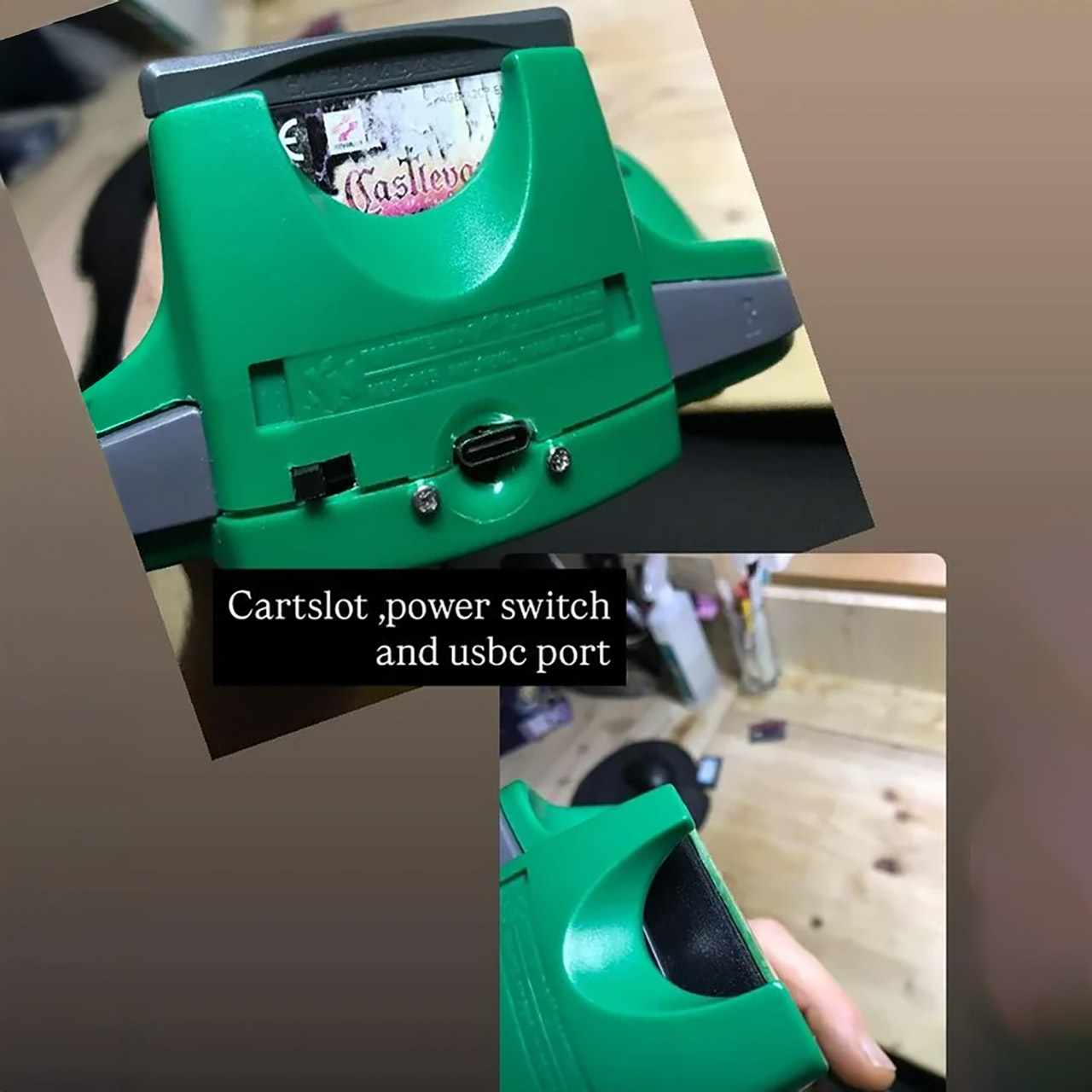
This is powered by a rechargeable battery which charges via the USB-C connector in the controller’s cable slot. This means no more battery replacements. The N64’s memory card port has been converted into a cartridge slot for GBA games. For music, there is a headphone jack on the back and speaker holes at the bottom of the joystick prong so you can listen quietly or in mono with the Micro’s hardware.
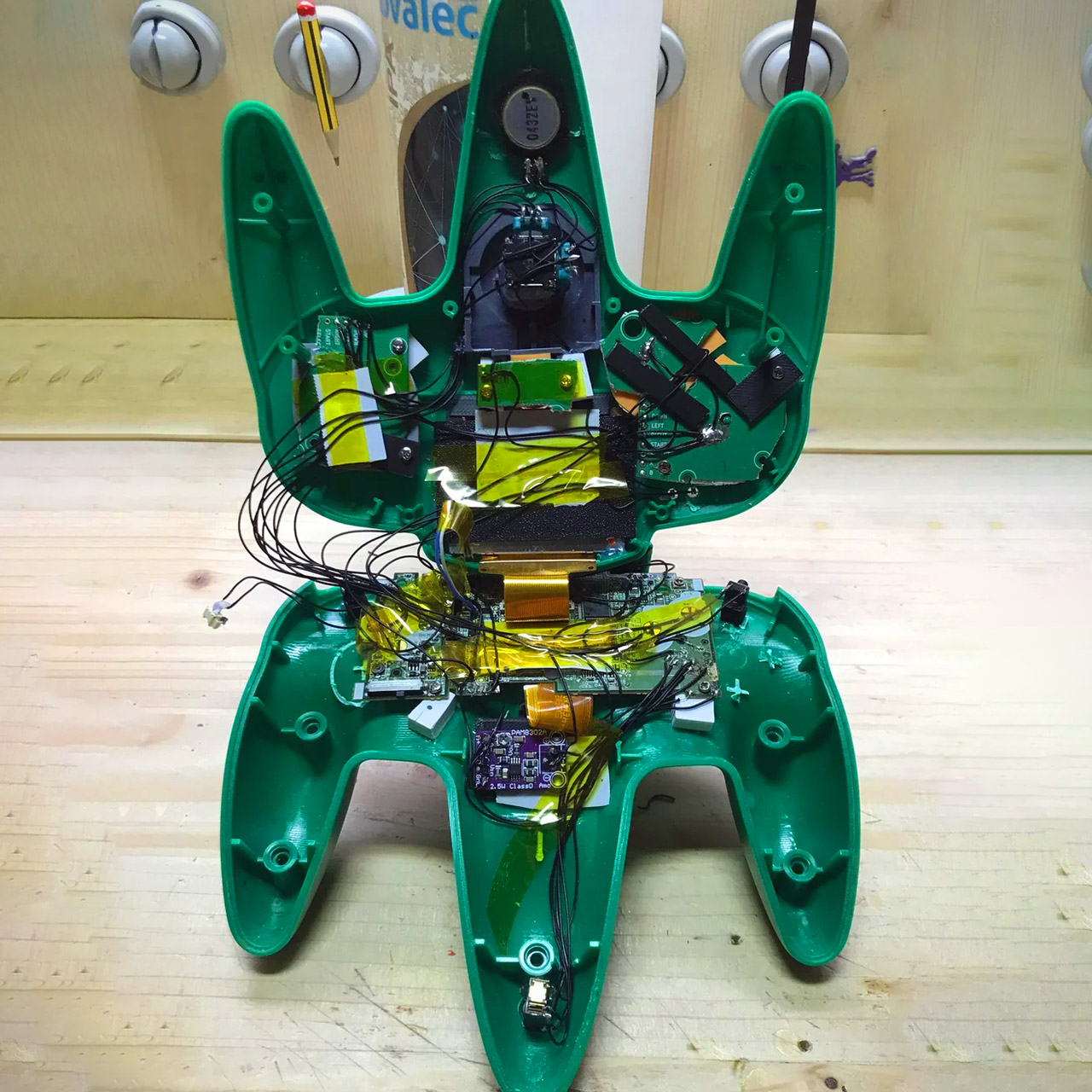
MaSaKee’s skills and patience are on full display inside, because instead of sacrificing a second Micro, he used DMG (original Game Boy) control PCBs that were modified to fit the N64 platform. For the analog stick, MaSaKee cut lines into the potentiometer to connect it directly to the board, without using resistors.