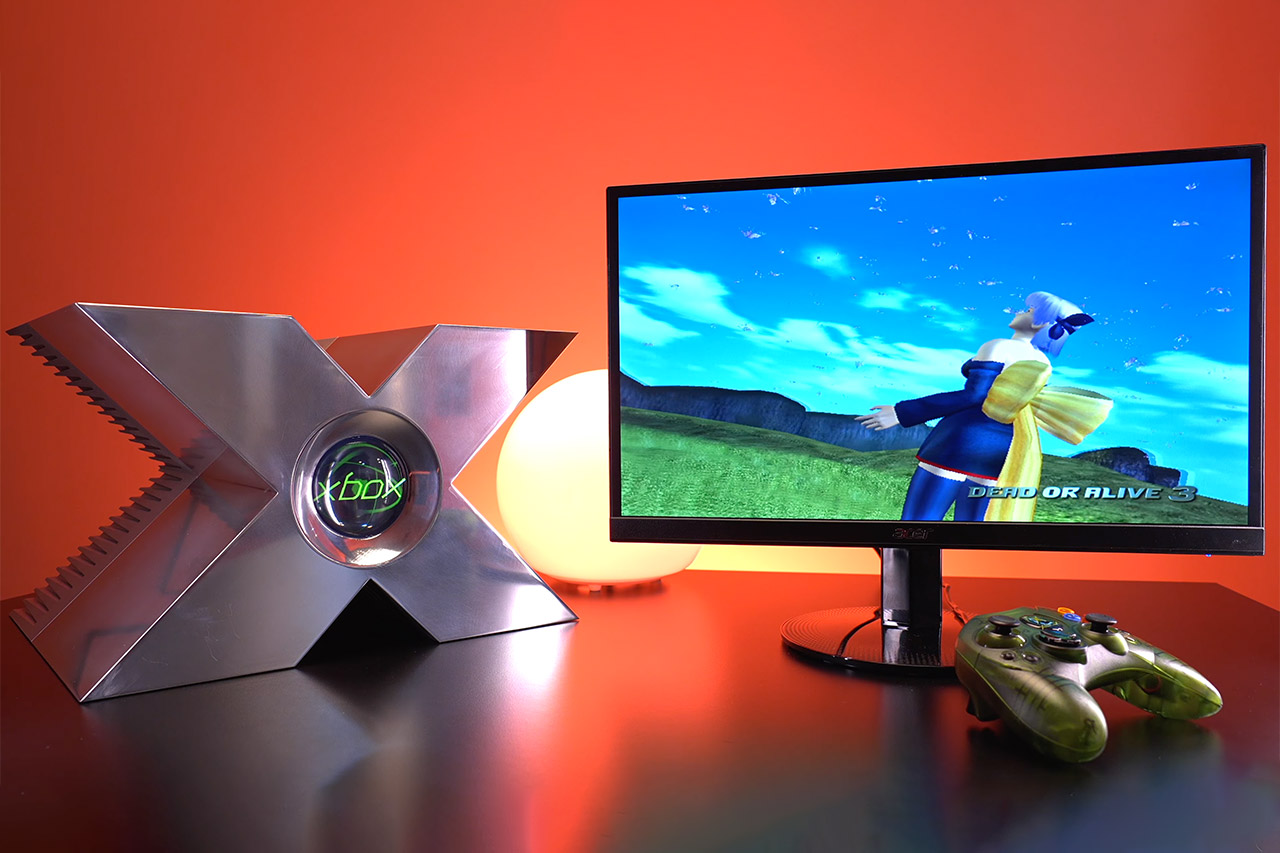
Tito Perez of Macho Nacho Productions spent months staring at a grainy photograph of Microsoft’s 2000 Xbox prototype. A 40-pound X carved from solid aluminum, polished so it mirrored the room like a dark mirror, and topped with a glowing green diamond. The original is kept away at Microsoft headquarters, a relic that no one could touch. So he created his own, a version that could actually play games.
Microsoft spent $18,000 per unit back then—about $36,000 today—just to machine the shell. Perez knew he couldn’t match that price, but he could match the look. He flew to New York, stood inches from a surviving prototype on display, and snapped hundreds of photos. Every angle, every curve, every screw hole. Modder Wesk took those images and built a complete 3D model. The file landed at PCBWay’s factory. Six thousand dollars and several weeks later, a single block of aluminum emerged as two perfect halves of an X. Polishing came next. Perez spent days with progressively finer grits, buffing the front face by hand until fingerprints vanished on contact. The rear fins—those sharp cooling ridges—kept their factory edges. When light hits the finished shell, the reflection warps across the curves like liquid metal.

- Experience brighter worlds, vivid imagery, and sharper details with 4K gaming and up to 120 FPS that makes everything feel so real it’s unreal.
- Quick Resume: Seamlessly switch between your favorite games and pick up right where you left off.
- Backward compatibility: Play four generations of games, including games that are optimized for Xbox Series X|S to look and play better than ever.
Original Xbox motherboards measure roughly 12 by 8 inches. The X cavity offers less than half that width at the center. Perez slid the board in sideways, then designed 3D-printed rails to lock it in place. The DVD drive sits above, tilted at an angle. A modern SSD replaces the old hard drive, soldered directly to the board for speed and space.
Power posed the biggest puzzle. Stock Xbox supplies are brick-sized. Redherring32 built a replacement that runs on USB-C, small enough to fit in a palm, yet strong enough to feed the entire system. One cable now handles everything. Fans spin quietly behind the rear vents, pulling air through channels cut into the aluminum.
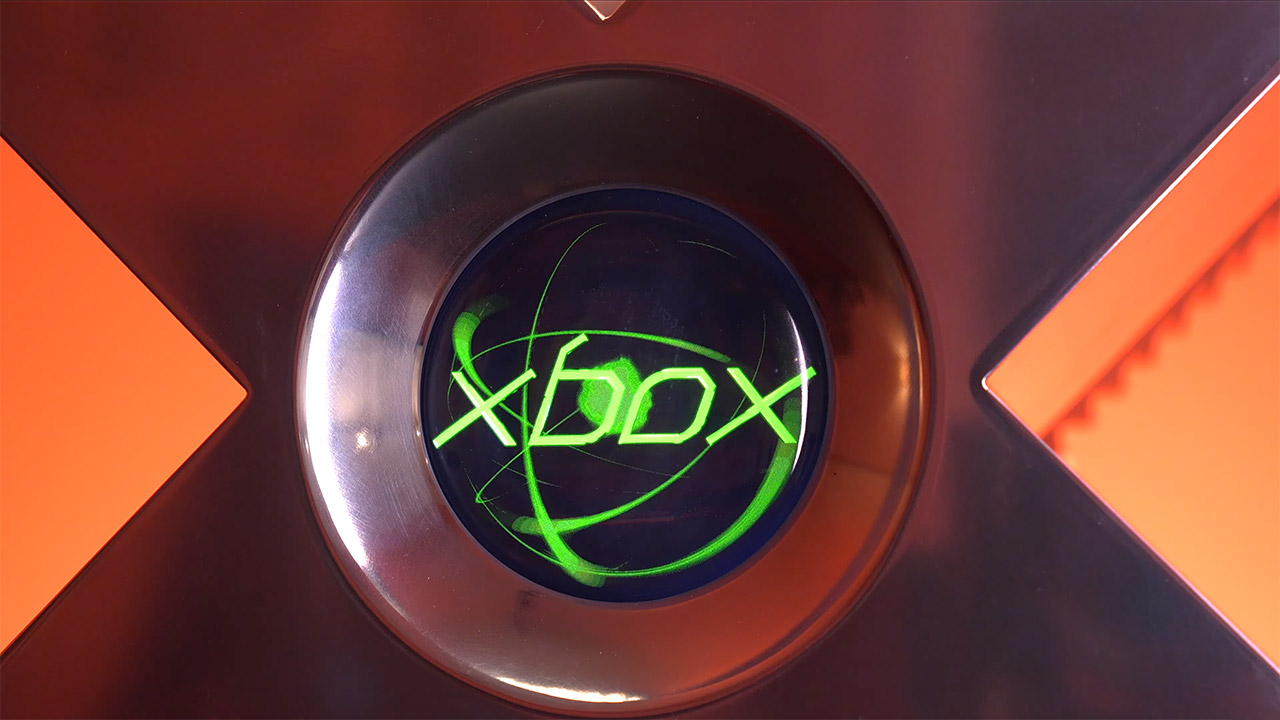
Microsoft’s jewel was static green plastic over a bulb. Perez wanted motion. StuckPixel programmed a Raspberry Pi Pico to drive a circular LCD. The screen sits flush behind tinted acrylic. At boot, atoms orbit the Xbox logo in smooth loops. Plug the console into a computer, hold a hidden button, and the Pico appears as a USB drive. Drop in a new animation file—Halo’s Guilty Spark, a pulsing DirectX logo—and the jewel changes in seconds.
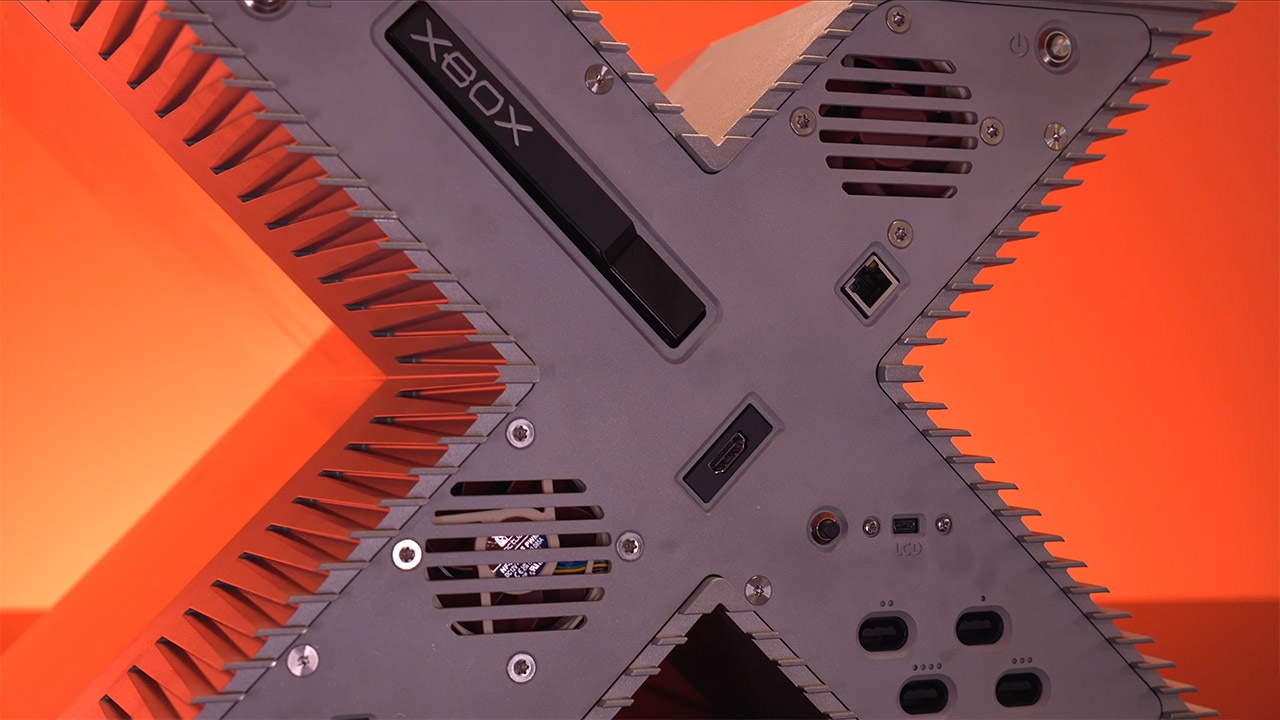
Assembly took place on a workbench that was almost totally covered in anti-static mats – the kind that you’ll always find in a parts box somewhere. Wires had been neatly threaded through custom-made harnesses, the ends clipped into handy quick-disconnect plugs. Four little 5cm bolts pulled the halves together tight. Perez then hunted for an HDMI cable, plugged it in, pressed the power button and waited for a few seconds. And then the color changed – the jewel ignited – the fans kicked in with a gentle whir and Halo: Combat Evolved suddenly loaded from the SSD in under ten seconds flat. The prototype – originally just a silent decoration – was now capable of running games at 720p without any of the lag people had been expecting.
At 39 pounds, it’s a bit of a beast to carry, but it fits neatly in a custom Pelican case that’s lined with laser-cut foam for extra protection. Perez is planning on hauling it round to the retro gaming shows – you can bet the crowds will be queuing up to hold the original-style controller. That controller has been wired up to the aluminium arms and the plan is for it to be used to play Jet Set Radio Future on hardware that must’ve cost an absolute fortune to prototype back in the day. Microsoft built a statement – a statement of what they were capable of back then. Perez built a machine – the same shape, same gleaming finish, but his version will actually boot up, load up and just play.