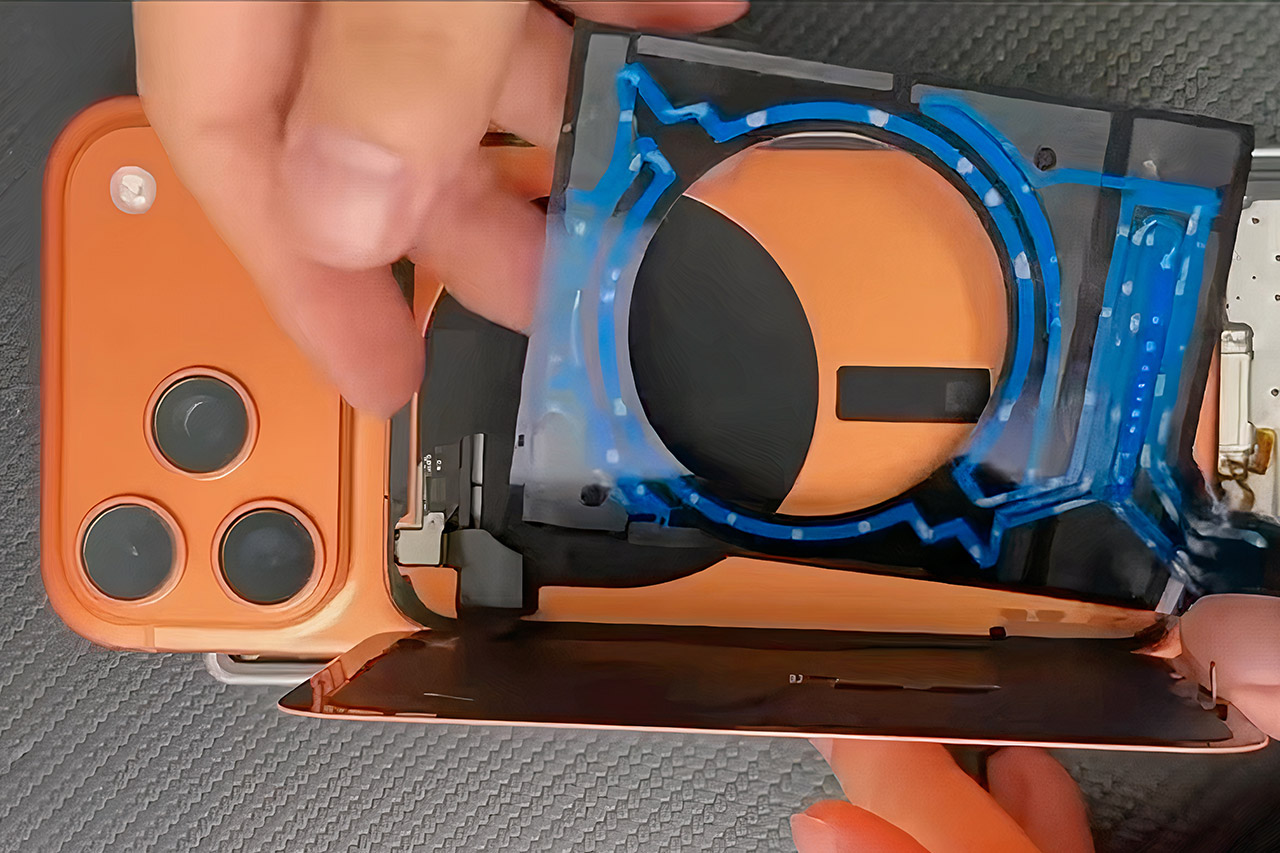
A YouTuber named Kingmi Mobile got his hands on a brand new iPhone 17 Pro Max and cracked it open to cram a liquid cooling setup from a RedMagic 11 Pro+ gaming phone inside. The result? An 8% boost in benchmark scores, which makes you wonder why hasn’t Apple done this.
Kingmi started simple: three phones on the table, ready for AnTuTu runs to set a baseline. The RedMagic 11 Pro+ scored 4,144,376 points right out of the box, with breakdowns of 1,260,914 for the CPU and 1,411,676 for the GPU. The iPhone 17 Pro Max scored 2,456,045 total – respectable but not embarrassing the Android beast in a head to head. He threw in an old iPhone XR for fun and scored around 640,000 after fiddling with the back panel. These numbers were the before picture, a snapshot of each device running stock cooling only.

- 【35W Cooling Beast】Magnetic Phone Cooler 5 Pro offers up to 35W power,30% more than the previous generation, drops the temperature to below zero...
- 【18 Addressable RGB LEDs】 The cooling fan, featuring 480 diamond-inspired facets, comes with 18 addressable RGB LED beads and introduces the...
- 【Smart Temperature Control】The mobile phone cooler uses dual NTC sensors to monitor internal temperature in real time. It auto-shuts off if temps...
Disassembly came next and that’s where the real work began. Kingmi heated up the RedMagic’s back cover with a tool to loosen the adhesive, then peeled away a sticker to reveal the cooling plate. A few screws later the whole liquid system slid free, disconnected from the wireless charging coil. What emerged looked like a high tech sandwich: thin tubes filled with fluid, a tiny pump driven by piezoelectric ceramics that flex under electric current to push the coolant around and contact points waiting for power. He noted that unscrewing two bottom pins cut the system’s power, isolating it completely for transplant. Detached the unit weighed almost nothing but would wick away heat like a pro.
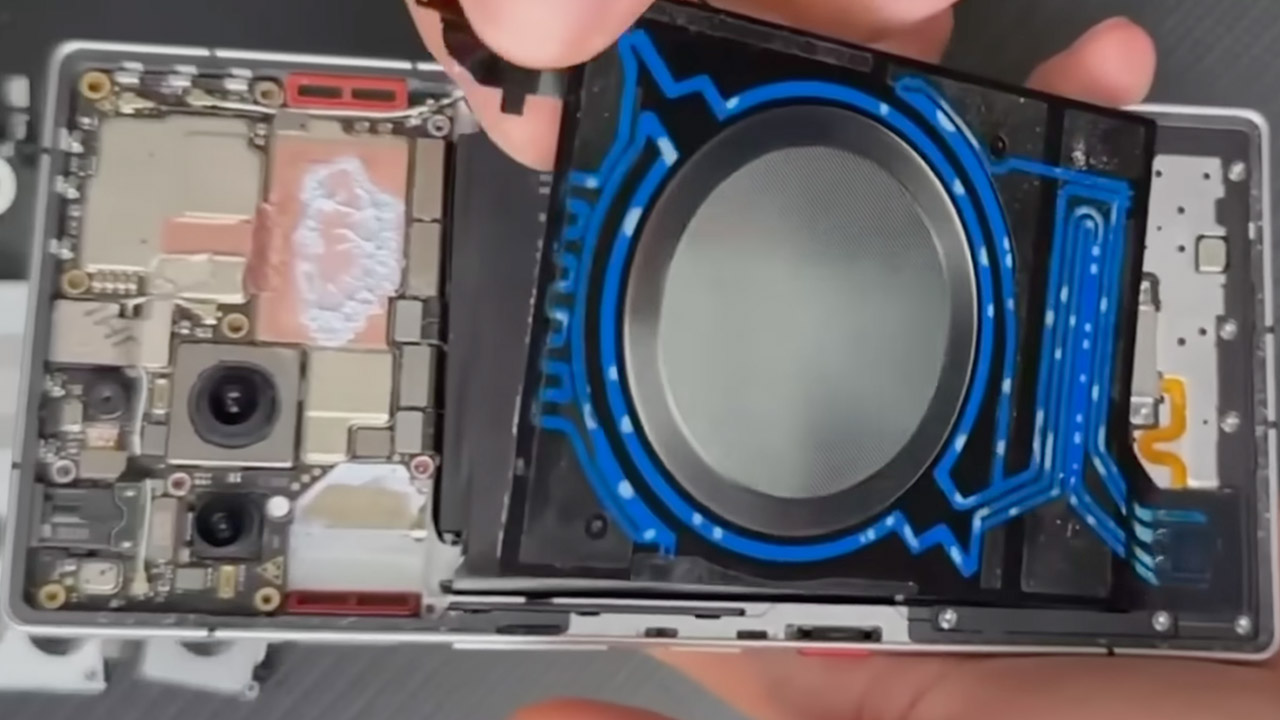
Powering the thing alone proved more difficult than imagined, as Kingmi connected up a spare OPPO battery first – 3.7v, enough to spin a test fan but not move the pump. Undeterred, he cut into the RedMagic’s charger wire, soldering red and black leads to positive and negative terminals for a 20v shock. That started the fan spinning, but the pump remained silent. A simple web search revealed the truth: the ceramics require more than 70 volts to vibrate and circulate the fluid. Most household chargers max out at far lower voltages, so he had to improvise a booster circuit from the donor phone’s guts. Once connected, the system blazed to life, with the pump buzzing gently as coolant passed through its channels. Success felt like a victory after two unsuccessful efforts.
With the cooling unit now up and running, attention turned to the iPhone. Kingmi carefully pried off the 17 Pro Max’s glass back – always a nerve-wracking moment with those notoriously finicky adhesives – and positioned the running RedMagic module right alongside the midframe where the A19 Pro chip generates most of the heat. He pressed it firmly there, making sure there was metal-to-metal contact for the best possible heat transfer, then resealing the cover with the phone’s own screws. No fancy brackets or epoxy needed here – just some careful alignment and the phone’s own screws to hold everything together. The setup does add a bit of bulk, but it fits snugly enough to look almost like a prototype that Apple’s skunkworks came up with.
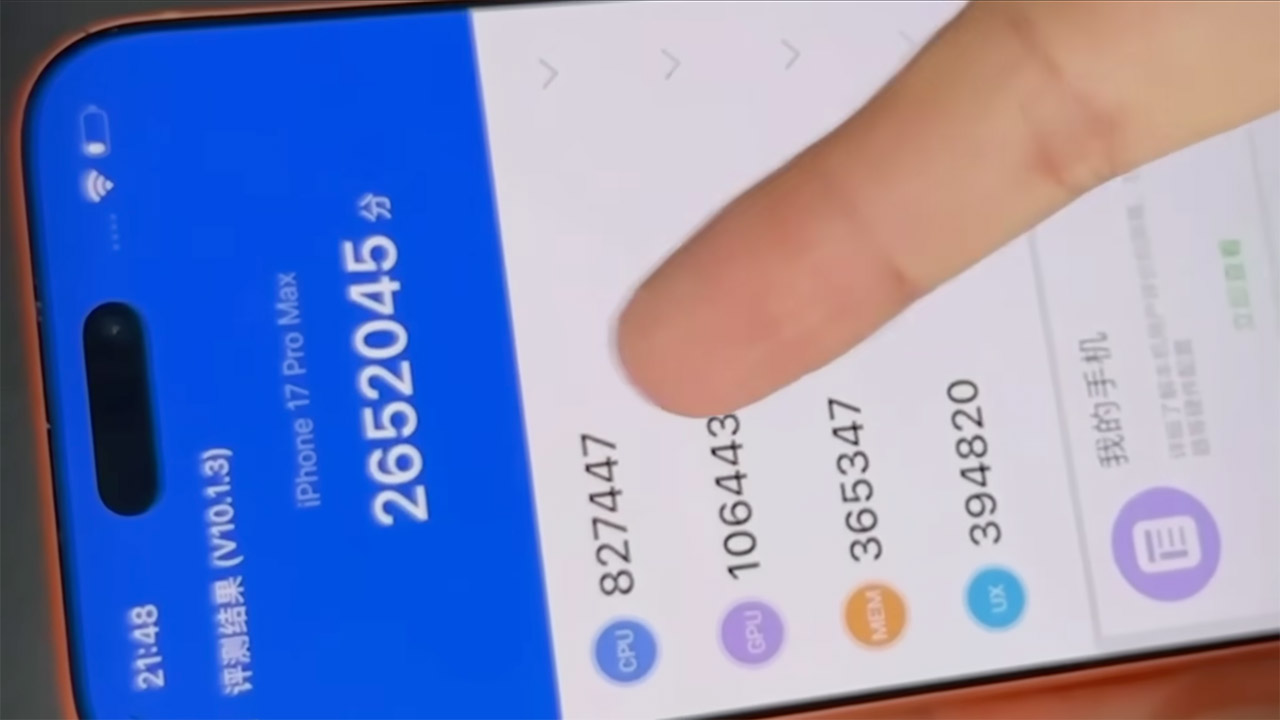
Next up were the benchmarks, which gave us the numbers. And the numbers don’t lie : the modified iPhone zoomed up to 2,652,045 points – a whopping 196,000 point jump that breaks down into 827,447 in CPU, 1,064,431 in GPU, 365,347 in memory and a 394,820 in user experience. That 8% gain really shines in graphics and processing, where heat usually starts to build up and forces the phone to throttle back clock speeds after a minute or two. Kingmi paused the test halfway through to also see what happened to the iPhone XR – but its glass back shattered the moment he got a careless scratch in it, turning that time into a cautionary tale. But he slapped the cooler on anyway, and the result was hardly surprising : the XR barely budged from 640,000 to 641,581 – which just goes to show that older hardware or dodgy contact can really suck the life out of it.
Kingmi’s curiosity then got the better of him, and he had to find out how the donor phone would do without its liquid layer in the RedMagic, so he did the test. Without it, the RedMagic basically dipped to 4,124,867 total – a mere 19,509 point drop. Or put another way, a loss of under 1%. The CPU took the biggest hit at 1,241,894, while the GPU held pretty steady at 1,414,115. And what this tells us is pretty clear : the RedMagic is a phone that relies pretty heavily on its built-in air cooling system – a vapor chamber and fans that handle most of the heat. So the liquid add-on is more of a fine-tuner than a game-changer. Take it away, and the phone still powers games without breaking a sweat.
[Source]