NASA’s Perseverance Mars rover took a picture of a rock that looks like a skull on April 11, 2025, in Jezero Crater, at a spot called Port Anson on the slopes of Witch Hazel Hill. The rock was even nicknamed “Skull Hill” by scientists, as it’s a dark, rough formation that stands out against the lighter, dusty ground.
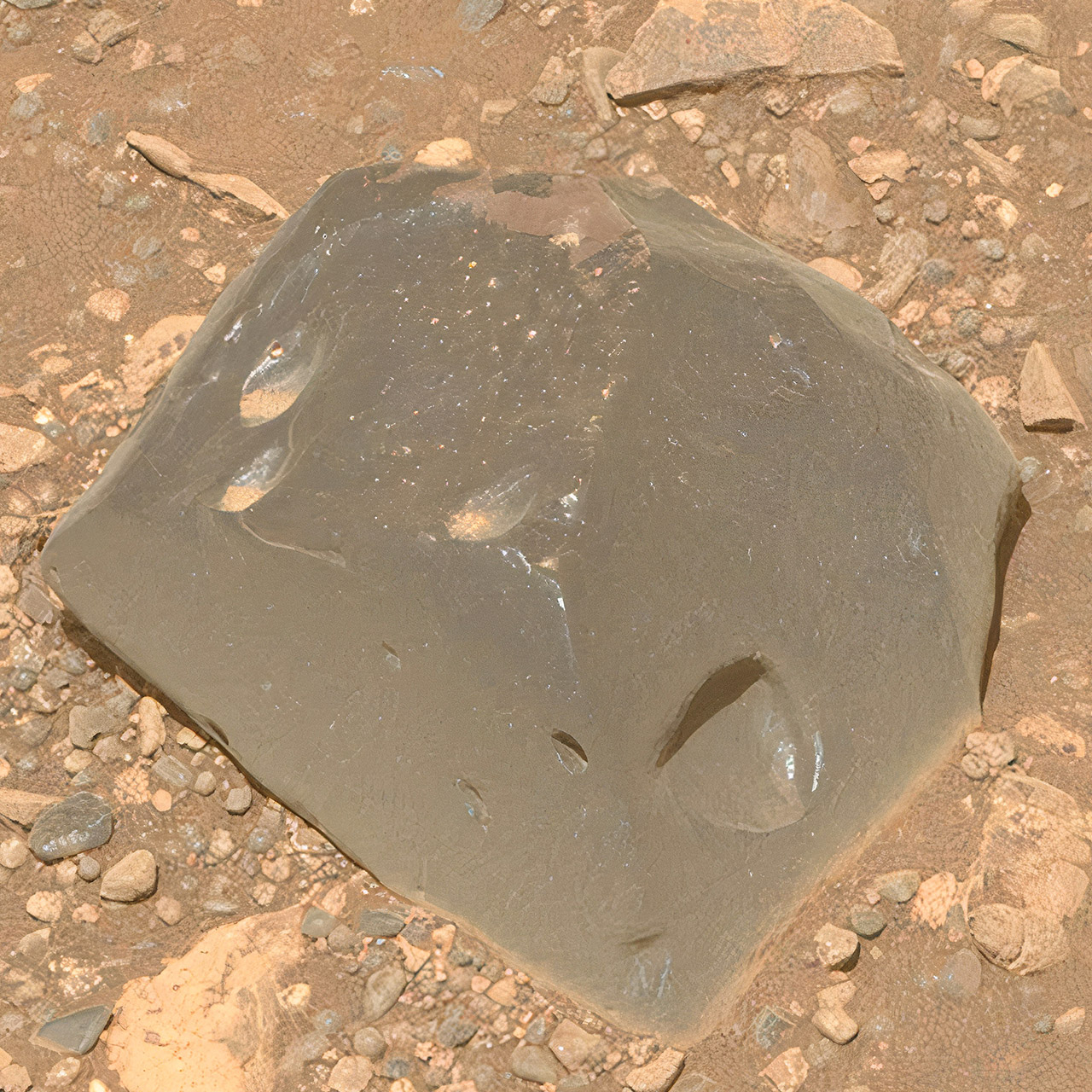
This rock is called a “float,” meaning it probably came from somewhere else and was moved to its current spot, maybe by ancient floods, asteroid impacts, or erosion. At first, some thought it might be a meteorite because of its dark color, like iron-nickel meteorites found by the Curiosity rover in Gale Crater.

LEGO Technic NASA Mars Rover Perseverance Building Toys - STEM Model Kit for Boys & Girls, Ages 10+ Years...
- Feed a passion for science and technology – Kids can learn more about the challenges of space exploration with this LEGO Technic NASA Mars Rover...
- Conduct a test flight – This advanced building kit for kids ages 10 and up includes a buildable toy version of NASA’s Ingenuity helicopter, which...
- AR brings the mission to life – The accompanying augmented reality app experience lets kids dive into the details of the rover and its mission
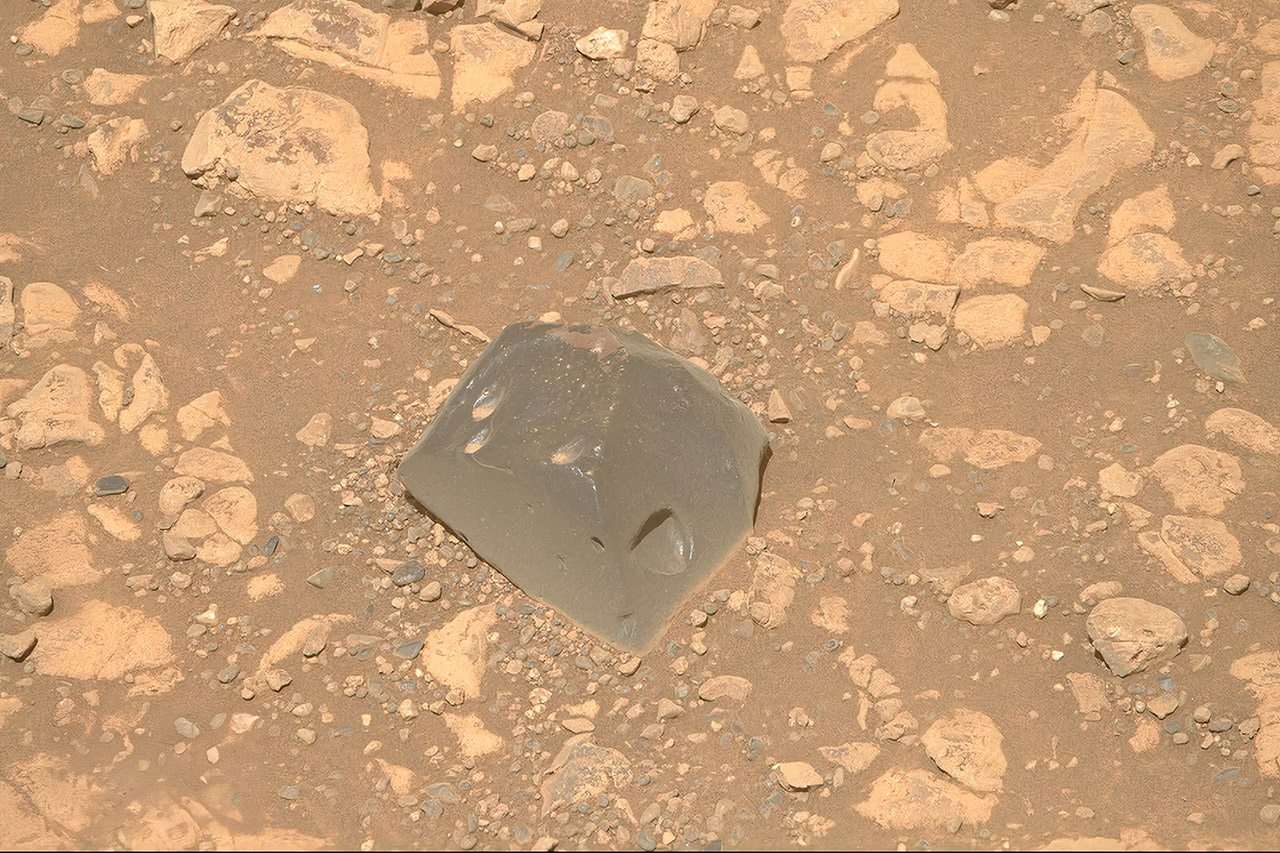
But Perseverance’s SuperCam tool checked its makeup and confirmed it’s not a meteorite. Instead, it’s likely an igneous rock, formed from cooled magma or lava, with minerals like pyroxene or olivine that make it look dark. The holes on its surface might have come from wind wearing it down or weaker bits breaking off.
The rock’s strange look has sparked fun ideas online, like it being an alien artifact or a petrified skull, but NASA says it’s just a natural rock. Scientists are still figuring out where it came from, with ideas like volcanic activity or being thrown out from a nearby impact crater. This find adds to the excitement of Jezero Crater, a former lakebed being studied for signs of ancient microbial life.
[Source]