Researchers at the Autonomous Robots Lab at the Norwegian University of Science and Technology, working with colleagues from ETH Zurich and the University of Bonn, set out to solve a stubborn problem for small flying robots. Cluttered indoor spaces, tunnels, and inspection sites often contain openings smaller than a quadrotor’s normal width. Rigid frames force pilots or planners into slow, precise maneuvers that depend on perfect sensing. Active folding arms add motors, wiring, and weight. Earlier passive designs reduced width on contact but left engineers guessing at the right mix of foldability, flight efficiency, and stable control.
Their solution is a closed-loop design method that turns figuring out how to make gap crossing successful into the ultimate challenge. So they devised an optimization process that works by sampling possible airframes, with each airframe characterized by 22 geometry values and four parameters that determine how a couple of flexible side arms respond under different stresses.

- Fly Fearlessly – This drone with camera for adults 4k features full-coverage propeller guards made from lightweight carbon fiber, providing...
- Lightweight and Regulation Friendly - Weighing under 249 g, [1] this drone with camera doesn't need FAA registration or Remote ID in America. It's...
- Your On-the-Go Director - With subject tracking, your subject stays in focus. Whether you're hiking or having a party, this drone for adults acts like...
Each candidate airframe is thrown into a simulation with 500 encounters per second and controlled by highly advanced predictive models. Airframes that can handle simulation are utilized to create the next generation of designs. After approximately 800 iterations, the entire process settles on a layout in which the arms are sturdy enough for regular flying but give way when they strike the walls, much like a metal spine.
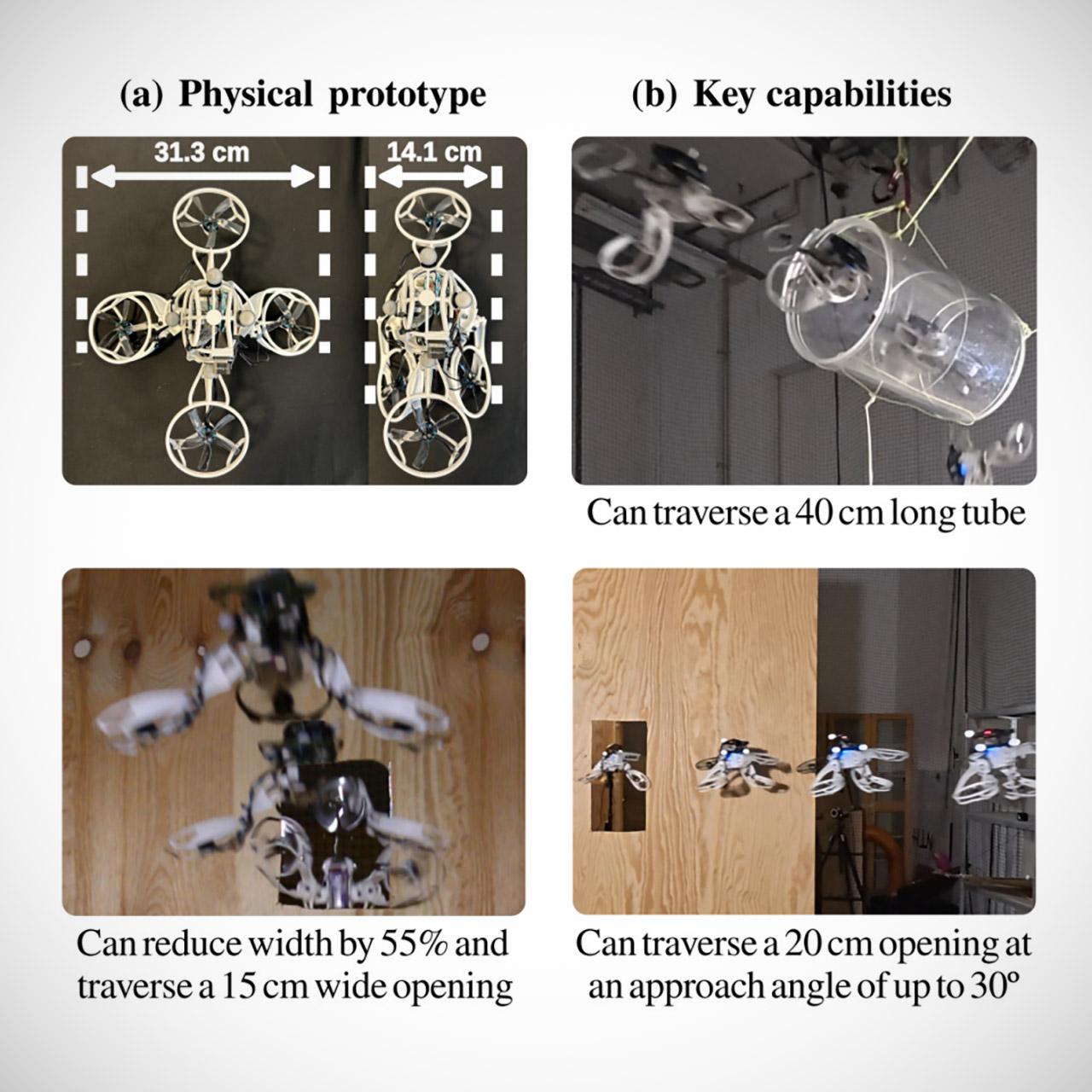
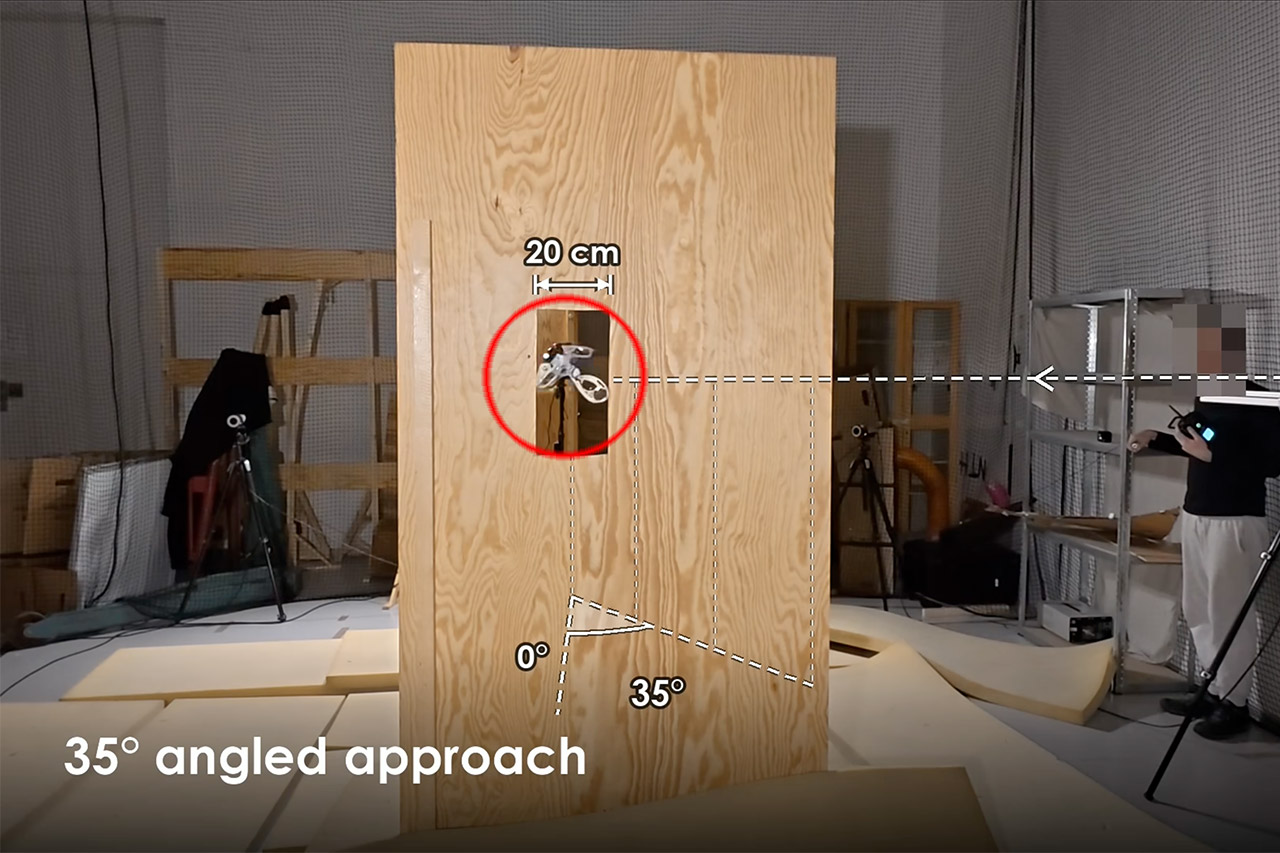
When its arms are extended, the finished prototype measures 31.3 centimeters across, but when it touches something, it folds inwards, taking up only 14.1 centimeters, or slightly more than half the breadth. When you test its gap-crossing abilities, it easily travels through a 15-centimeter-wide gap at a steady 2 meters per second before recovering from a minor wobble and returning to hover. The same airframe is capable of driving through a 40 centimeter. When the arms are folded, the long tube measures only 22.5 centimeters wide. You can even get it to do that at approach angles of up to 30 degrees and still have some pretty consistent success, but much steeper and it starts to become a little dodgy, and the arms sometimes snap out of joint.
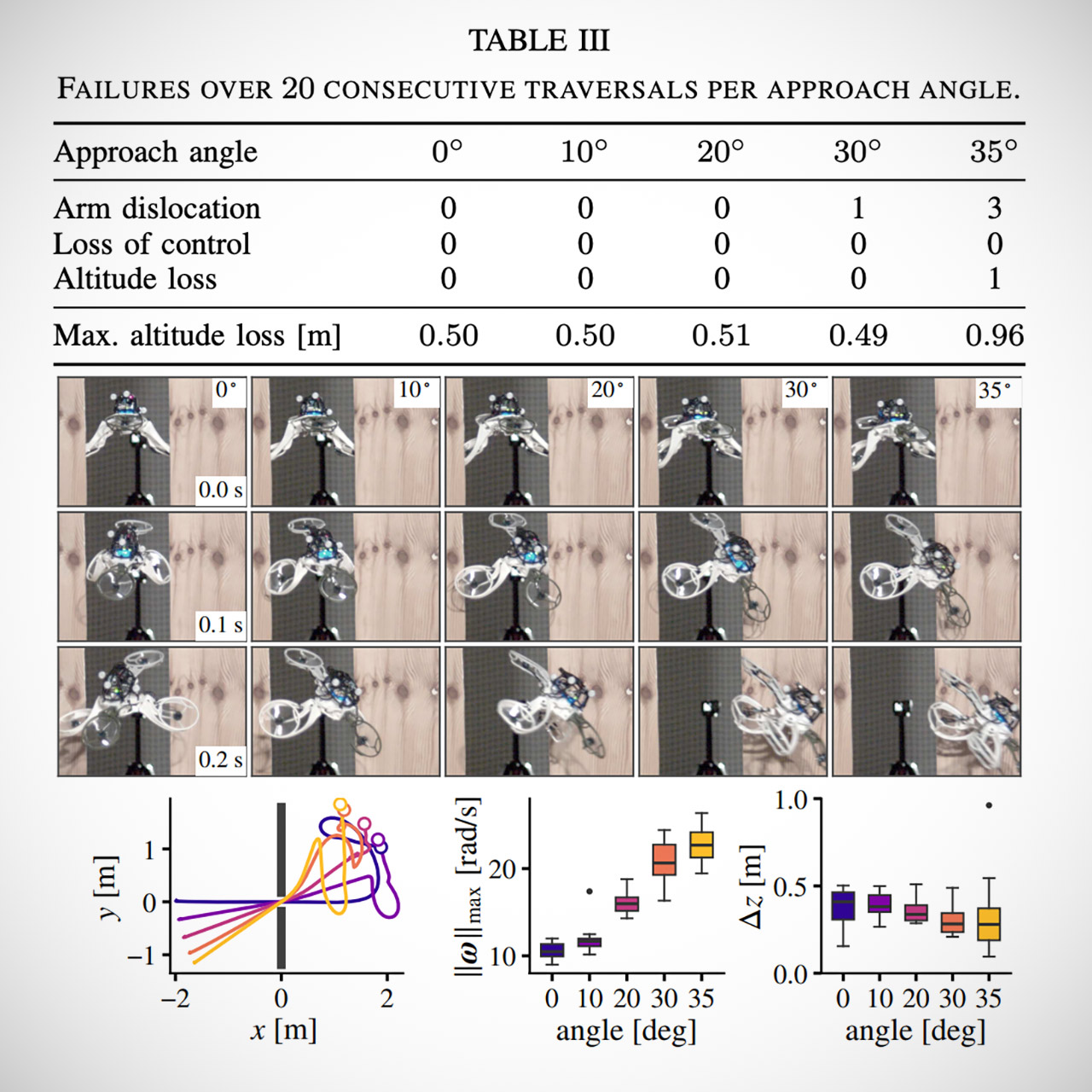
Sidearms are relatively inexpensive under most flight situations. When compared to an otherwise similar rigid robot, its position is only 2 millimeters off, and it consumes somewhat more power, less than 1% to be accurate. These extremely flexible joints only require spring-loaded cams to return to their previous configuration. No more motors are needed. When they pop back out, the same controller can continue to fly it as if it were rigid. The team that accomplished all of this has even given the design code, allowing others to download it and perform their own optimizations to see what happens with different gap sizes or payloads.
[Source]