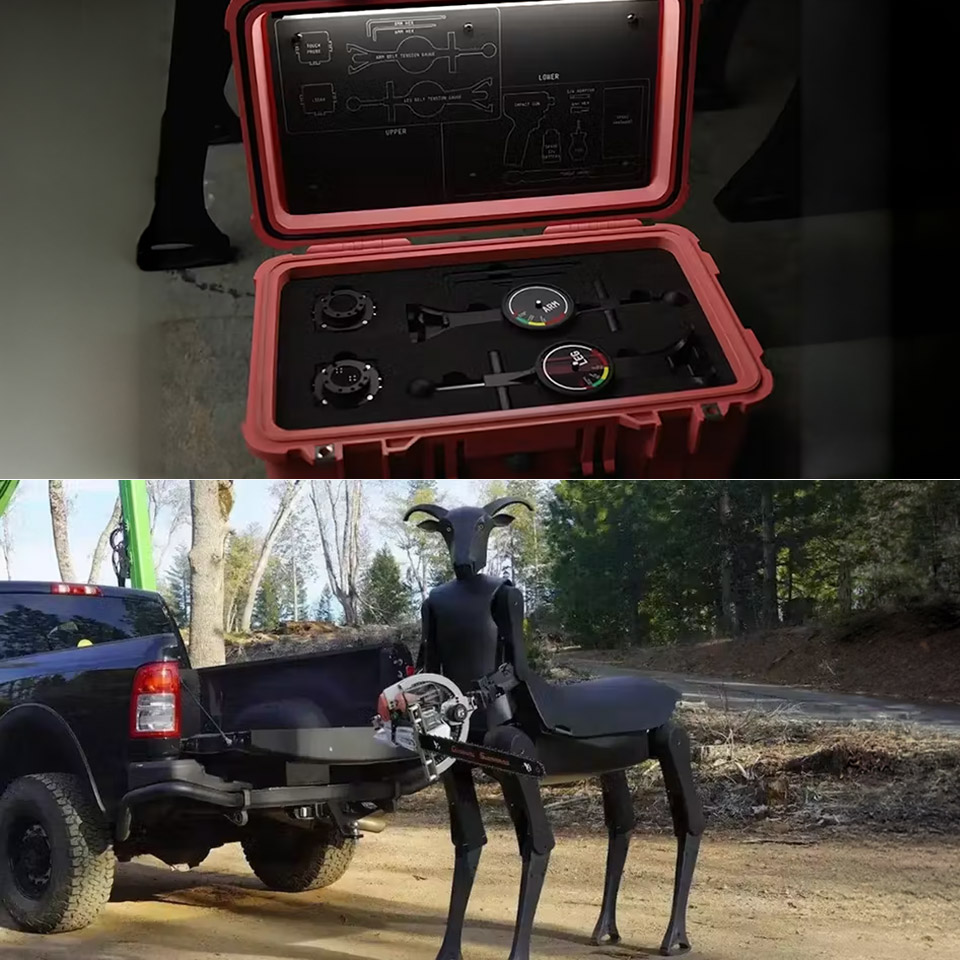
A steel figure nearly seven feet tall stands in promotional images that exploded across the internet in late July. Four legs support a humanoid torso. Arms end in quick-connect mounts instead of hands. A goat-like skull with horns and glowing eyes sits on top. In one view it grips a gas-powered chainsaw. In another it stares through a glass door as if waiting for orders. Millions of people saw the photos and reacted with memes, jokes about movie monsters, and genuine unease. The inventor behind it calls the machine Threehalves. He built it to keep people out of places that can kill them.
Beau G. works as an engineer in Northern California during the day, but at night, he and a small group of friends in his garage in Auburn hammer together pieces for a robot that currently has no investors and no flashy demo film. The website satyress.com has been up and running for nearly two years, with only a few visits per day, until the photographs became completely viral, at which point server bandwidth needed to be increased to accommodate the millions of additional visitors. Beau has kept his full last name hidden to safeguard his day job. He named the corporation Satyress after the feminine form of the mythical satyr, and pronounced it roughly ‘say-ter-ess’. The robot, dubbed Threehalves, is a strange blend of human, goat, and horse shapes.
- 【Next-Generation Robotic Companion: Meet the Unitree Go2 Robotic Dog】 The Unitree Go2 Air is an intelligent quadruped robot, perfect for beginners...
- 【Intelligent Navigation with 3D LiDAR & Obstacle Avoidance】 Featuring ultra-wide 3D LiDAR with 360°x96° perception, the Go2 Air detects...
- 【High-Definition Vision & Seamless App Integration】 A front HD camera streams 1280x720 video to the app. Control the robot, view real-time data...
The design began basic but is effective, as bipedal robots tend to topple over as soon as the power goes out or the earth shifts beneath their feet. Rubble, steep slopes, and soft ash make it difficult for wheeled or tracked platforms to operate. Four legs work well because they reduce the center of gravity and keep the machine upright even on the most broken terrain. A touch of friction on each joint holds them in place, preventing the robot from drawing any power when not in use. If air pressure drops for whatever reason, the brakes activate and pin locks solidify the limbs. The reservoirs on the chest plate can be easily hacked with a bullet or blade, shutting down the entire system in an instant. However, they also function as a kill switch that anybody nearby can activate without the need for any special codes or distant commands.
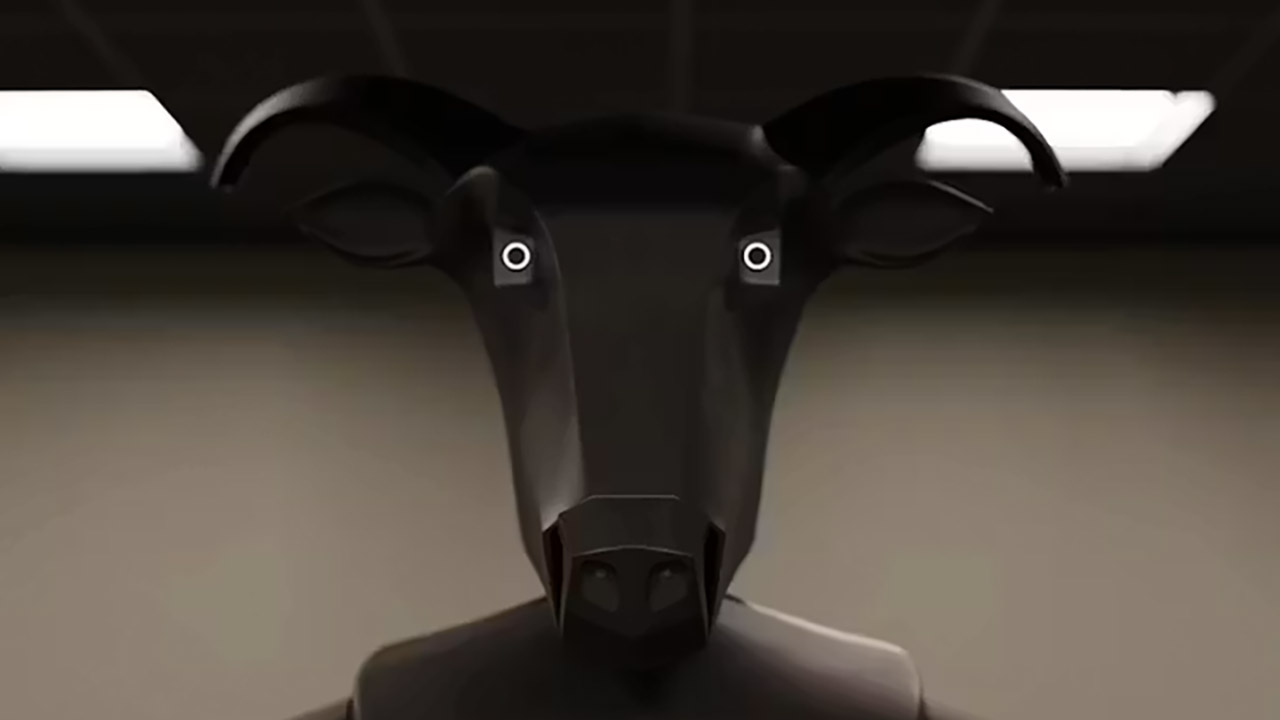
The robot is designed to be human-like up to the ribcage, allowing an operator to control it using natural movements. Using a conventional game controller or joystick, a trained individual may control it from a distance, usually out of line of sight. A pair of cameras in the horns capture views from the arms, tools, and legs, providing a backup in case the joint sensors fail. The wrists lack fingers and instead include quick-connect fittings that allow you to attach 12-volt, 18-volt, or 48-volt power as well as pressurized air directly into whatever tool you’re using. In only a few minutes, you can swap out a chainsaw for a drill, impact gun, or industrial screwdriver. The arms and tools are all broken down into three identical portions, allowing you to replace any damaged parts in the field without having to send them to a specialist workshop.
Beau believes that his early goals stemmed from forestry work in wildfire country. Dead trees and hanging limbs can fall unexpectedly. Every season, people are in the thick of removing electrical wires and cutting fuel breaks. Threehalves is all about taking the chainsaw into high-risk areas while keeping the operator safe from falling wood and heat. The same platform may be used to move debris from a collapsed structure, drive through locations with poisonous leaks, or work in areas where severe temperatures make it difficult for humans to enter.
[Source]