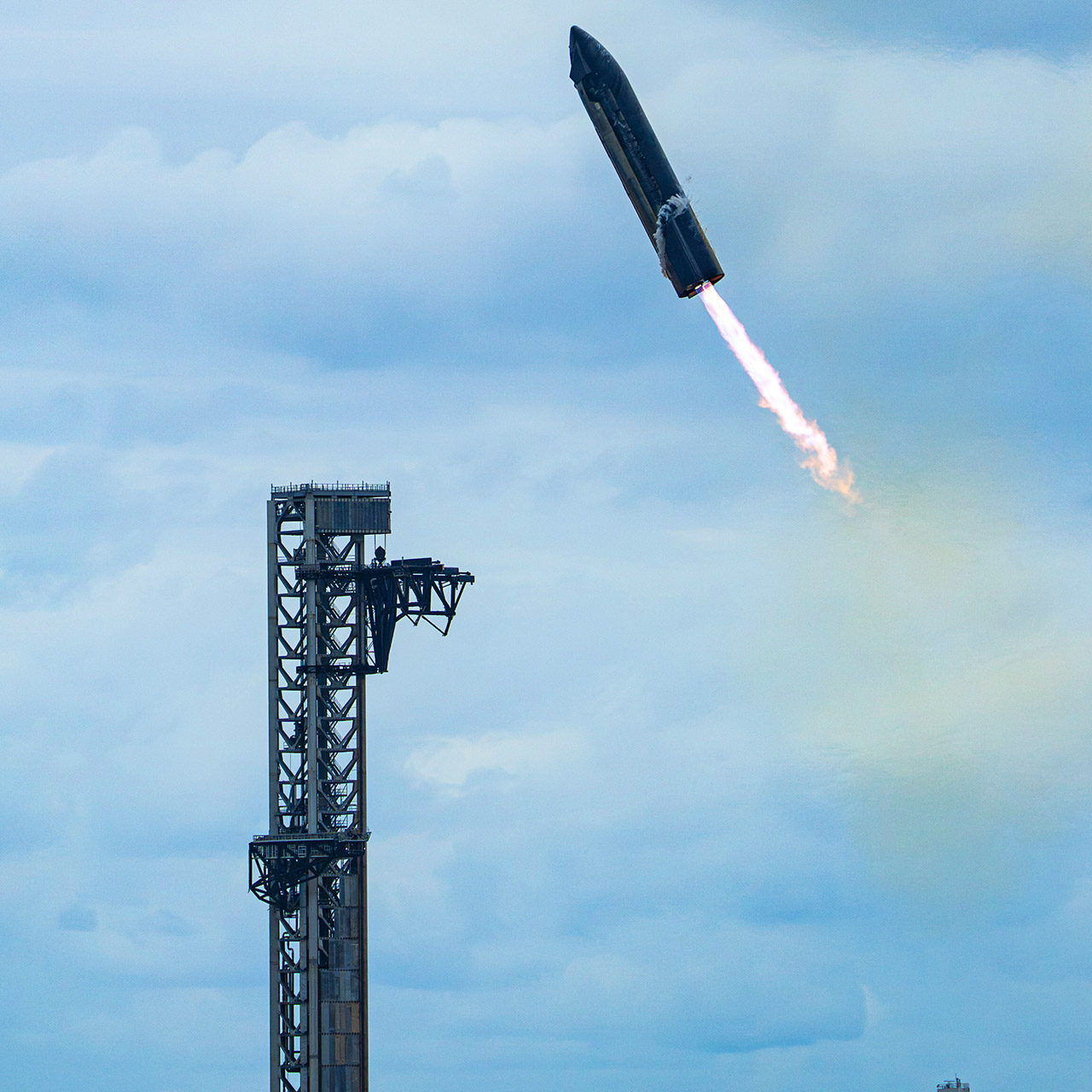
Ship 42 came home from orbit Saturday afternoon and settled into the launch tower’s mechanical arms at Starbase in South Texas, the first time any company has caught an orbital rocket’s upper stage on its return. The catch closed a flight that had started the day before with a partial setback, as the Super Heavy booster below it aborted its own recovery and ended in the Gulf of Mexico. SpaceX had already caught earlier boosters on three prior tests, yet the upper stage had never been recovered this way after circling the planet.
The launch occurred on Friday evening at Pad 2 at approximately 4:47 p.m. local time. Within a few minutes of stage separation, Booster 22 detected problems with guidance and navigation during its boostback and landing sequence. Controllers watched in real time as it deviated off course and headed out to sea, where its flight termination mechanism activated just as it hovered above the ocean. Still attempting to find out what went wrong, one early notion is that it was a low-fuel issue spurred on by a minor underperformance from the engines. Unfortunately, SpaceX was unable to achieve their desired dual catch on Flight 15.

- NASA rocket model kit – Launch into a creative project with the LEGO Icons NASA Artemis Space Launch System model building project for adult space...
- What’s in the box? – This creative building set includes everything you need to craft a multistage rocket with 2 solid-fuel boosters, an Orion...
- Features and Functions – This NASA-themed rocket model features retractable launch tower umbilicals, rocket support and crew bridge, detachable...
Some phone videos I took from the tower https://t.co/kxiSkIvoHQ
— Elon Musk (@elonmusk) November 15, 2026
Meanwhile, Ship 42 continued to ascend until it reached orbit and unloaded its full payload of 26 Starlink V3 satellites, the first operational batch of the new and upgraded model that cannot travel on Falcon rockets. Then there were three of them, each carrying a camera that captured images of the heat shield while they were still in space, which was quite cool. Controllers reviewed those photographs, as well as ground reports, and opted to allow the vehicle to land on land rather than splash down in the Pacific Ocean. The ship then coasted around for a while, entering 14 circles and staying up for approximately 22.5 hours, the longest Starship trip ever.
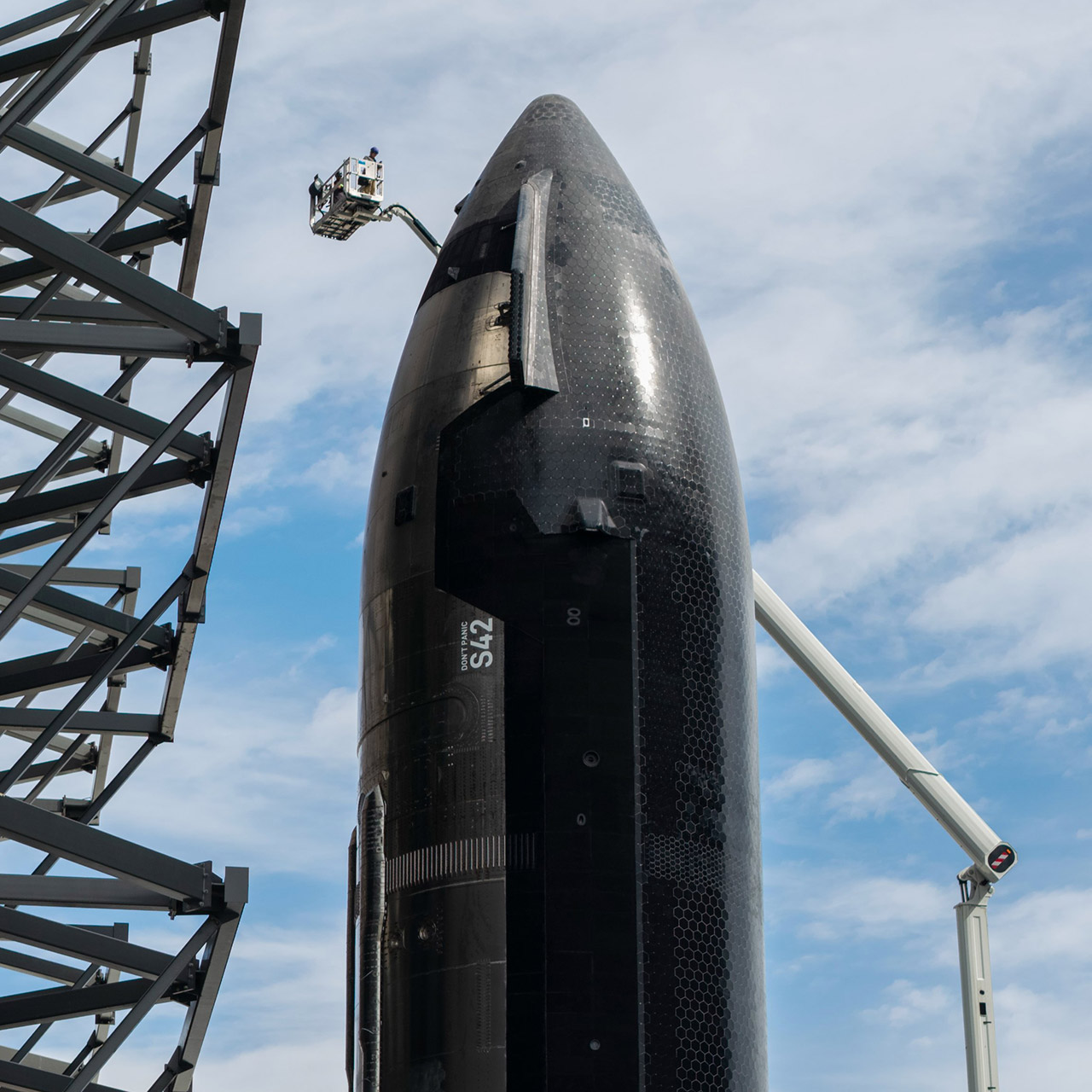
On Saturday, things truly took off when the ship fired up its engines for a de-orbit burn, then entered the atmosphere over Mexico and South Texas, steering using its flaps before flipping up onto its three Raptor engines. By 3:20 p.m. local time, it had been caught by Mechazilla, the large claw arms that SpaceX affectionately refers to as chopsticks, a proud moment.
The ultimate goal is to completely reuse both stages, which would allow Starship to fly around a lot for a low cost, allowing them to conduct long-term trips to the moon and Mars. NASA is already investing heavily on Starship so that it can transport astronauts to the moon as part of the Artemis program, and SpaceX is still striving to have Starship operational in Florida. Yesterday’s catch was significant because it demonstrated that an upper stage can undertake a longer, hotter voyage back from orbit while still returning as part of the entire spacecraft. Losing the booster was unfortunate, but the fact that the upper stage returned intact indicates that they made significant progress toward re-launching the entire spacecraft.