
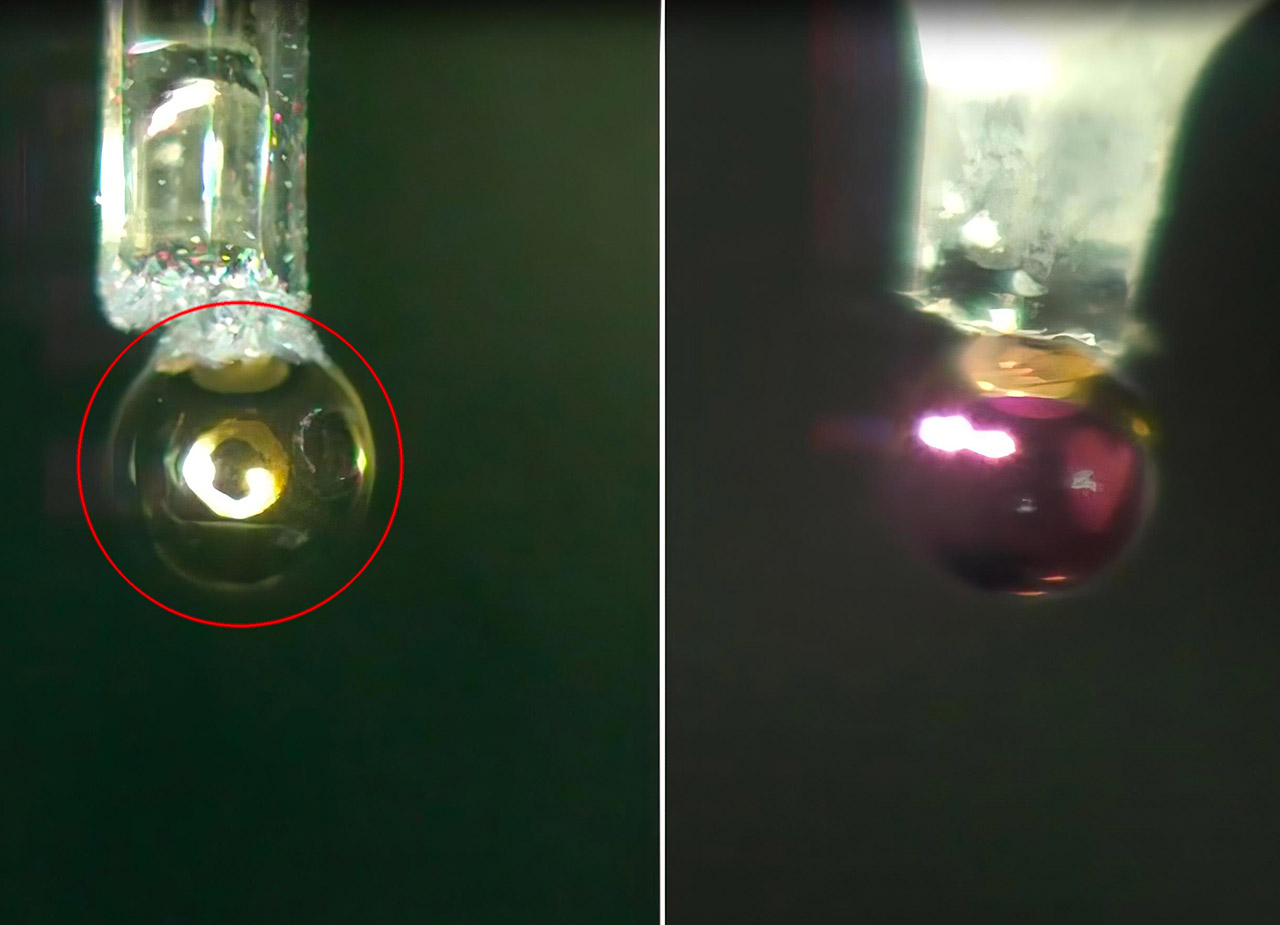
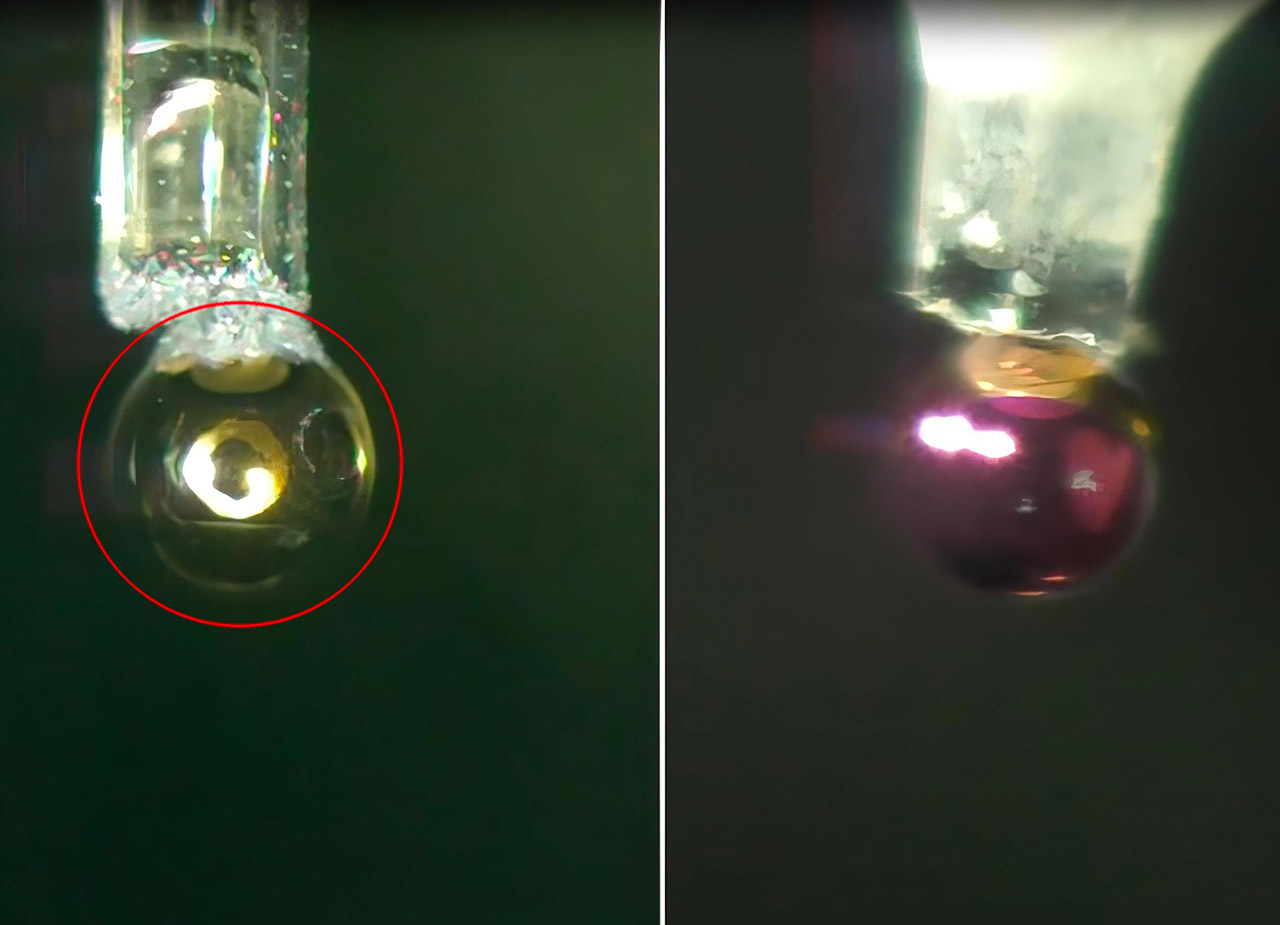
In something that sounds like a scene from a movie, scientists have managed to turn pure water into a gold-colored metal. Since unfiltered water is capable of conducting electricity due to salts, purified water contains only water molecules, whose outermost electrons remain bound to their designated atoms, and thus, they can’t flow freely through the water. So, if you applied enough pressure to pure water, its water molecules would then be squashed together and their valence shells, would overlap. Its electrons would then flow freely between each molecule and turn the water into a metal.
What kind of pressure are we talking about? Approximately 48 megabars, or slightly under 48-million times Earth’s atmospheric pressure at sea level. For the experiment, the scientists used a vacuum chamber and started extruding a small amount of sodium-potassium alloy, which is liquid at room temperature, and very carefully added a thin film of pure water using vapor deposition. When they made contact, the electrons and positively charged ions flowed into the water from the alloy, giving the water a shimmering gold shine and making it conductive.

- WINNER OF THE TOTY "STEAM TOY OF THE YEAR AWARD" - Join Bill Nye is his virtual reality lab in an ultimate immersive learning experience!
- LEARN, EXPERIENCE, PLAY! - From chemistry to physics, this unique educational toy delivers core scientific values that foster a fundamental and...
- STEP-BY-STEP VIDEOS - Enter augmented reality as pictures turn to video right on the page! Develop the skills and confidence to perform science...
You can see the phase transition to metallic water with the naked eye! The silvery sodium-potassium droplet covers itself with a golden glow, which is very impressive,” said Robert Seidel, physicist at Helmholtz-Zentrum Berlin für Materialien und Energie in Germany.

