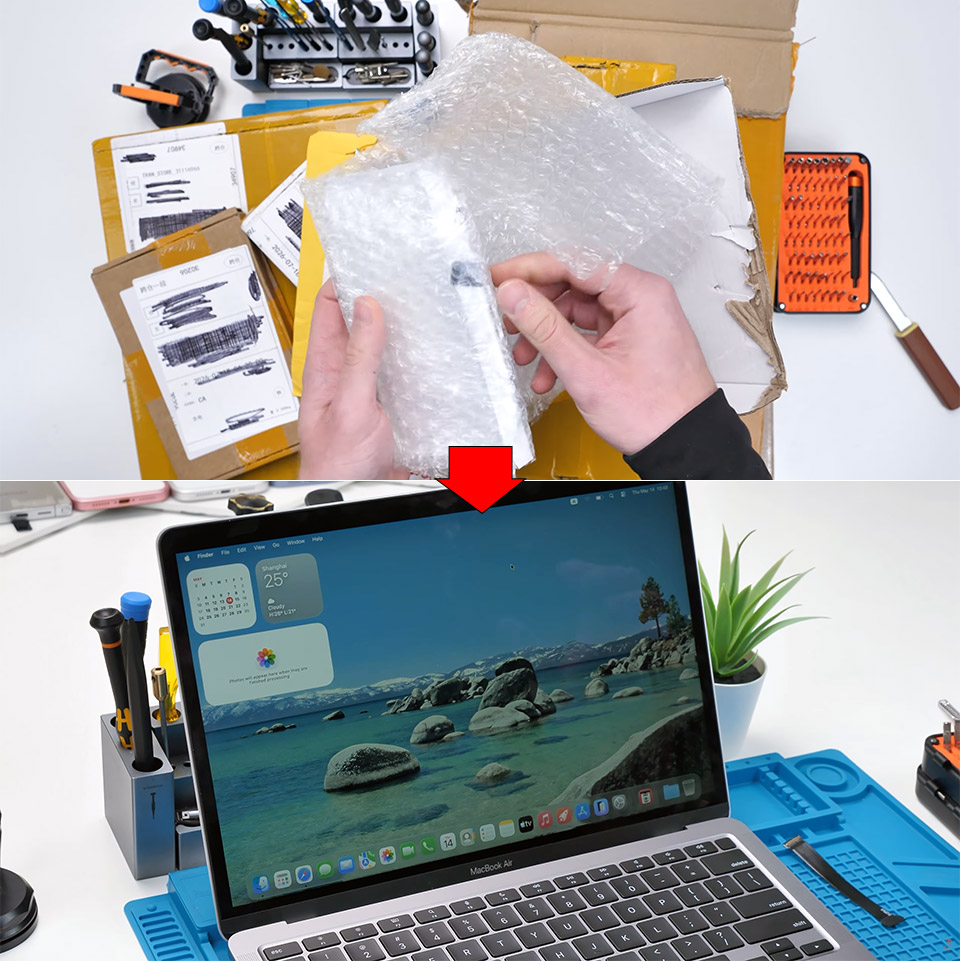
Phone Repair Guru set out to answer a simple question that keeps coming up in repair circles: can you order every piece of a laptop from AliExpress, put them together on a bench, and end up with something that actually boots and works. He chose an M1 MacBook Air because the parts listings exist in volume and the board itself is compact. Packages started arriving in waves. Small bags held screws, antennas, a microphone, USB-C boards, speakers, and an audio board with its flex cable. Larger boxes contained the top case with keyboard, a trackpad, a battery, the bottom case, a display assembly, and the logic board that already carried 128 GB of storage plus a Touch ID module.
Screws proved incomplete, despite the item advertising a full set, which meant another order and pushing the entire timeframe behind. The display appeared to be a little filthy around the camera, indicating that it had most likely been copied from another system rather than manufactured from scratch. Battery cells arrived without the adhesive pads that generally hold them in place once inserted, allowing them to move about a bit. Moreover, the speakers were missing those small tabs that are supposed to be used for performing servicing later on to make things easier. Despite these tiny omissions, the assembly proceeded. The board was inserted into the top case, cables were plugged in, the display came online, and the bottom cover went on without issue.

- AN AMAZING MAC AT A SURPRISING PRICE — With an incredibly portable and durable aluminum design, up to 16 hours of battery life,* and the A18 Pro...
- FOUR STUNNING COLORS. ONE DURABLE DESIGN — Choose from four beautiful colors — Silver, Blush, Citrus, or Indigo — each with a color-coordinated...
- FLY THROUGH EVERYDAY ASSIGNMENTS — Whether you’re cramming for finals, using Apple Intelligence* to summarize class notes, creating presentations...
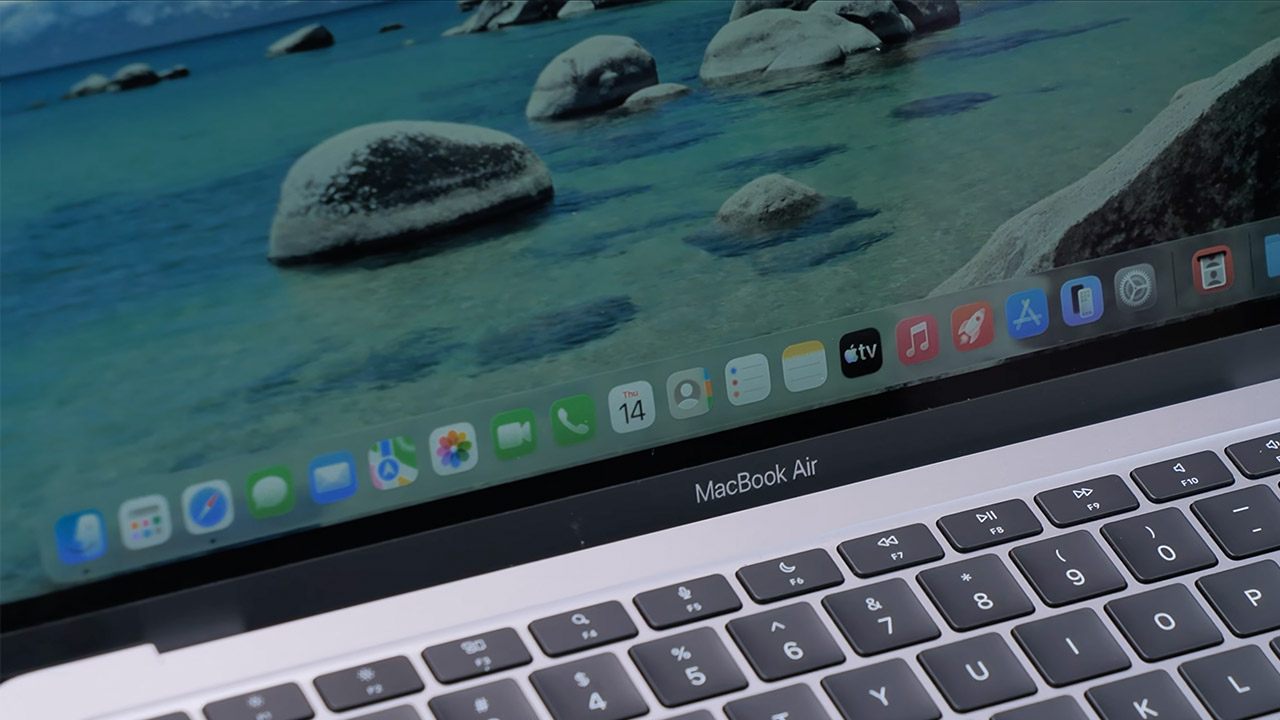
The first power-on yielded no useful results. The board began to warm up, charging behaved strangely, and the machine simply refused to brighten up. Diagnosis indicated that the audio-board flex wire was shorting out the entire system. Getting a partial return on the purchase price allowed me to receive a replacement cable in the mail. After that ribbon was replaced, the Air came to life. Apple’s diagnostic mode revealed that the display was obviously not a factory part, therefore True Tone and complete calibration were turned off, giving the panel a somewhat less bright appearance than a conventional device. However, everything else worked as expected: Touch ID connected and responded quickly, the speakers were working properly, the front camera displayed an image, and the computer successfully booted up to the desktop.
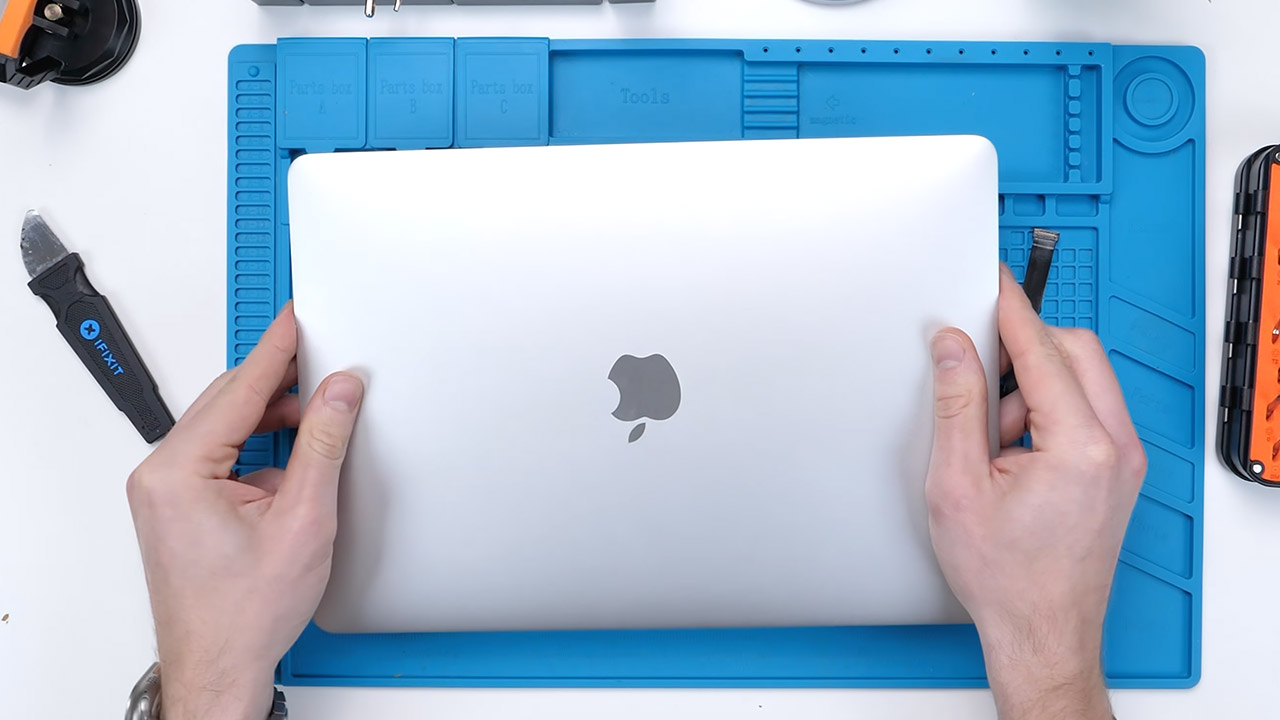
The total cost, including the extra screws and the replacement cable, came to $939.66 CAD. Around the same time, a refurbished M1 Air with a reasonably good display was available on Amazon for a low of $620 CAD. The end result was a working laptop and a clear lesson that the parts are indeed available, they can be coaxed into working together, and the finished machine is usable, but it also costs more than purchasing one that has already been built, has an unknown history on each individual component, and lacks those reassuring Apple parts-pairing guaranties. As the video states, this was an interesting experiment to witness, but not one that most people should attempt to imitate.