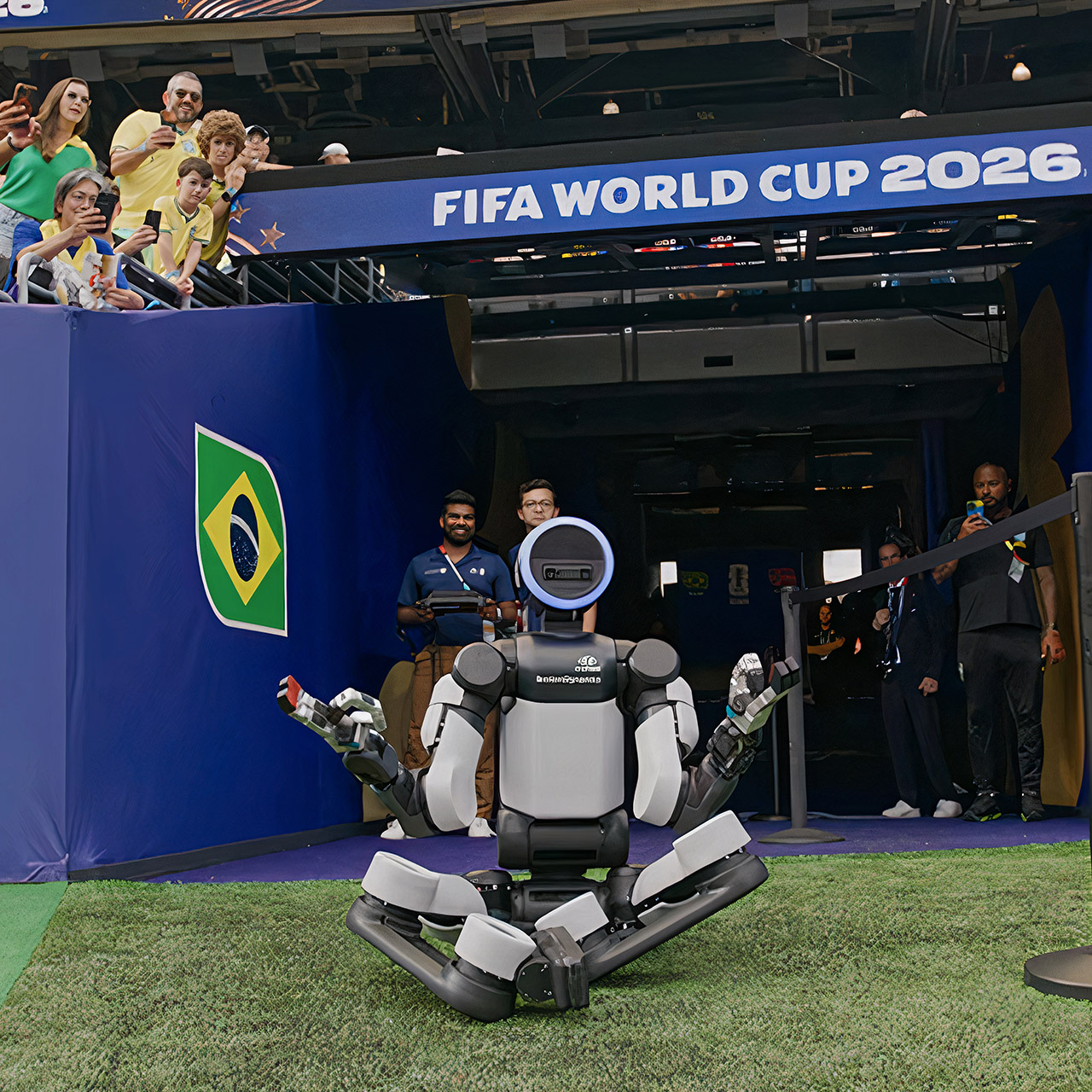
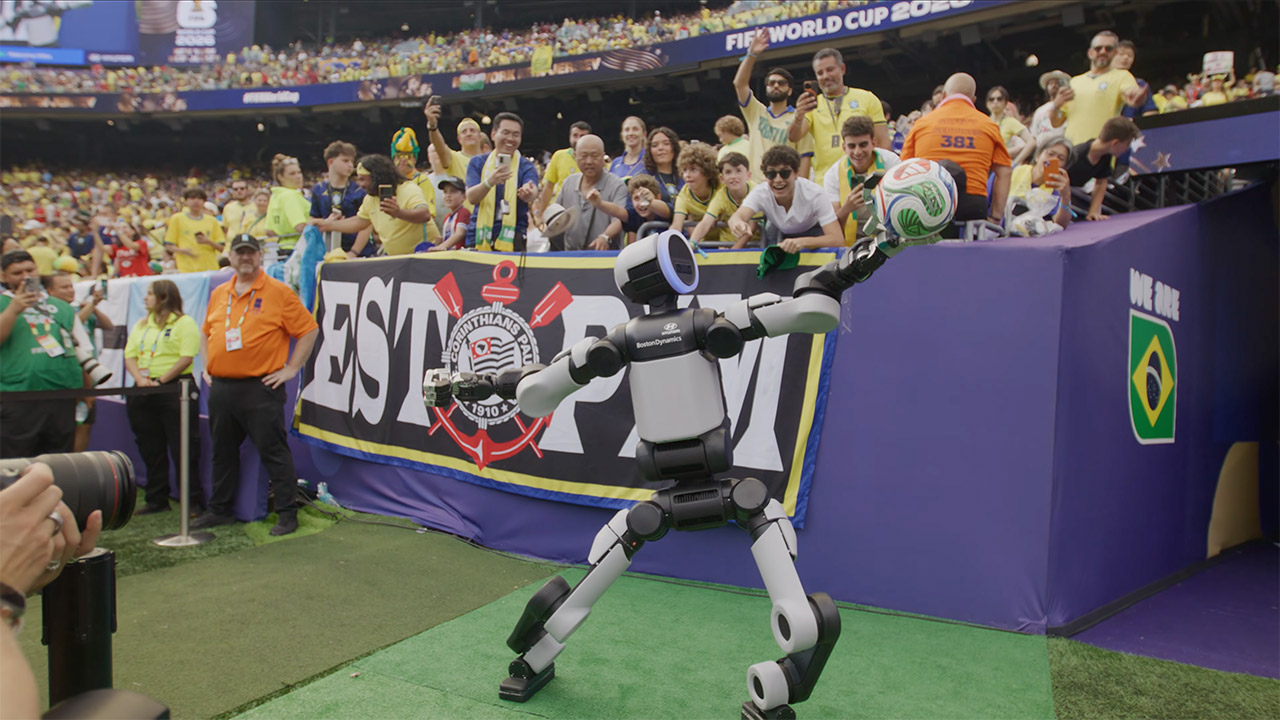
Eighty thousand fans filled New York New Jersey Stadium (MetLife Stadium) on July 5 for the Round of 16 match between Brazil and Norway. The score sat tied at zero when halftime reached its ninth minute. Out from the players’ tunnel came Atlas, the humanoid robot built by Boston Dynamics and backed by Hyundai Motor Group, the tournament’s official robotics partner. It moved with steady, natural steps across the grass and into full view of the crowd.
Atlas leaps into action, initiating a string of goal celebrations that the football world is all too familiar with. It begins by channeling Harry Kane’s iconic pose, then seamlessly transitions into Matheus Cunha’s goofy surfing-style celebration, but the real crowd-pleaser is a spot-on imitation of Erling Haaland’s cross-legged meditation stance, with the entire stadium erupting in cheers, and finally brings things full circle with Son Heung-min’s camera-click pose. The entire sequence is fluid, with one action flowing seamlessly into the next without a single halt or wobble, and it is all the more astonishing given the robot’s hard arms and torso, as well as its firm footing on the ground.

- BUILDING TOY FOR SOCCER FANS – The LEGO Editions FIFA World Cup Official Trophy (43020) building set for boys, girls, and soccer fans ages 12 and up...
- AUTHENTIC DETAILS – This collectible model features 2 stylized human figures holding up the Earth, plus the iconic globe and a plaque naming past...
- HIDDEN COMPARTMENT – The top globe opens to reveal a FIFA World Cup 2026 branded minifigure holding a mini trophy and a backdrop displaying the...
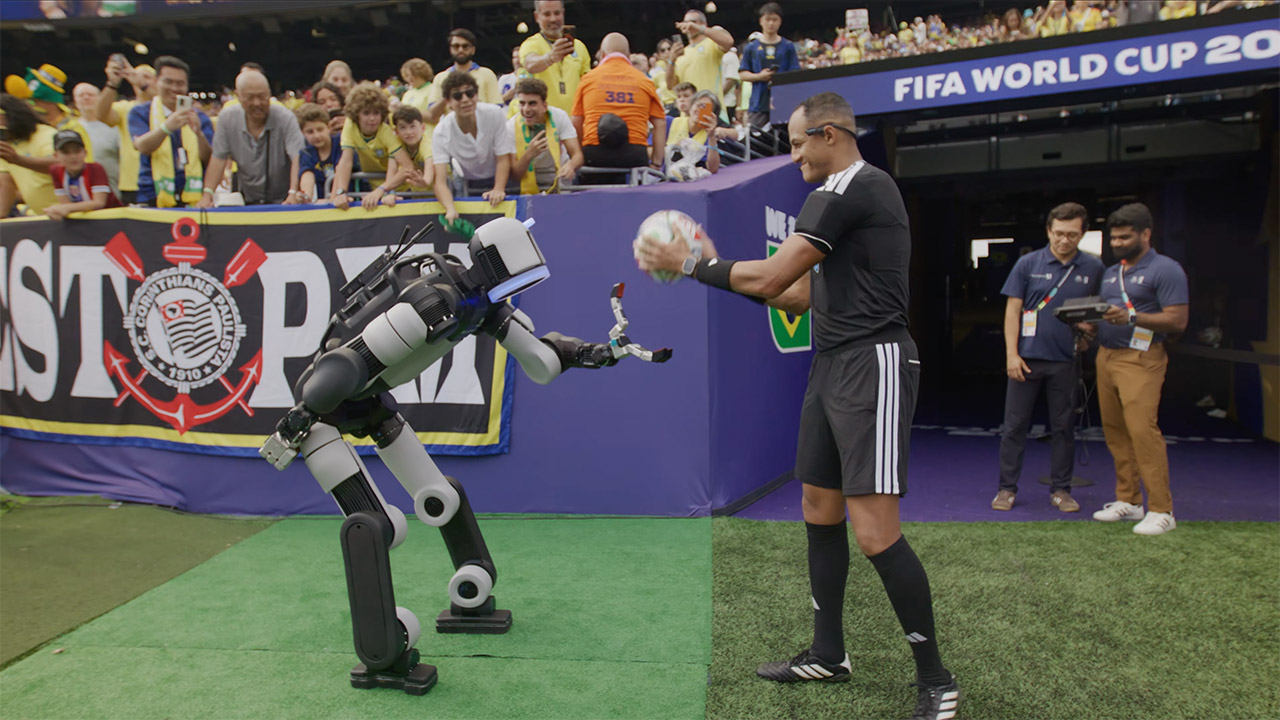
After the celebrations, Atlas collects the official match ball. It gives it a little spin, dips its head with a small bow, and walks towards the referee waiting near the center circle, where the handoff is accepted with a smile and a thumbs up from the official, signaling the official start of the second half and a major milestone in the history of humanoid robotics, as it is the first time any robot has taken an official role in a live FIFA World Cup match day ceremony.
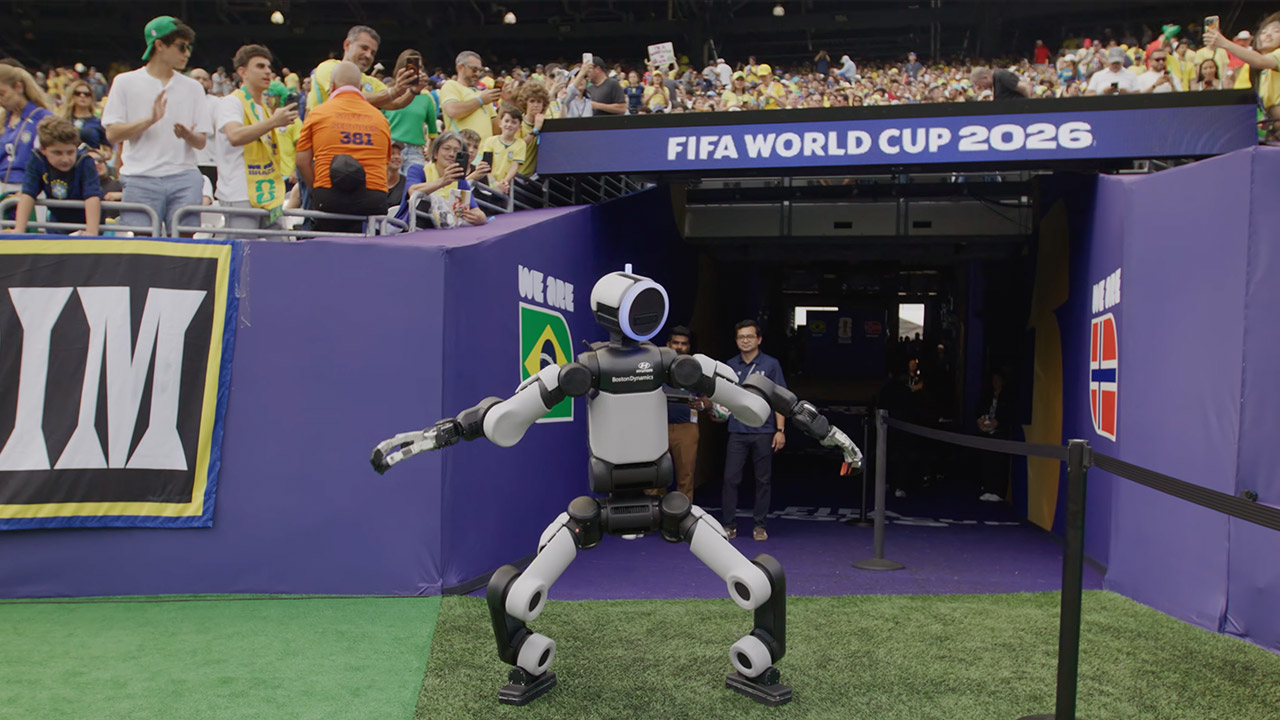
The entire performance lasts only a few minutes, but what it displays in that time is a pretty telling example of what Boston Dynamics engineers have been working on with Atlas outside the lab. They trained the robot using footage of real players as well as motion capture data from their own team. What was especially interesting was that it practiced the maneuvers a million times in a physics-based simulator before taking the field.
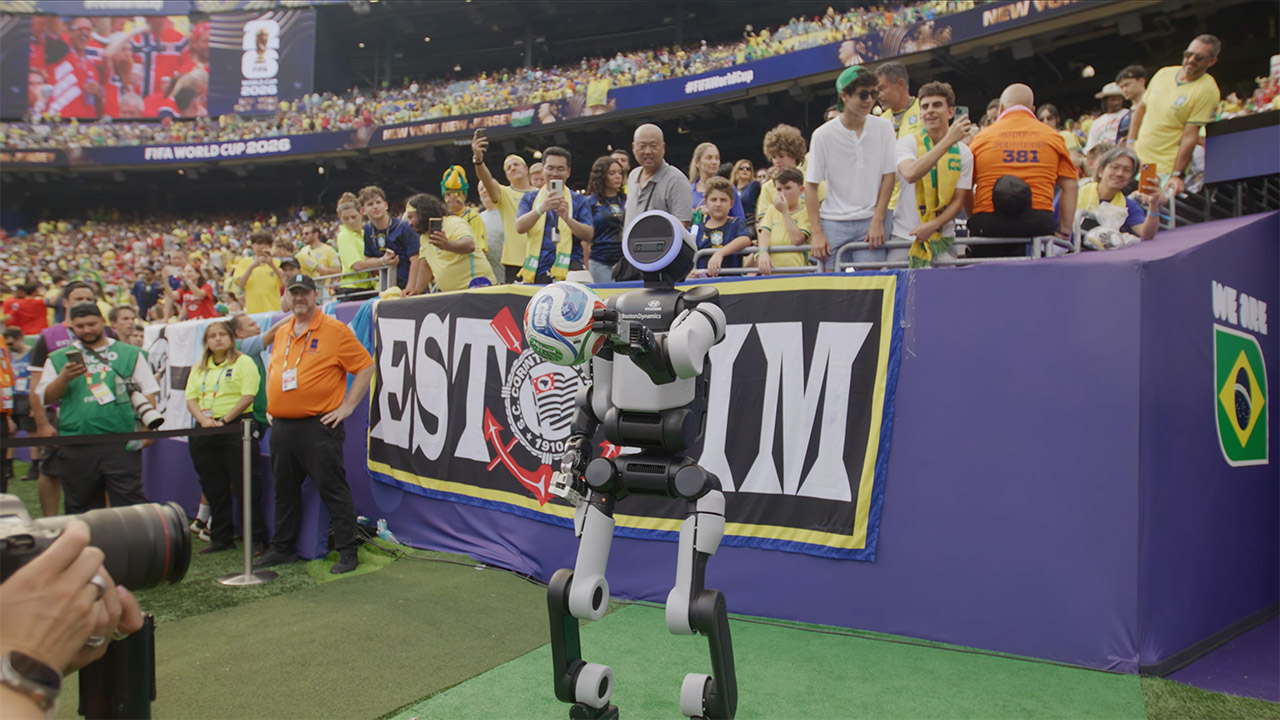
They also used retargeting technology to map actual human movements onto Atlas’s mechanical frame, and went a step further by using whole body control to ensure that every single step, turn, and gesture remained perfectly coordinated and stable, even when it had to adapt to the uneven grass and bright stadium lights.
Hyundai integrated the activation into its “Next Starts Now” campaign, which seeks to bridge the gap between people and technology by bringing them together via common activities such as football. Sungwon Jee, the company’s global marketing director, described the occasion as an opportunity to demonstrate how robotics are becoming trusted, rather than distant, companions in everyday life.
Meanwhile, Boston Dynamics’ Alberto Rodriguez, who leads the robotics behavior team, observes that the same approach employed for these enjoyable celebrations is also proving effective for more practical applications such as industrial labor. What’s fascinating is that the robot learns tasks through repetition in simulation, rather than being programmed step by step for each new action; it learns by performing it again.