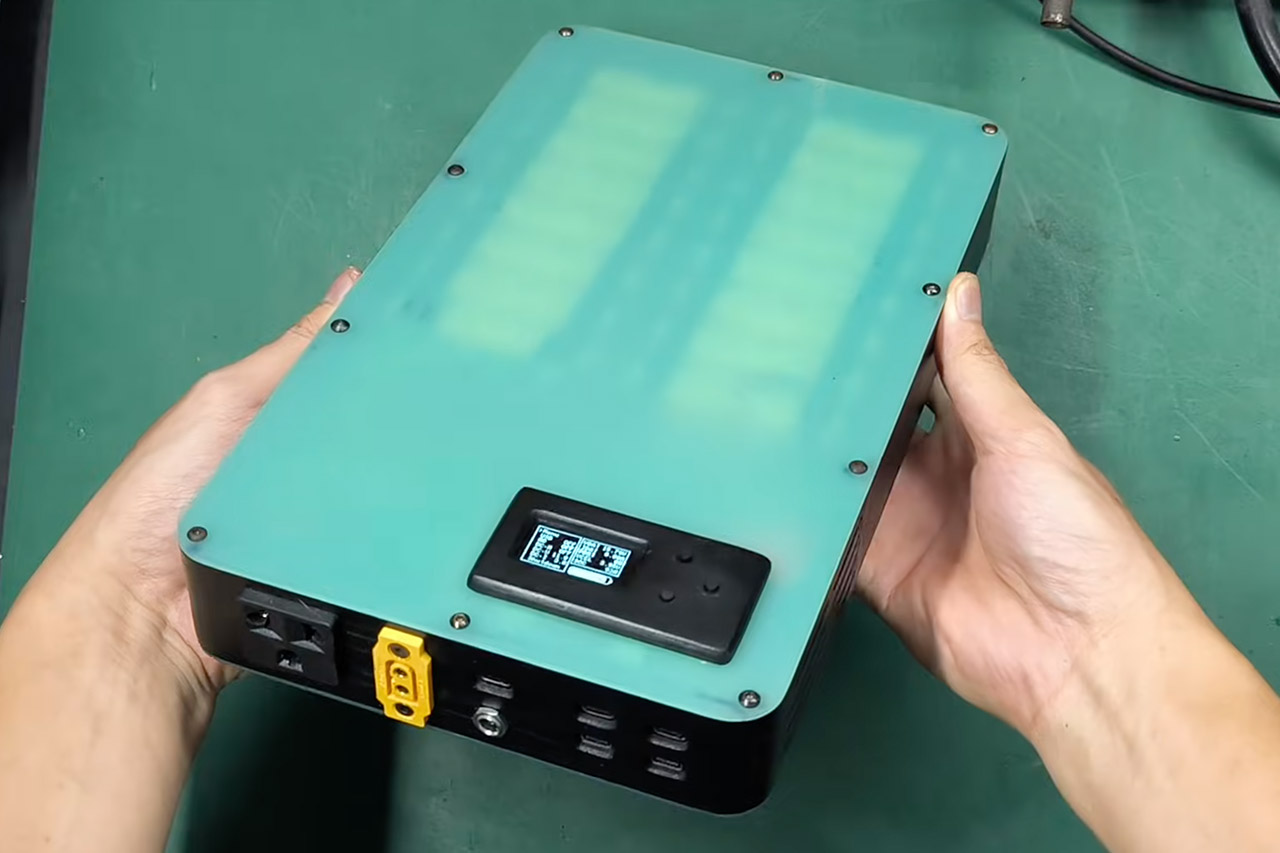
Digital nomads frequently have to manage a bunch of devices, including laptops, phones, tablets, routers, and occasionally drones or small robotics installations. The problem is that regular power banks just do not cut it when you have many gadgets that require high power at the same time, or when you’re in the middle of nowhere and need something dependable and versatile to keep everything running. Luq1308 created the Omnibus 4×8 to address this exact issue. This tiny guy packs 345 watt-hours of electricity in a package smaller than a sheet of A4 paper, allowing it to fit into a backpack without taking up too much space.
The heart of this device is made up of 32 brand new 18650 lithium-ion cells organized in a 4S8P arrangement. Each of these batteries contains 3,000mAh, so multiplying it by the normal 3.6 volts yields a total of approximately 96,000mAh or 345Wh. A 4S 30-amp battery management system maintains the cells balanced, prevents overcharging and deep draining, and includes some extra fuses for further safety. The unit’s low stand-by demand, less than 400 microamps, means it sips power while it’s just sitting there, which is a good thing when you’re on a long trip and trying to conserve power.

- From INIU—the SAFE Fast Charge Pro: Experience the safest charging with over 38 million global users. At INIU, we use only the highest-quality...
- 140W PD 3.1 Super-Fast Charging: While others struggle at 65W or even 100W, our 140W PD 3.1 PowerNova if fast enough to power up all high-power-demand...
- Massive Airline-Approved 27,000mAh: With a whopping airline-approved 27,000mAh battery capacity, it gets multiple charges for all your devices on the...
The outputs are quite adaptable, with four USB-C connectors pushing 36 watts each, which is enough to charge your phone or tablet simultaneously. There is also a bidirectional 100 watt USB-C port that can charge laptops faster or accept power from a compatible source. DC Jack outputs 2.7 to 20 volts, thus it’s ideal for custom projects or gear that doesn’t use standard connectors, either steady voltage or current. For good measure, there’s a high-wattage XT60 connector capable of handling loads of more than 400W. The package also includes a 150 watt AC outlet that, using a modified inverter module, allows you to run small appliances when you don’t have a wall connection.
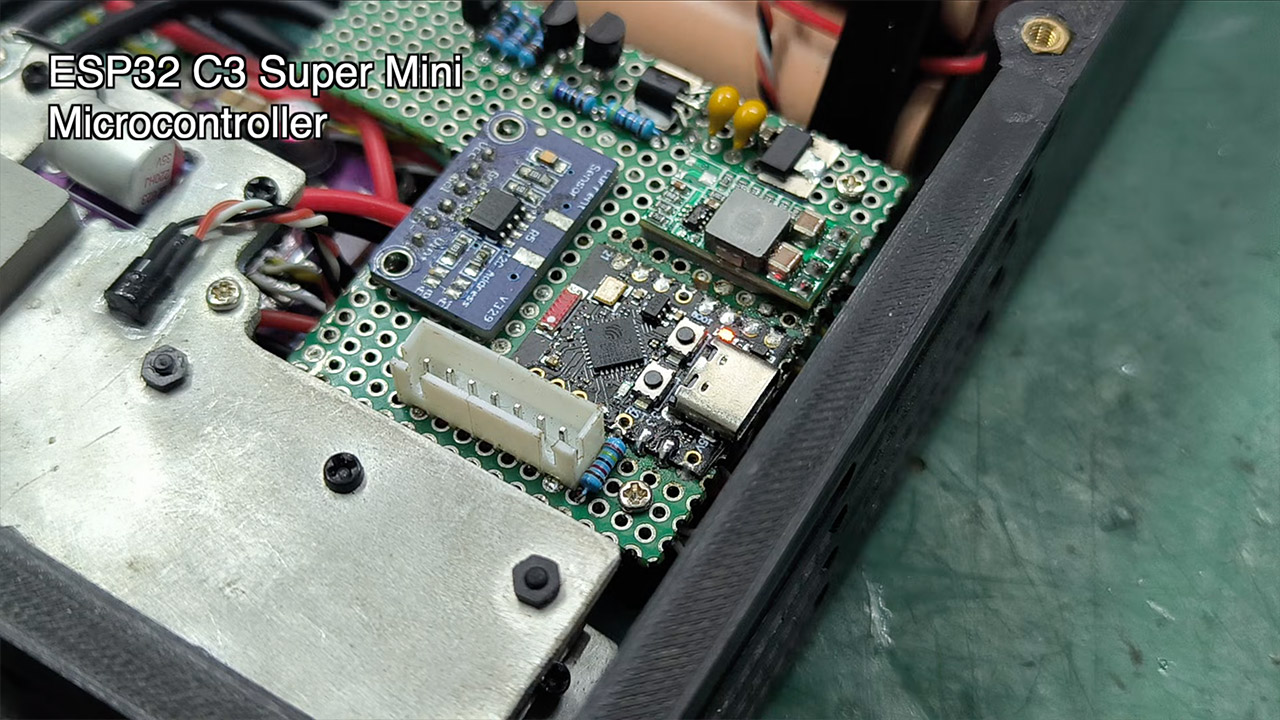
An ESP32-C3 microcontroller keeps everything together; it reads current levels from an INA219 sensor, controls outputs, and powers a 1.3-inch OLED display with three navigation buttons. The screen displays real-time status, voltage, current, and temperature data, and users can switch modes or monitor telemetry using simple menus. Four DS18B20 sensors monitor temperatures at the battery pack, heatsinks, and inverter, triggering dual 40mm fans for active cooling as needed. For good measure, bespoke aluminum heatsinks with thermal pads prevent the power modules from overheating when pushed too hard.
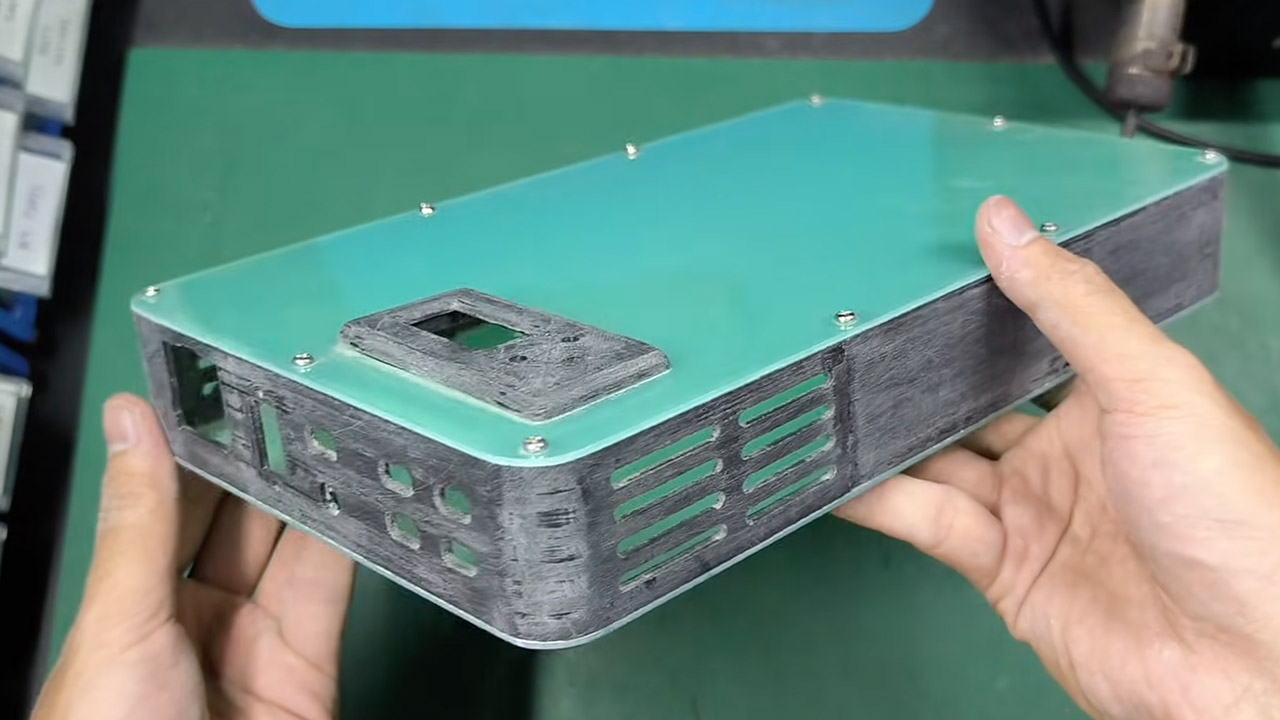
The enclosure consists of hand-cut G10 fiberglass plates for durability and 3D printed ABS sides in matte black. Brass spacers and metal mesh vents enhance the rough look while yet providing airflow and debris prevention. The battery modules just sit inside, connected together with 14 gauge silicone for minimal resistance. Power distribution employs a perfboard bus with fuses, and modules such as the IP2368 for bidirectional USB-C, four XPM52C for conventional USB-C, and the SC8812A for DC all find a home on those heatsinks.
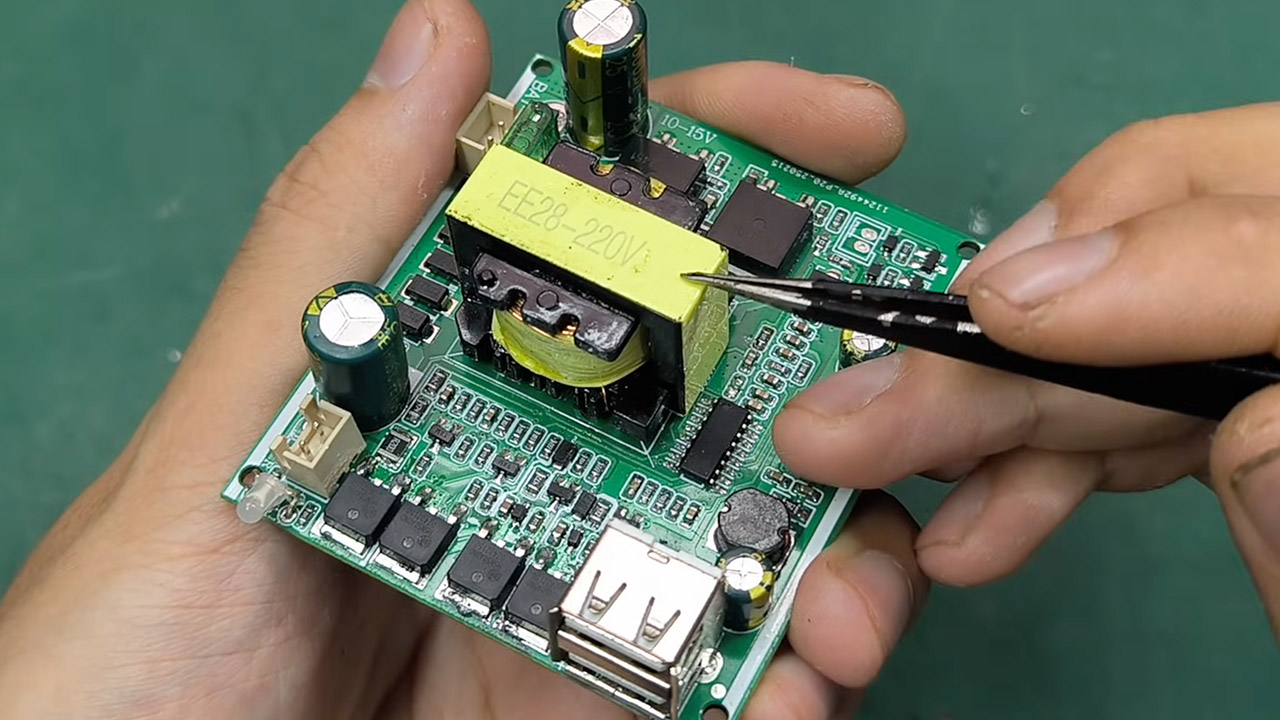
The inverter required a bit of a hack to function securely for the full 4S voltage range up to 16.8 volts, so Luq1308 rewound the transformer primary, altered the voltage divider, and connected it all to ESP32 control so you may activate it on demand. This construction stands out for its adaptability; bidirectional ports may accept solar input in MPPT mode, allowing for extremely efficient off-grid operation. The XT60 port enables heavy-duty connections. Oh, and the open-source files on GitHub make it simple for anyone else to copy or modify the concept.
[Source]