
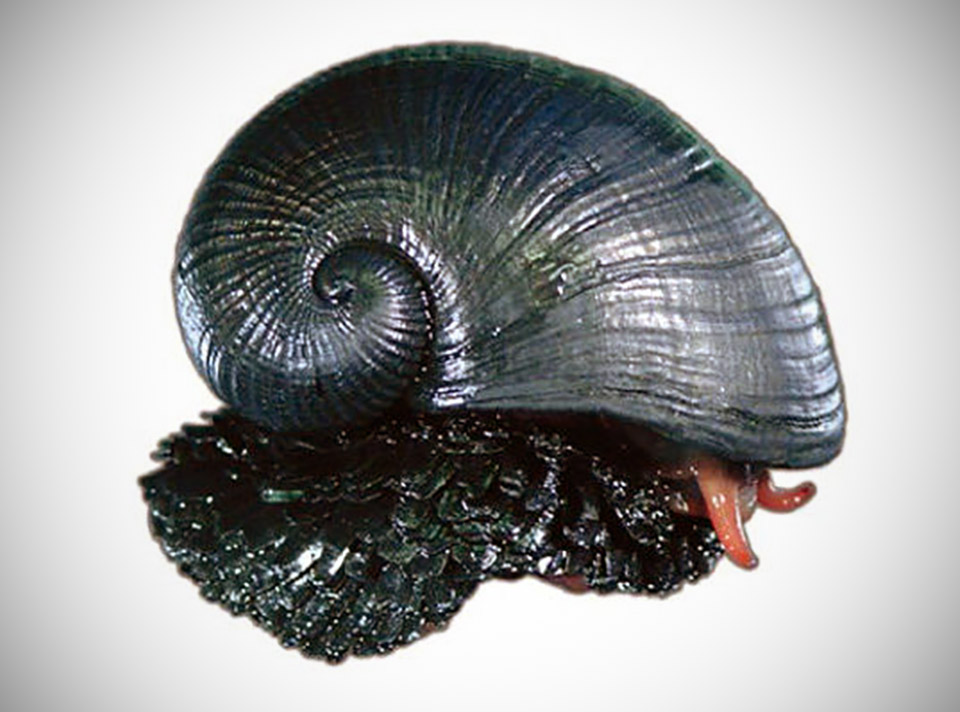

The bizarre-looking deep sea snail boasts a unique three-layered shell that can easily fend off attacks from crabs as well as protect it from high temperatures. They’re currently known to exist around four hydrothermal vents in the Indian Ocean where temperatures can reach up to 750 degrees Fahrenheit. Its outer layer of its shell is made from iron sulfide, creating a suit of armor around its vitals.
Researchers also discovered that the snail doesn’t really eat anything, but instead relies on energy produced from bacteria it hosts in a large gland.

- Stabilization and Smart Tracking: Record smooth footage with 3-axis mechanical stabilization while AI tracking keeps your subject centered and in...
- 10-bit I-Log for Creative Control: Shoot in 10-bit I-Log for smoother tonal transitions and more nuanced color, with support for professional...
- Long-Lasting Battery and Fast Charging: Shoot for up to 4 hours on a single charge, with fast charging to 80% in just 23 minutes so you can keep going...
This is an important step towards alerting policymakers to the potential impacts deep-sea mining may have on biodiversity. These are fragile areas under threat, and it’s not like we researchers can start a breeding program for deep-sea-vent creatures. We can only try to protect what’s there,” said Lisa Levin, biologist at the Scripps Institution of Oceanography.

