
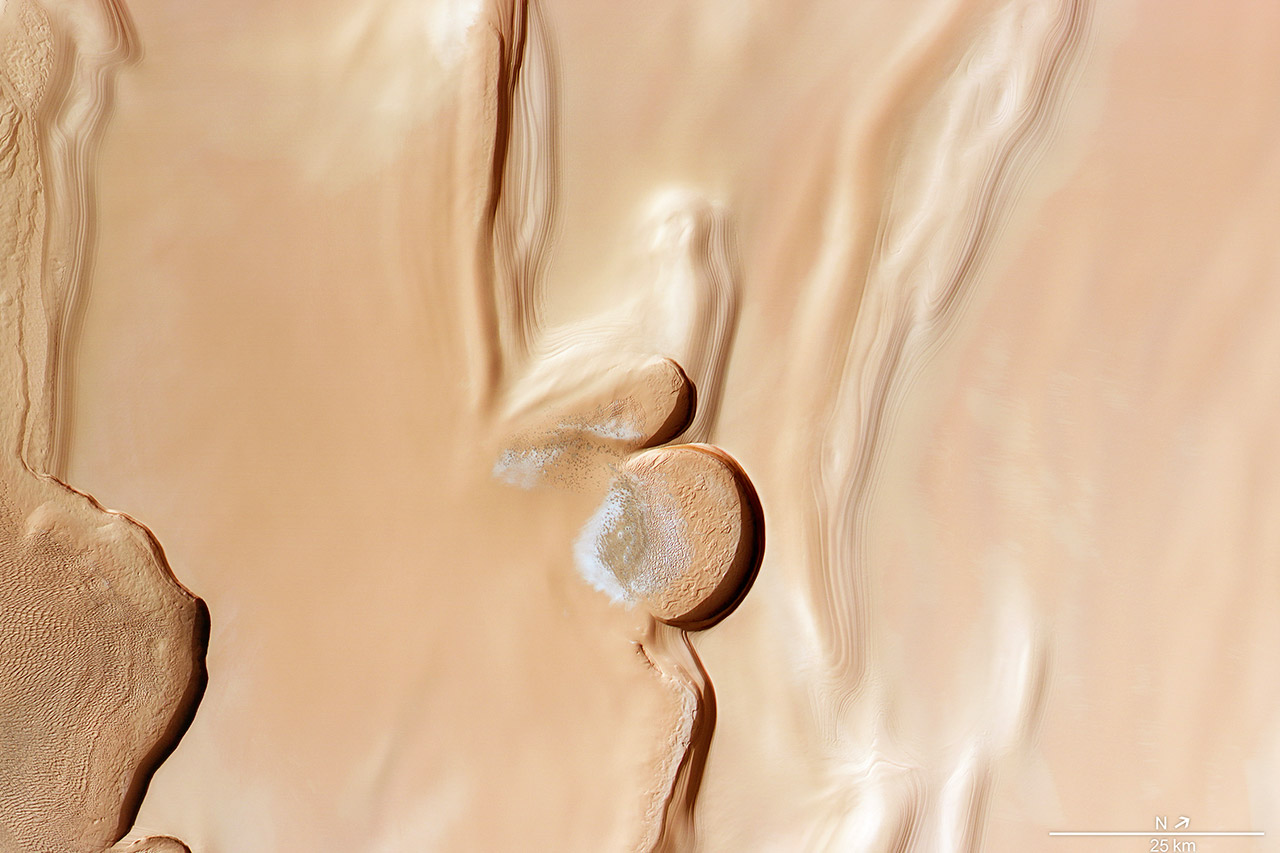
ESA’s Mars Express recently captured an interesting image of stacked ice on sand dunes at the Red Planet’s north pole. This region is known as Planum Boreum, while the north pole itself is covered in several layers of fine dust and water ice stacked several kilometers thick, stretching out for around 1000 km (621 mi).
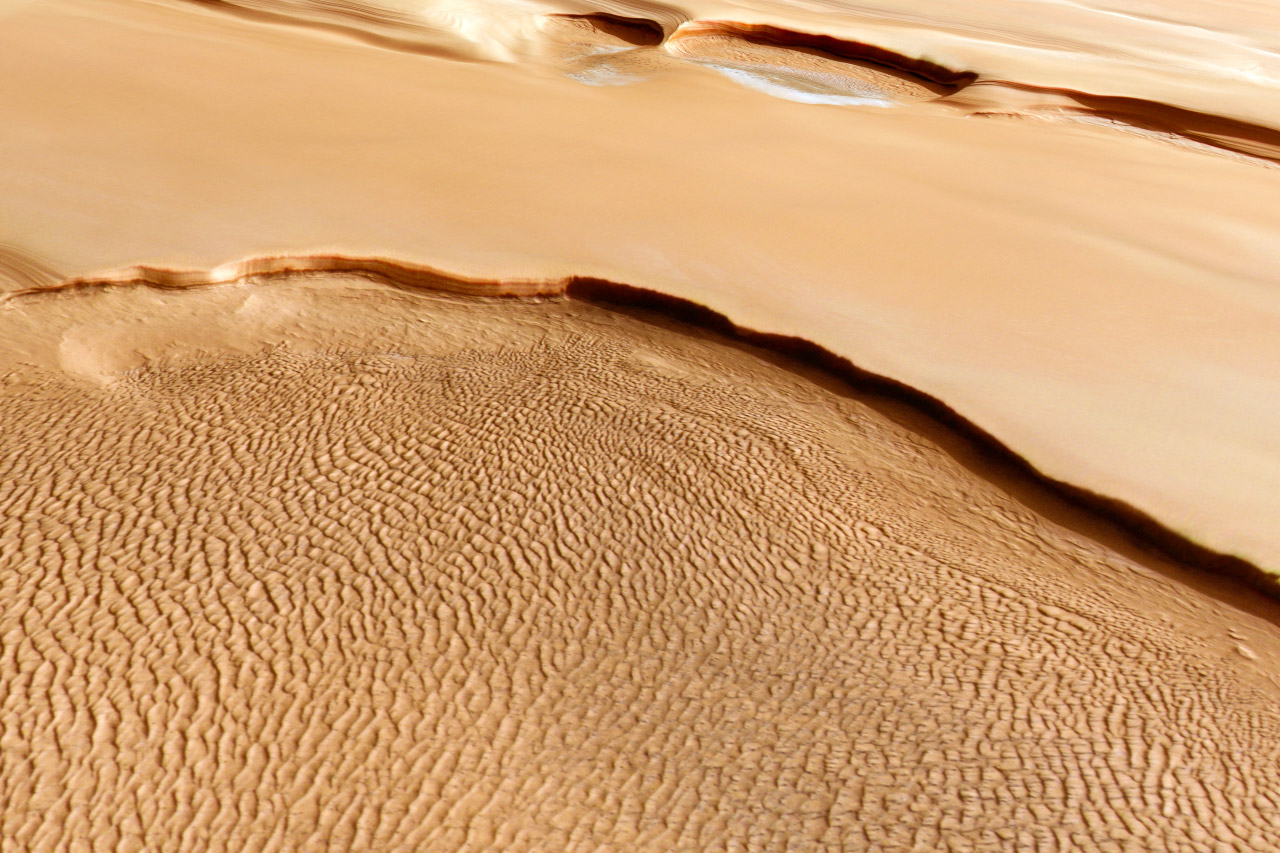
These layers are actually a combination of dust, water ice and frost that settled on the surface over time. Astronomers are fascinated by this region because each layer contains valuable information about Mars’s history and how the planet’s climate has changed over the past few million years. During the winter, the layers are capped by a thin layer of dry ice measuring a couple of meters thick.

- Mars Rover toy for boys and girls aged 11+ – The LEGO Technic Mars Crew Exploration Rover space toy for kids is packed with realistic features so...
- A space toy filled with features – This space building toy includes an expanding truck bed, suspension, a moving crane, elevator, generator...
- Rover expands and retracts – The model reflects how rovers adapt from being compact for transportation to expanding when they carry cargo after...
Between these two extremes sit two semicircular cliffs, the larger of which is around 20 km wide. Within the curves of these cliffs sit frost-covered sand dunes. The grand scale of the cliffs is clear from the dark shadows they cast on the surface below – their steep, icy walls tower up to a kilometer high,” said the European Space Agency.
[Source]