

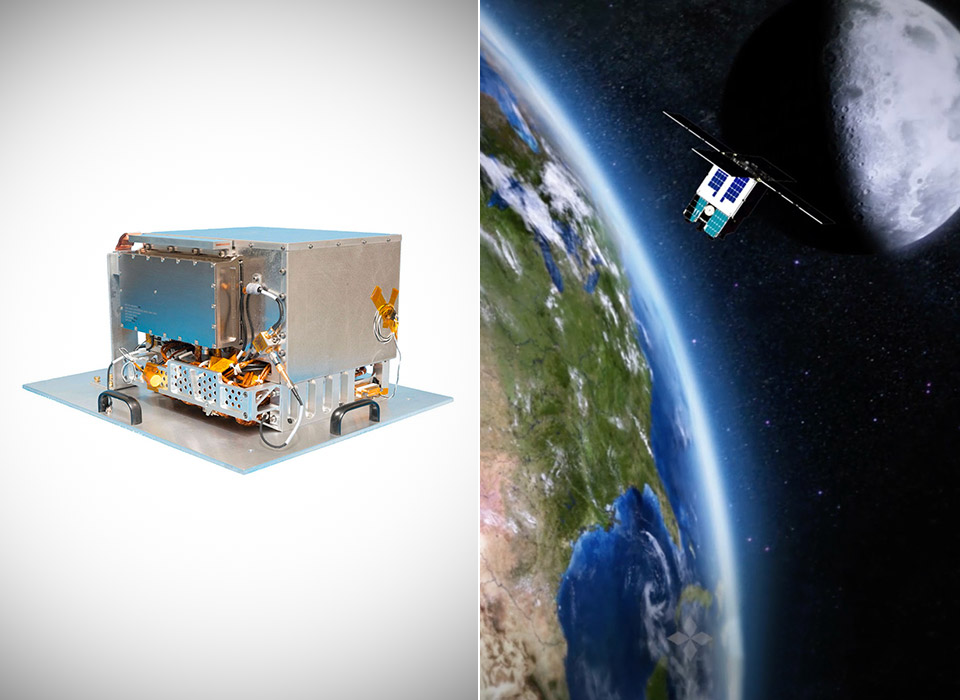
NASA’s Deep Space Atomic Clock is designed to improve navigation for robotic explorers as well as the operation of GPS satellites for journeys beyond our Moon that will rely on communication with ground stations on Earth. If spacecraft carried atomic clocks, they would be able to calculate their own position and direction, like this one, which has achieved more than 10 times the stability of current space-based atomic clocks, including those on GPS satellites.
Unlike other atomic clocks, the Deep Space Atomic Clock is stable over longer and longer periods, or to be more specific, it has a time deviation of less than four nanoseconds after more than 20 days of operation. Built by JPL and funded by NASA’s Space Technology Mission Directorate (STMD), the ultra-precise clock signal generated with the Deep Space Atomic Clock could eventually help enable autonomous spacecraft navigation and enhance radio science observations on future missions.

- ADVANCED TECH MEETS ICONIC DESIGN: The NexStar 8SE pairs Celestron’s legendary orange tube with a fully computerized GoTo system—ideal for those...
- 8-INCH SCHMIDT-CASSEGRAIN OPTICS: The large 8" aperture gathers enough light to reveal fine lunar details, cloud bands on Jupiter, and deep-sky...
- FULLY AUTOMATED GoTo MOUNT WITH NEXSTAR+ HAND CONTROL: Use the NexStar+ hand control to select from a 40,000+ object database. The computerized mount...
As a general rule, an uncertainty of one nanosecond in time corresponds to a distance uncertainty of about one foot. Some GPS clocks must be updated several times a day to maintain this level of stability, and that means GPS is highly dependent on communication with the ground. The Deep Space Atomic Clock pushes this out to a week or more, thus potentially giving an application like GPS much more autonomy,” said Eric Burt, an atomic clock physicist for the mission at JPL and co-author of the new paper.


