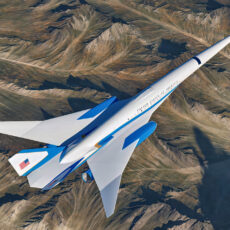
NASA and Lockheed Martin’s X-59 QueSST supersonic aircraft has been nicknamed “Son of Concorde”, and rightfully so. The agencies hope that the ban on commercial supersonic flight over land can be lifted by replacing the loud sonic boom with a softer sonic “thump.” When shock waves from an object traveling through the air faster than the speed of sound merge together before they reach the ground, a sonic boom happens, resulting in a thunderclap. The X-59 Quiet SuperSonic Technology (QueSST) aircraft will solve that issue.
Researchers assigned to the Commercial Supersonic Technology (CST) project recently tested a small-scale model of the X-59 in NASA Glenn’s 8- by 6-foot Supersonic Wind Tunnel to visualize the agency’s boom-reducing technology and validate its boom-predicting capabilities. This model was subjected to weeks of testing in the tunnel, producing shock waves that were captured by special cameras mounted outside the test section as well as with a unique sensor array inside.
No products found.
This is the team’s opportunity to get data at the low sound levels produced in the tunnel. It all comes down to our ability to measure the thump,” said Clayton Meyers, deputy project manager of the CST project.