Quantum computers have the ability to solve some extremely tough problems that are virtually impossible for regular computers to crack. There is one catch: those incredibly sensitive quantum bits known as qubits can be thrown out of sync by the smallest disturbance, forcing researchers to spend an eternity modifying hardware and correcting errors on the fly. That has all changed with NVIDIA’s recent announcement, which includes a set of open AI models that anybody may download and adapt.
Researchers named the new family Ising after a famous physics approach that used to be extremely useful in simplifying complex systems. The models are focused directly at the two most significant problems of making our noisy quantum hardware dependable. One set handles the constant tinkering required to keep the processors stable, while the other works with detecting and correcting errors before they cause a calculation to go awry.
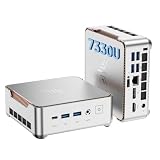
- 【AMD Ryzen 7330U】 – The Efficiency-Tuned Powerhouse,AMD Ryzen 7330U (Zen 3, SMT, 4C/8T) in KAMRUI P2 mini PC crushes rivals: Intel i3-10110U...
- 【AMD Radeon Graphics】– Triple 4K Vision & Fluidity,The integrated Radeon Graphics (based on the modern Vega architecture with 6 CUs) is a...
- 【Generous Storage & Easy Expansion】The KAMRUI Pinova P2 mini desktop computers comes with 16GB LPDDR4X RAM (higher frequency, lower power) for...
Calibration used to require teams of experts sifting through data for days on end, but Ising Calibration operates in a whole new way. It is based on a large language model with 35 billion parameters that can be read directly from a quantum processor and then outputs explicit instructions to an automated agent that makes the appropriate modifications. It has made a significant difference, as the entire process used to take days, but with Ising Calibration, it can be completed in a matter of hours, freeing scientists to conduct larger and more fascinating studies.
Error correction is the more difficult nut to crack since quantum systems create massive amounts of supplementary data from special helper qubits that attempt to indicate faults without interfering with the primary calculation. Traditionally, this meant that software had to sift through all of this extra data to figure out what went wrong and how to solve it. Ising Decoding replaces that slow process with two miniature 3D neural networks, one of which is a speed demon focused on getting the job done quickly, while the other is more exact but takes a little longer. In either case, the results are twice as fast and three times more accurate than the present state of the art.
Developers get the full package because everything is open-source, including the models on Hugging Face and GitHub, as well as all of the training data, step-by-step directions, and lightweight services that can operate on any standard GPU. Researchers using a certain quantum processor can fine-tune the networks to meet their own noise patterns in a few hours rather than starting from scratch. NVIDIA also provides pre-built microservices, allowing teams to integrate the models into their existing workflows without rewriting a single line of code.
The suite is already being tested by major labs, including Harvard, Cornell, Fermilab, IonQ, and the UK National Physical Laboratory. The models plug directly into NVIDIA’s CUDA-Q architecture, which connects quantum processors to powerful GPUs via super-fast interconnects, allowing classical computers to handle the heavy lifting while the quantum side does the actual work.
[Source]