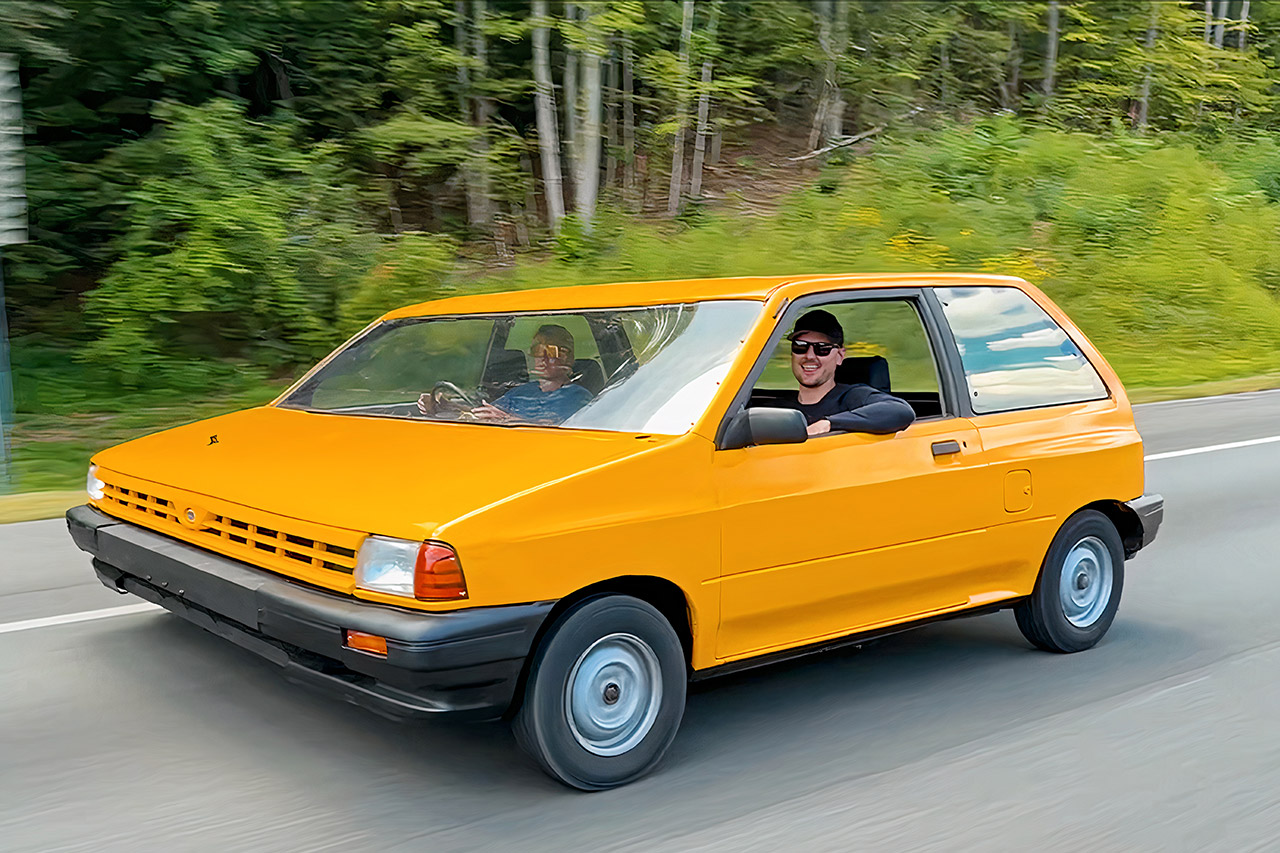
Tyler Fever of Prop Department already cut a Ford Festiva into the thinnest street-legal car possible. For the follow-up he reversed the idea and produced a version that measures exactly ten feet from one side to the other. Three more of the little 1988 hatchbacks served as donors, each purchased for roughly $250, so the whole starting collection stayed cheap while still supplying enough parts and metal.
That exact width was chosen because it represented the sweet spot. If he went a little wider, things would become more problematic. For example, conventional vehicles can reach up to 8 feet 6 inches without the requirement for additional permits or paperwork, while in Tennessee, up to 10 feet can still touch the road with an oversize permission and commercial insurance, but no escort vehicles or special safety flags. Go just a little bit wider and things get a whole lot more problematic, as route constraints and the whole nine yards, so he had to decide on ten feet as the max width for a car that could yet handle like a regular vehicle.

- CUSTOM MUSTANG RACE CAR – This LEGO Speed Champions Ken Block's '65 Ford Mustang Hoonicorn V1 (77262) building toy for boys and girls ages 9 years...
- AUTHENTIC DETAILS – Builders will recognize cool features from the car's debut in the 2014 Gymkhana SEVEN film, including exposed velocity stacks on...
- KEN BLOCK MINIFIGURE – The included Ken Block minifigure features a Hoonicorn hat and jacket, plus an extra helmet accessory for added play value
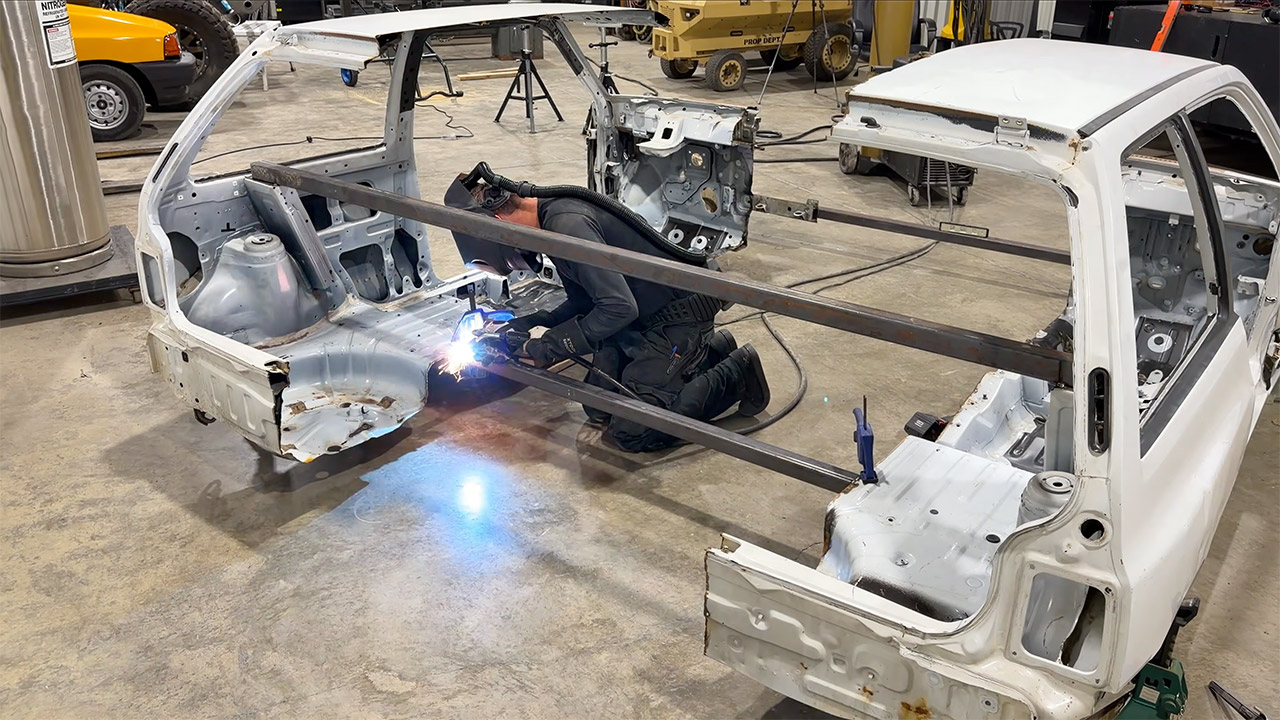
Work began by slicing apart a Festiva. One Festiva was split down the middle with a portable fiber laser. Fortunately, we were able to freeze the old floor adhesive with liquid nitrogen, so it fractured and cracked cleanly instead of splitting apart. Then we slotted some square steel tubing in there to bridge the gap, closed it up with a 10-gauge steel floor and an 18-gauge steel top, and welded it back together into a single solid shell, all while keeping the original body panels and box-flared fenders around the sides.
Now, to accommodate the increased width, the suspension and drivetrain had to expand slightly. The rear beam axle was already past its prime, so he stretched it to its limit. On the front-wheel-drive side, he faced a challenge, so he stretched the CV axle almost five feet using careful welding and controlled cooling, and managed to keep the joint from becoming bent out of shape. The steering shafts from the donor vehicle were modified to work on both sides of the cabin, allowing both occupants to maneuver the automobile as needed.
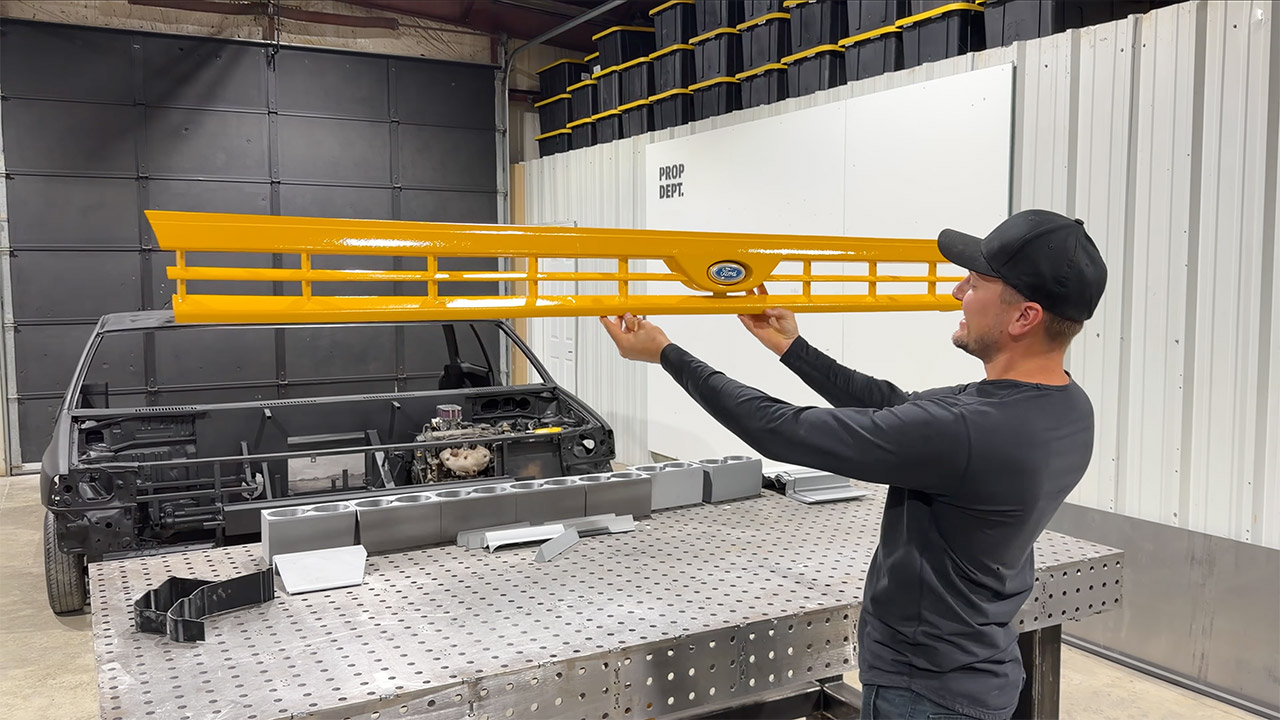
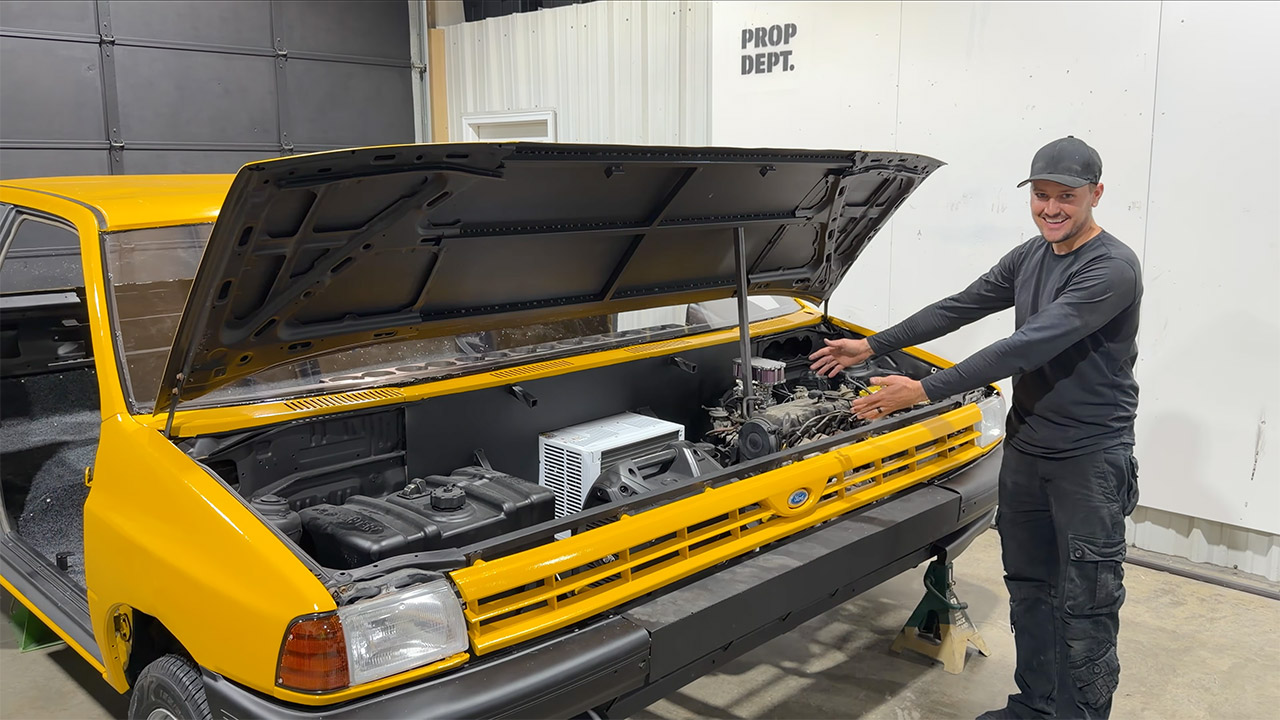
Despite the fact that it was a difficult task, a Bambu Lab H2C printer was able to knock out a bigger front grille and enlarged dashboard parts that fill up the extra width. Inside, the car still has four seats, all of which are in the front of the spacious cabin, as well as a big center console with 14 cupholders to keep everyone hydrated. Under the hood, the original engine is slightly skewed to one side, alongside the fuel tank, an auxiliary generator, and a domestic window A/C unit that keeps the cabin cool even on lengthy trips.
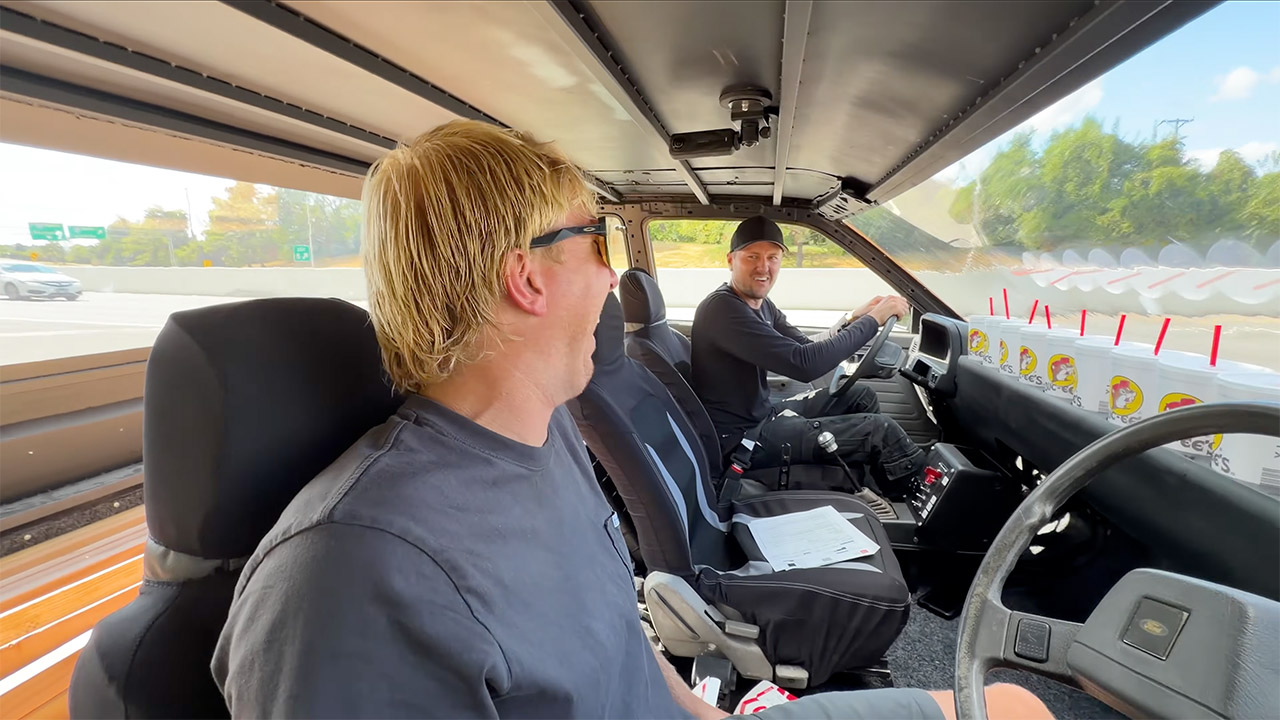
The entire structure is painted a brilliant, sunshine-yellow, and he installed some plastic windows to span the new breadth. Once we received our permit, Fever took it for a test drive across 400 miles of highways, country roads, and city streets, and it functioned admirably, despite carrying logs, three passengers, and bulk supplies at the same time. It even reached speeds of over 70 mph with no major concerns. He had a few encounters with the police due of the size and temporary plate, but the officers were largely intrigued and he received no penalties. Lane positioning needs careful consideration, but tight spaces necessitate some strategy. However, the car proved reliable enough for real-world use and was even enjoyable to drive after the driver adjusted to the proportions.