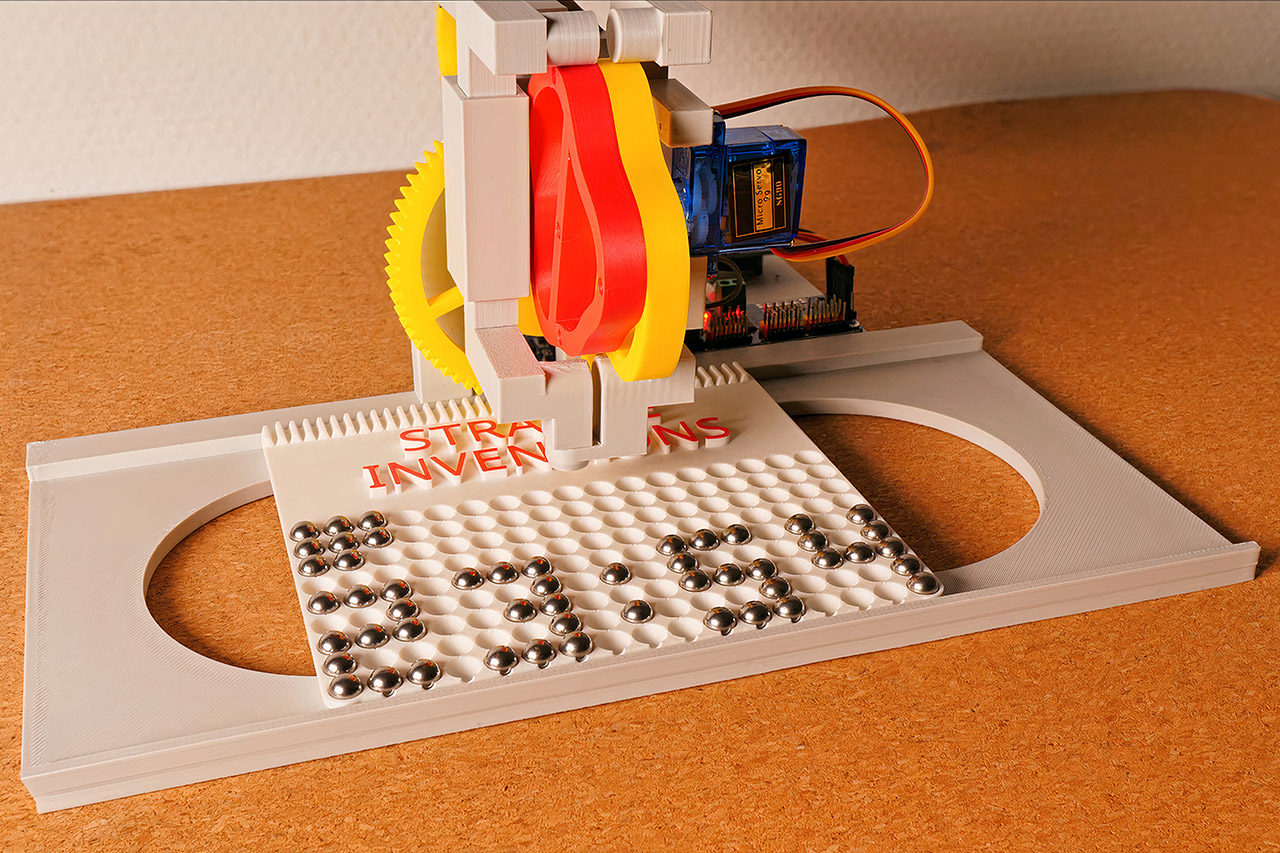
Jens’ workstation has a tiny marble clock that tells the time without the need for large rolling balls. Instead, a little arm reaches in, grabs the marble with a magnet, swings it around, and puts it into place to create the numerals. Every minute or so, the mechanism causes a small stir to update the display. The whole piece looks good on a desk and is a fraction of the size of the large marble clocks that inspired it.
Jens was inspired by Ivan Miranda’s gigantic marble displays, which show the time by allowing hundreds of balls to move via intricate pathways. Those machines are clearly too large for a standard room, as they require a lot of area for the gravity-fed tracks, and the continual clatter they produce is somewhat annoying. Jens decided to flip that on its head. He designed it to be as tiny as possible, kept to a $23 budget, and eliminated the majority of the noise by replacing all of the rolling with good old strategic placement.

- MOTORIZED LIFT FOR ENDLESS RUNS - Features a motorized lift that carries your marbles up almost 20 inches and drop them onto the track! Create a...
- 150-PIECE KIT FOR MASSIVE MAZES - With 106 construction pieces, 30 marbles, and the 14-piece spiral lift, you get everything you need to create...
- COMPATIBLE WITH NATIONAL GEOGRAPHIC MARBLE RUNS - Expand any National Geographic Glow-in-the-Dark Marble Run with this kit! All pieces, including the...
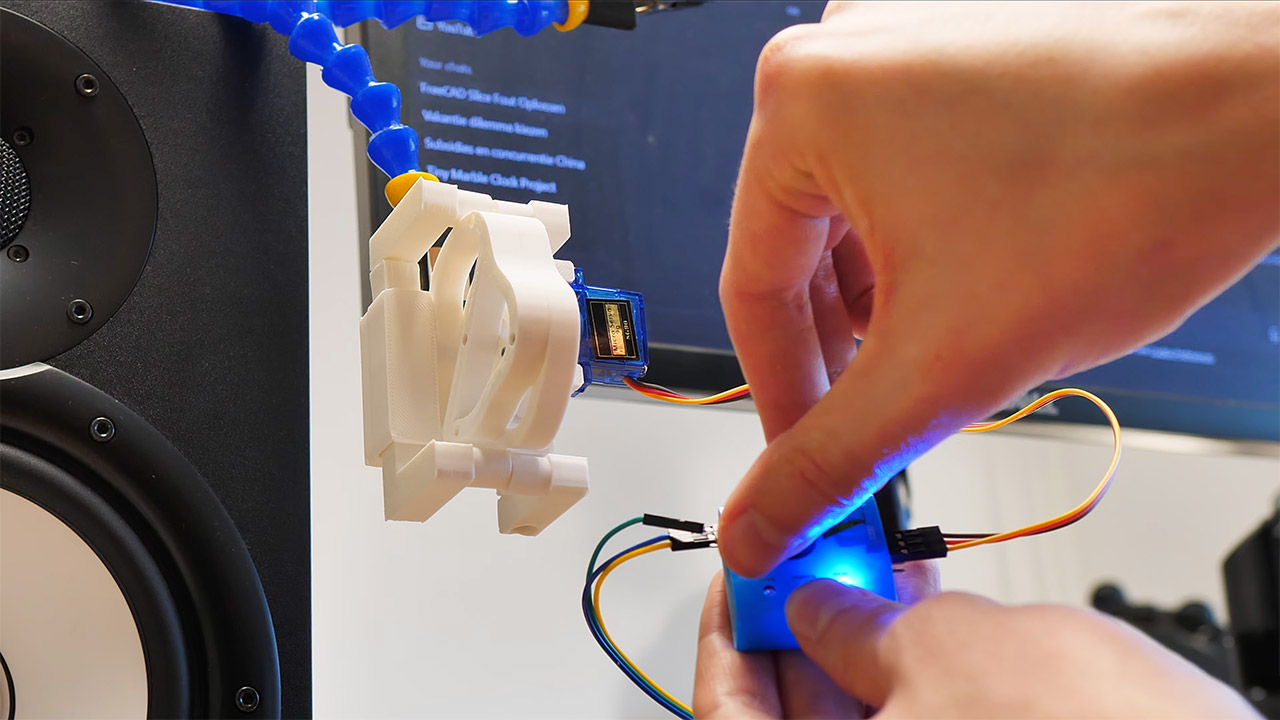
The SG90 micro servos do all of the work, with three of them controlling the arm’s movement across three distinct axes and a fourth stepping in to perform the pick-and-place. The arm ends with a magnet that lifts the marble from a matched supply location. Then there’s a basic piece that pushes the marble off when it reaches the correct position on the grid. Jens avoided springs and other unnecessary gear and instead devised a creative solution. A finely formed cam attached to a single servo generates the up-and-down motion required to capture the marble and deposit it into place. He really figured out how to make it work with inexpensive parts.
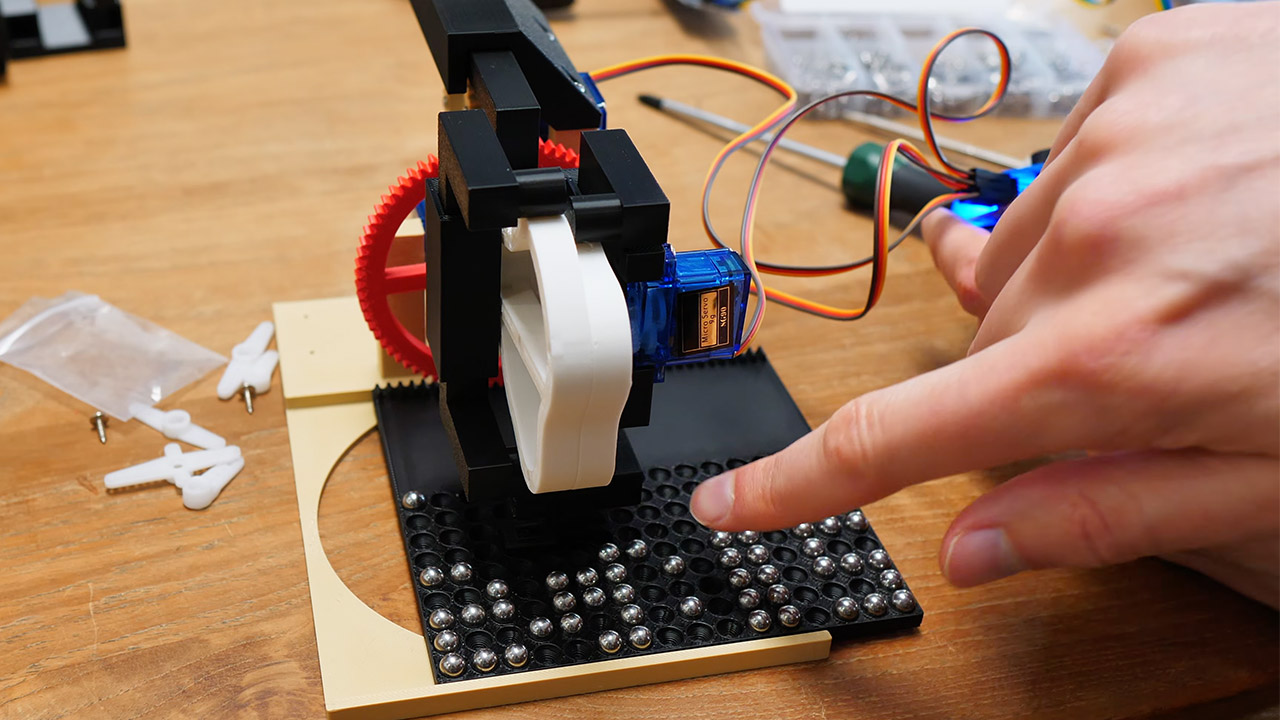
The marbles function as individual pixels, and when the time changes, the system determines which ones to add and which to remove. It’s all controlled by a microprocessor, which has a table of pre-programmed instructions for resolving any minor faults with the servos or something called hysteresis. Occasionally, the arm will block the display for a single second during a maneuver, but this is not a major concern.

One of the main advantages is that it’s decently quiet. Traditional marble clocks constantly fill the air with the sound of balls clattering down ramps. This one simply goes “whir whir,” with the occasional quiet click. So you can now place it on your desk without it being a bother. This marble clock is small enough to fit on the side of your keyboard and displays the time in a whole new way.
[Source]