Your eyes aren’t playing tricks, this is what FromSoftware’s Elden Ring would probably look like on the Nintendo Game Boy. Unlike other demakes, this one, inspired by The Legend of Zelda: Link’s Awakening, will be playable on the actual handheld console. It features a top-down view where players can explore scrolling environments, complete with a sword slash attack.

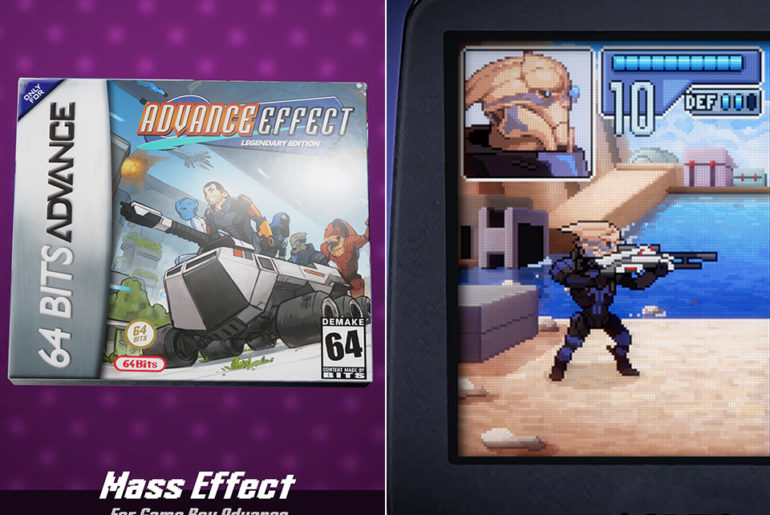
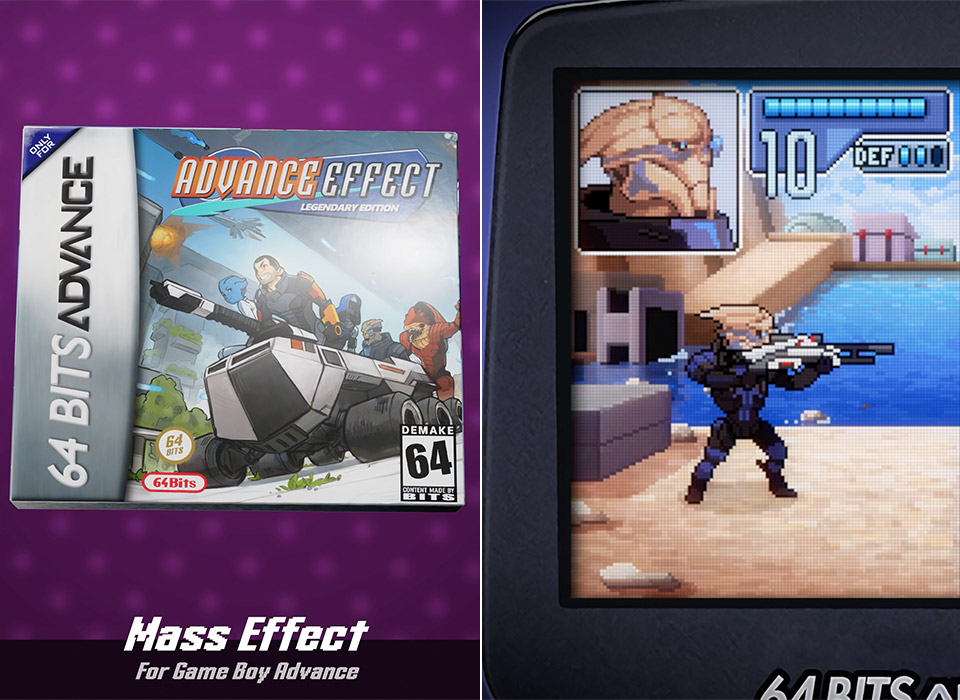
This fan-made Mass Effect Advance Wars-style demake for the Game Boy Advance should definitely be an official Nintendo title. Officially called the “Advance Effect: Legendary Edition,” it combines the gameplay of Advance Wars with the characters and scenery from Mass Effect. Unfortunately, there is no playable demo, as all of this was created from scratch, most likely using a program like Aesprite, which is purpose-made software for pixel art.

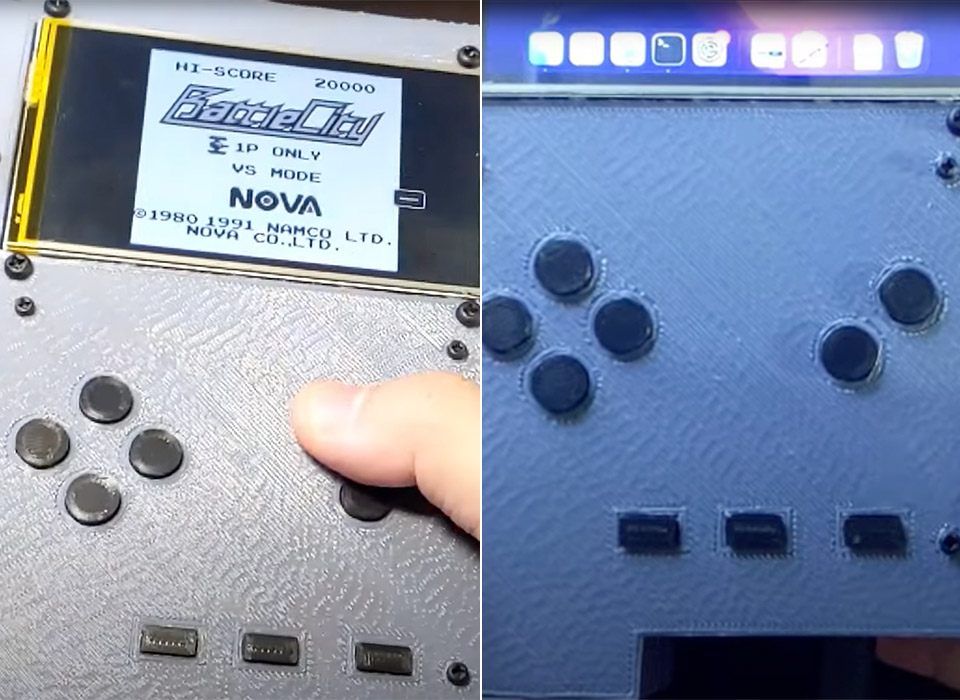
Ok, so this isn’t exactly as pocket-friendly as a classic Nintendo Game Boy, but this custom creation does run macOS Monterey. How? It’s essentially a handheld computer powered by a LattePanda Alpha board. This board has an Arduino (open-source electronics platform) integrated to map the Game Boy buttons as well as the resistive touch screen. The device uses a Python script to communicate with the macOS system, allowing it to emulate mouse movements and key presses.

Photo credit: Stack Smashing
In case you haven’t played Wordle yet, it’s basically a web-based word game developed by Josh Wardle. You have six chances to guess a five-letter word, and the mechanics are similar to the classic pen-and-paper game Jotto. The game was launched in October 2021 and quickly rose the worldwide fame, eventually being acquired by The New York Times. Today, a programmer has released a port for the original Nintendo Game Boy.

H/t: Conor Merrigan via PetaPixel
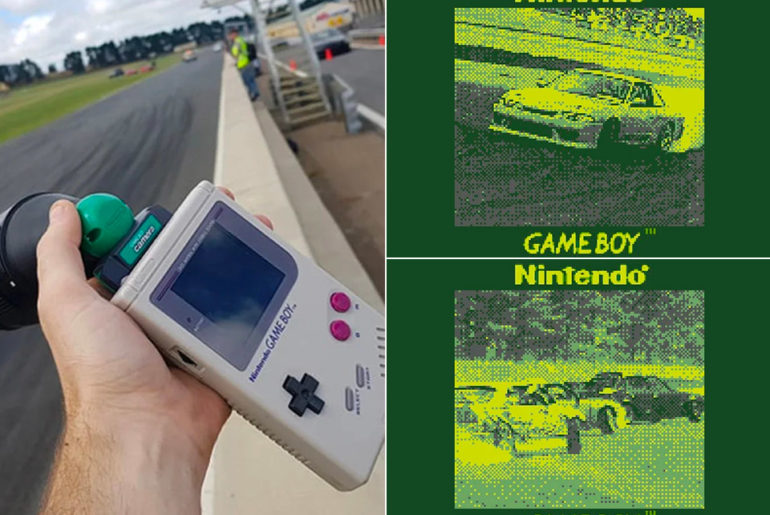
First released in 1998, the Nintendo Game Boy Camera was ahead of its time and straight out of the box, the picture quality leaves a lot to be desired, but with some modifications, it can become a decent shooter. Automotive enthusiast Connor Merrigan from Australia modified one to accept DSLR lenses using a 3D-printed adapter and then went to the racetrack to capture some drift cars.

H/t: Gizmodo
Always wanted a supersized Nintendo Game Boy without having to actually connect one of the consoles to a TV? Well, one gamer managed to come up with an unconventional solution that involves sacrificing nine other Game Boy consoles, or at least their screens. To start, the Game Boy Pocket’s display protocol had to be reverse engineered with an oscilloscope before its signal could be wirelessly streamed to another device using an ESP32 wireless module. Read more for a video of the modification and additional information.

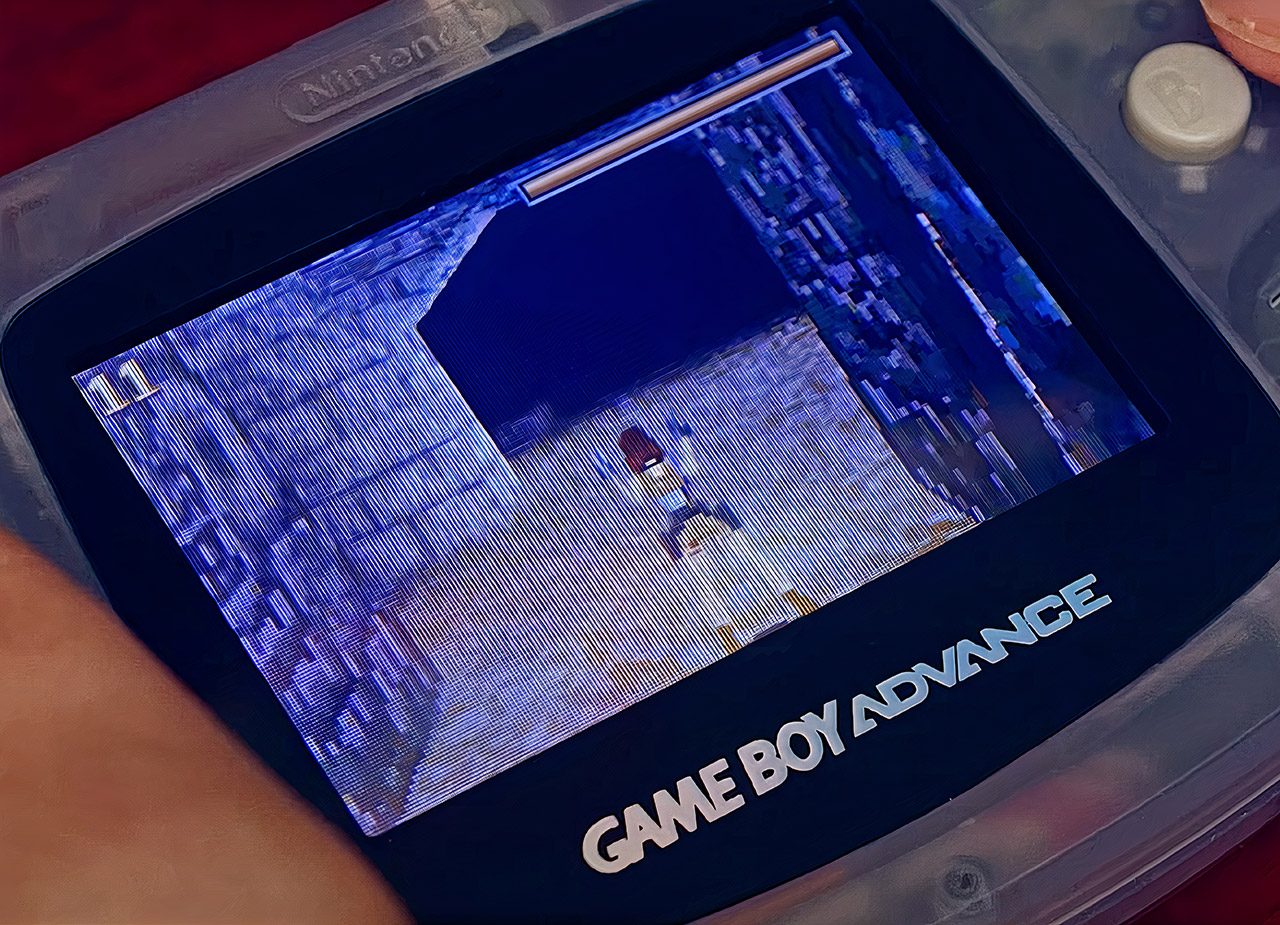
Successor to the Game Boy Color, Nintendo’s Game Boy Advance is essentially a 32-bit handheld game console boasting advanced 2D graphics hardware. This allowed for scaling and rotation for traditional tiled backgrounds in its modes 1-2 as well as scaling and rotation for bitmaps in modes 3-5. Is this hardware powerful enough to run the original PlayStation Tomb Raider game? Well, if you’re talking about the new OpenLara version, then most certainly.

YouTuber Logan Paul has been known for some crazy stunts, but his latest project might have angered some Nintendo fans. Why? He took 15 Game Boy Color consoles and turned them into an epoxy resin table, complete with a metal Pokemon frame to prevent edge wear. There’s no mention on if these handhelds were previously working, but should they all be non-functional, it’s a creative way to repurpose them.

H/t: Kotaku
Here’s a look back at an unreleased Game Boy Color accessory that might have turned it into a smartphone of sorts. Called the Nintendo PageBoy, this device would have given Game Boy Color users access to email, web browsing, photo messaging, world news, sports results, weather forecasts, and more.

Nintendo’s Game Boy Camera (GBC), also known as the Pocket Camera in Japan, was released on February 21, 1998, in Japan, and was ahead of its time to say the least. This accessory is capable of shooting grayscale photographs and gave users the ability to edit or create original drawings from them.