
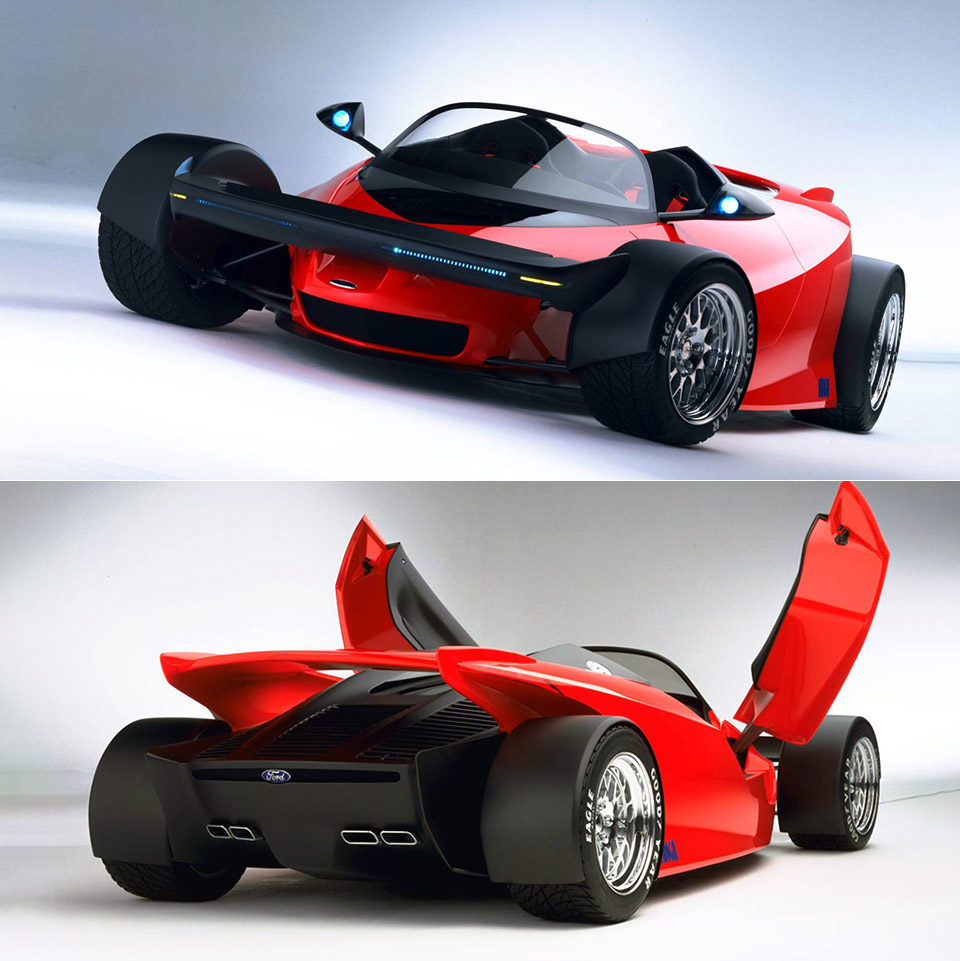
In 1996, Ford showed a concept car at the Detroit Auto Show that looked like it was ripped from the pages of a comic book. The Ford Indigo was a head-turning, open-wheeled monster powered by a 6.0-liter V12, designed to harness the raw power of IndyCar racing into something that could, in theory, hit the streets.
After missing out on Michael Schumacher’s 1994 F1 World Championship with Benetton-Ford, Ford wasn’t going to let Villeneuve’s 1995 Indy 500 win go unnoticed. Under the direction of Jac Nasser, Ford’s VP of product development, a team led by Mark Adams and John Hartnell, along with engineers from the Advanced Vehicle Technology group and Reynard Motorsport, built a car that screamed performance. The result was a car that married IndyCar tech with a road-going fantasy, built in just six months. The carbon fiber monocoque chassis, developed with Reynard, was a lightweight masterpiece, a single-piece structure like a race car but with two seats and a safety cell reinforced by wide air intake ducts.

- FORD BRONCO MODEL CAR KIT – Builders ages 9+ can create their own off-road adventures with this detailed LEGO Technic SUV featuring authentic...
- AUTHENTIC DETAILS – This car toy building set includes working suspension, opening doors, functional steering, and a detailed V6 engine under the...
- CAR MODEL KIT – Young engineers can explore learn more about their favorite vehicles with this building and learning toy that demonstrates real...
Powering the functional Indigo, nicknamed “Go,” was a 6.0-liter V12 engine, a Frankenstein’s monster cobbled together from two Ford Taurus Duratec V6s. Built by Cosworth with a new aluminum block and cylinder heads, it produced 435 horsepower and 405 lb-ft of torque, 0-60 in under four seconds and a theoretical top speed of 180 mph. The engine was bolted to the chassis, a stressed member of the suspension, just like an open-wheel car. A six-speed sequential manual transaxle, operated by steering wheel buttons and a racing-style carbon clutch, sent the power to the rear wheels.
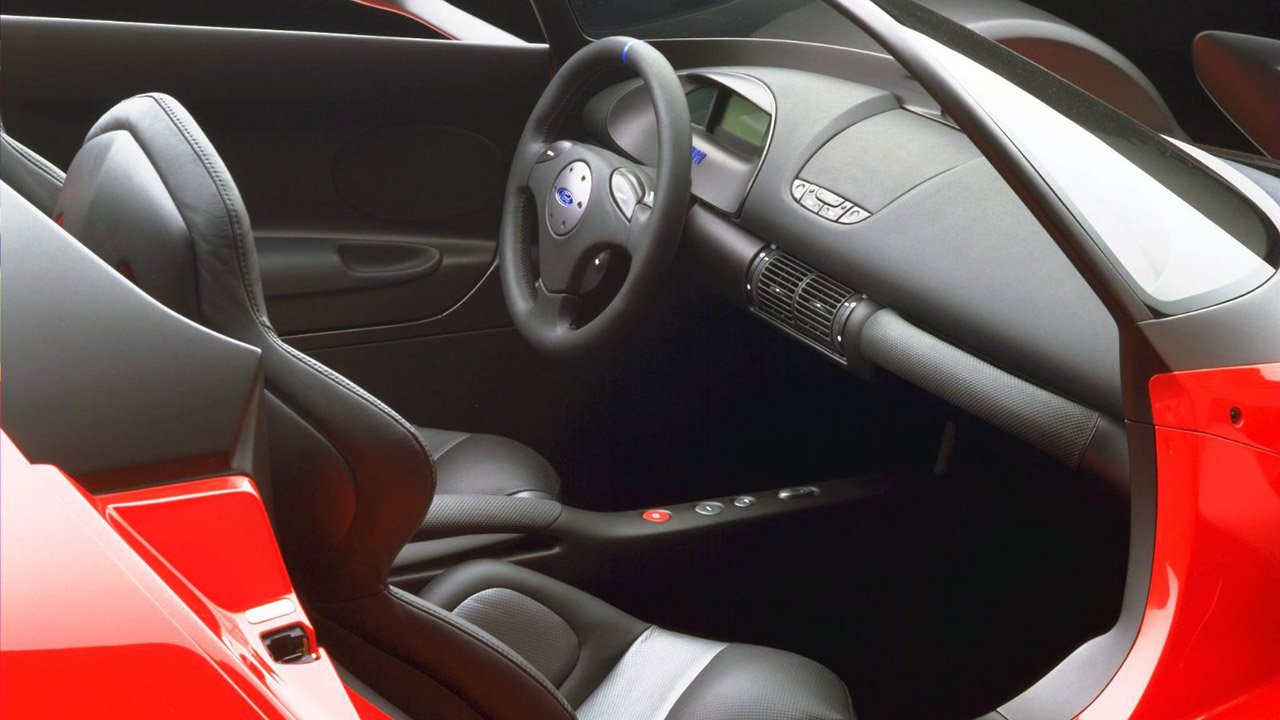
Practicality was an afterthought as performance was the priority. Scissor doors opened to a minimalist interior with four-point harnesses and a start button, just like a race car. The front end had an aerofoil that doubled as a housing for fiber optic lights, with additional lights in the wing mirrors due to the directionality of the main beams. Despite the stripped-down cabin, there was a minidisc player – but the V12 would probably drown out the music. The 114-inch wheelbase was the same as an IndyCar and the double-wishbone suspension with pushrods and inboard shocks was pure racing. Wind tunnel testing showed it could corner at 1.2g.
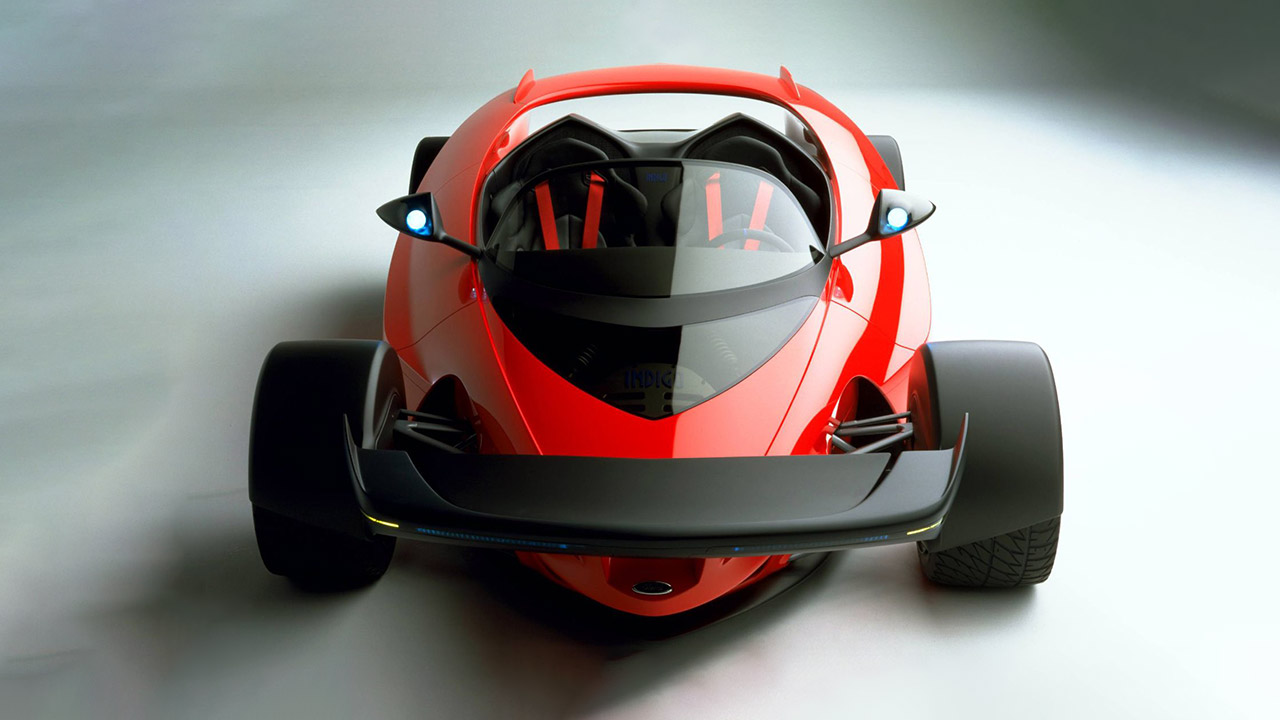
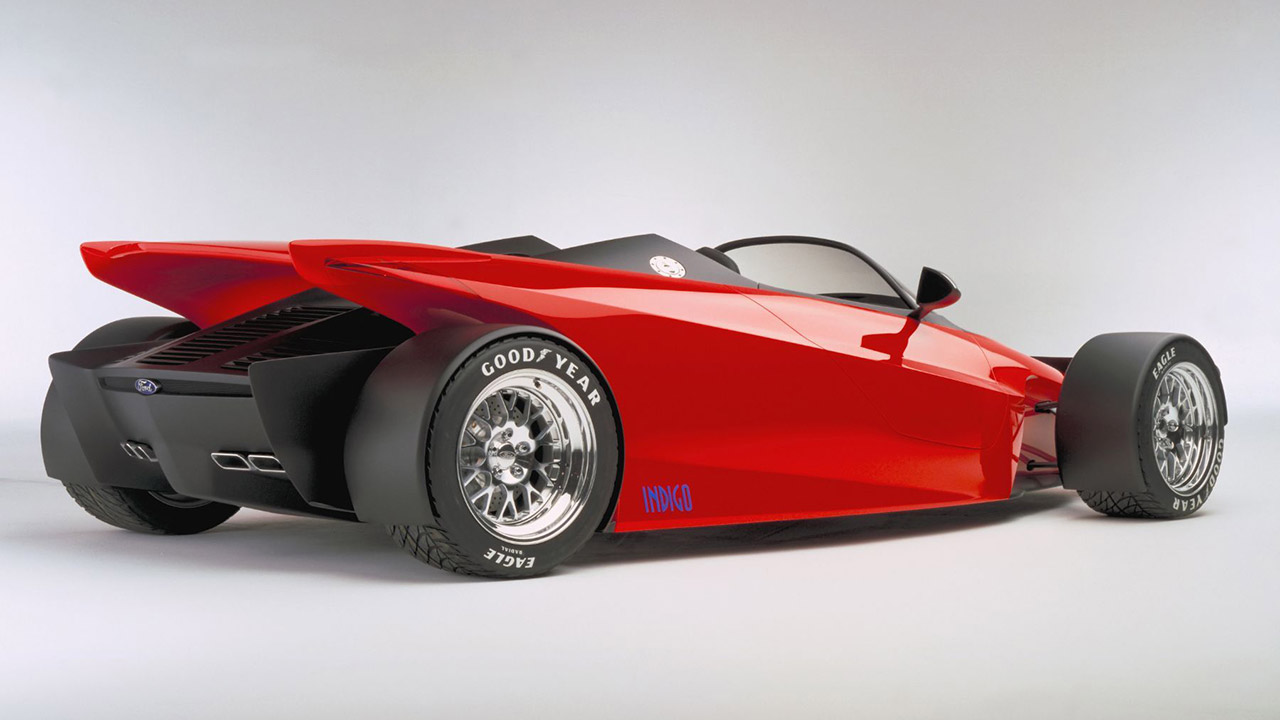
Behind the scenes, the Indigo was a test bed for a V12 engine destined for greatness. The same engine was developed by Ford’s Advanced Powertrain Engineering team and later went into Aston Martin’s DB7 Vantage, a nod to Ford’s ownership of the British marque at the time. The project was a big statement to outdo Chrysler’s Dodge Viper, with Ford execs looking for a “supercar” to rival it. Named partly for its IndyCar roots and partly for Jac Nasser’s love of a darker “Indigo Blue” for Ford’s badge, the car was a technology showcase. Its carbon fiber body, massive Brembo brakes and wide tires – 335/30ZR-17 front and 355/35ZR-18 rear – gave it a stance as aggressive as its performance.
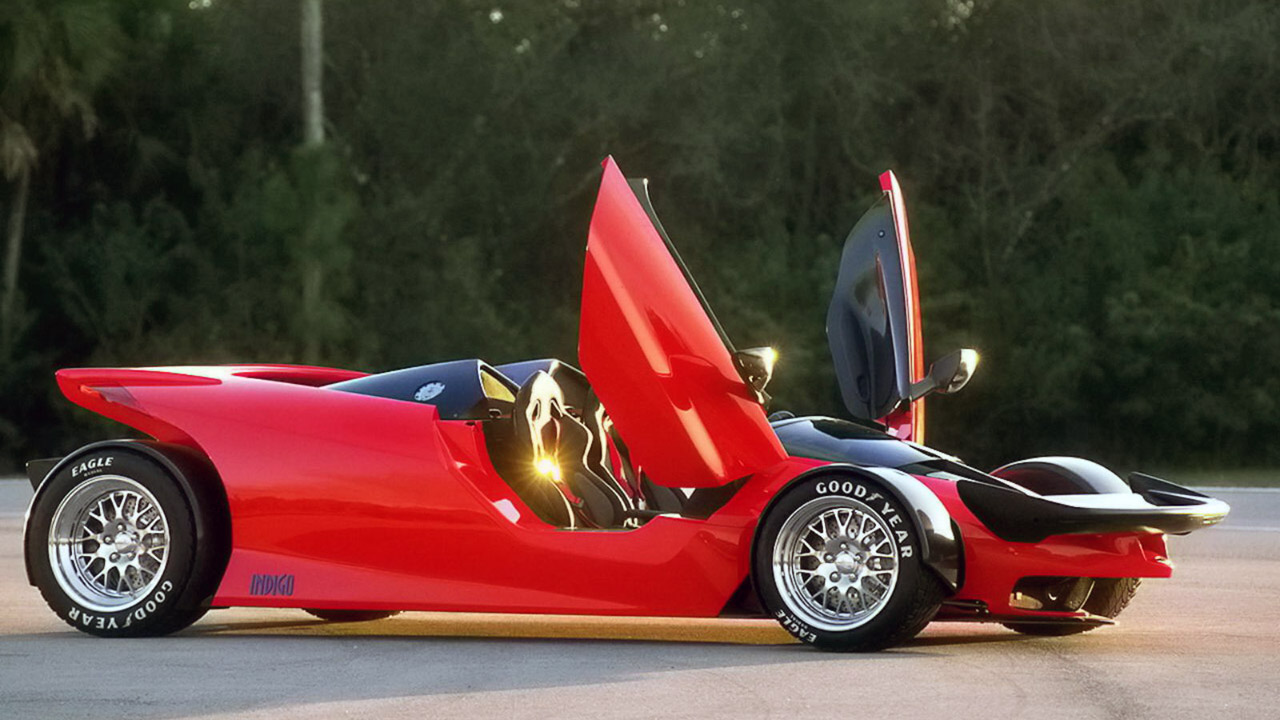
Despite its showstopping debut at the 1996 Detroit Auto Show, where it went head to head with the Mercedes-Benz AAVision concept, the Indigo never made it to production. The decision was tied up in internal politics with Jac Nasser using the project to further his case for being CEO of Ford. The functional prototype was pushed to its limits at the chaotic Australian Grand Prix where it hit 193mph with F1 and saloon racing drivers giving joyrides to VIPs. The lack of a roll cage raised eyebrows among the engineers who were shocked to hear about the car’s extreme workout through the press rather than management.
Two of the three Indigos were sold off in the early 2000s, with one non running roller recently appeared on Facebook Marketplace. Its gullwing doors and finished interior make it a collectible but the lack of an engine is a tragedy. A star of the 1997 video game Need for Speed II it remains a memory for car enthusiasts, a symbol of Ford’s boldest dream – a road legal IndyCar that could have redefined the brand’s heritage.