Photo credit: Electron Update
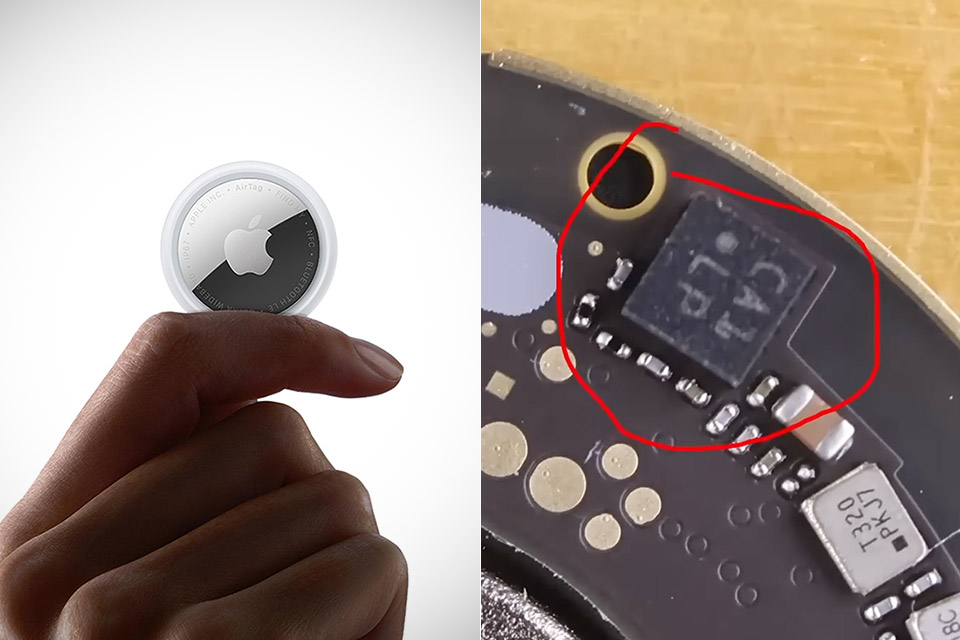
Apple released the second-generation AirTag just last week, and in addition to the normal changes, it has a much louder alert sound, a significantly longer Bluetooth range, and noticeably more accurate position tracking. Electronupdate examined one of these second-generation versions and confirmed that Apple pretty much delivered on that promise, but also raises the curtain on how they managed to do it without changing the look on the exterior.
The exterior is identical to its predecessor, but the hardware tells a different story. First, pry the rear cover open, rotate it around, and you’ll see a simple CR2032 coin cell that rests underneath. The layers remain the same: a battery holder, printed circuit board, speaker assembly, NFC antenna, and UWB antenna ring, all neatly stacked.

- FIND YOUR ITEMS ON FIND MY — AirTag (2nd generation) helps you keep track of what matters. Attach one to an item you want to keep track of using the...
- EXPANDED PRECISION FINDING ON IPHONE AND APPLE WATCH — Get step-by-step directions to your lost item on iPhone and, now, Apple Watch.*
- ENHANCED SPEAKER — With a 50% louder speaker and a new, distinctive chime, it’s easier than ever to hear and find AirTag.*
The speaker has been upgraded slightly, largely to provide the louder chime Apple desired. It has a stronger magnet in the center, which is then wrapped in a copper voice coil, tying the entire thing together. They’ve also devised a simple ingenious technique for getting superb sound: the case itself serves as the diaphragm, vibrating to produce the music. That produces a sound that travels significantly further than the previous model and cuts through background noise much more effectively. Apple has taken efforts to position the speaker out of the way, so you can’t casually pull it out and turn off anti-stalking notifications. Nonetheless, people always seem to manage. With time and some basic tools, you can disable it just as easy as the initial AirTag model.
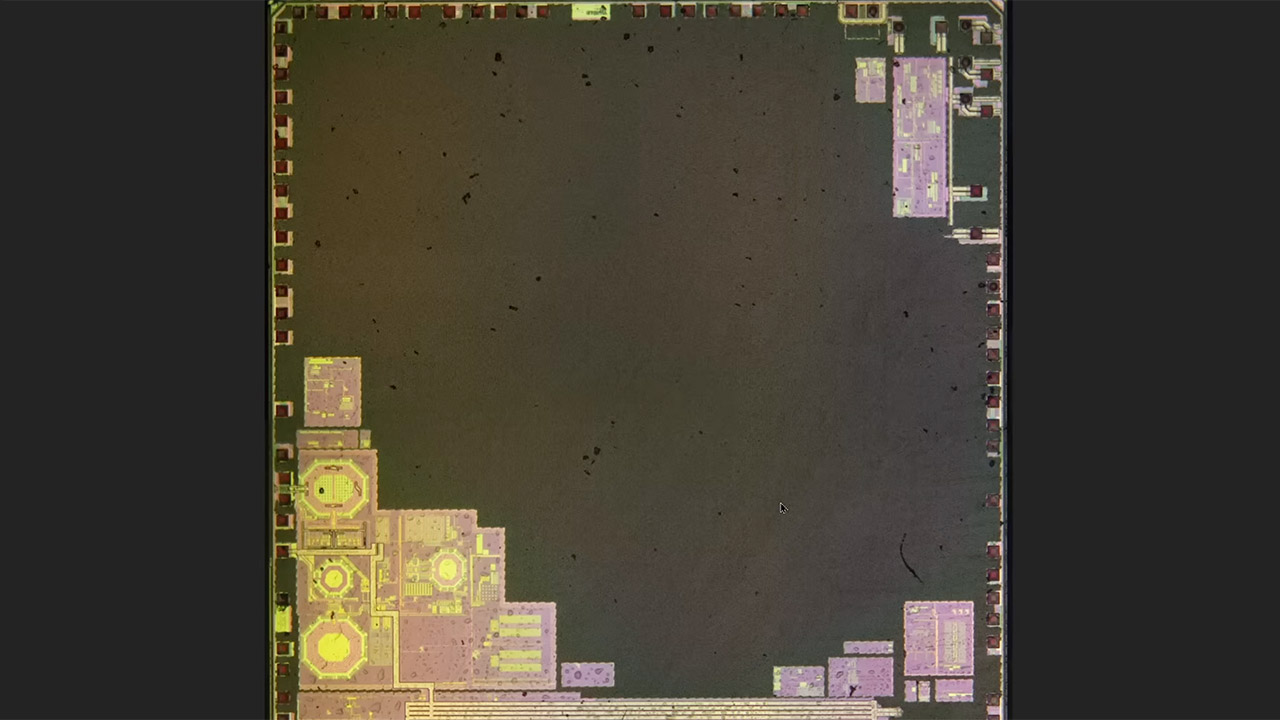
Bluetooth connectivity has shifted to a new Nordic Semiconductor chip, the nRF 52840 model, which is an enhanced version with greater flash memory and RAM, as well as improved radio performance on low energy frequencies. Looking down at the chip, you can see the typical radio blocks: voltage controlled oscillator, independent mixers for receiving and broadcasting, and a balun to match the antenna, among others. The digital bits are all hidden beneath the metal layers, which is a common approach in the industry for protecting crucial circuitry from the outside world.
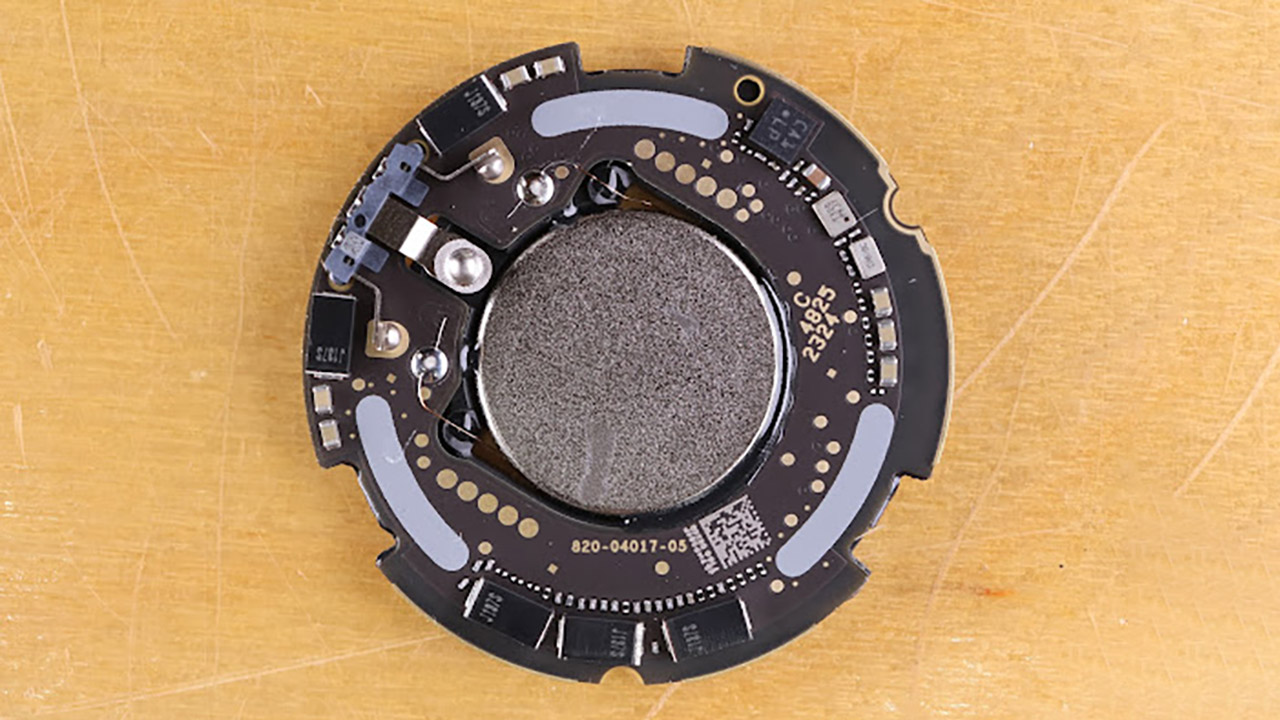
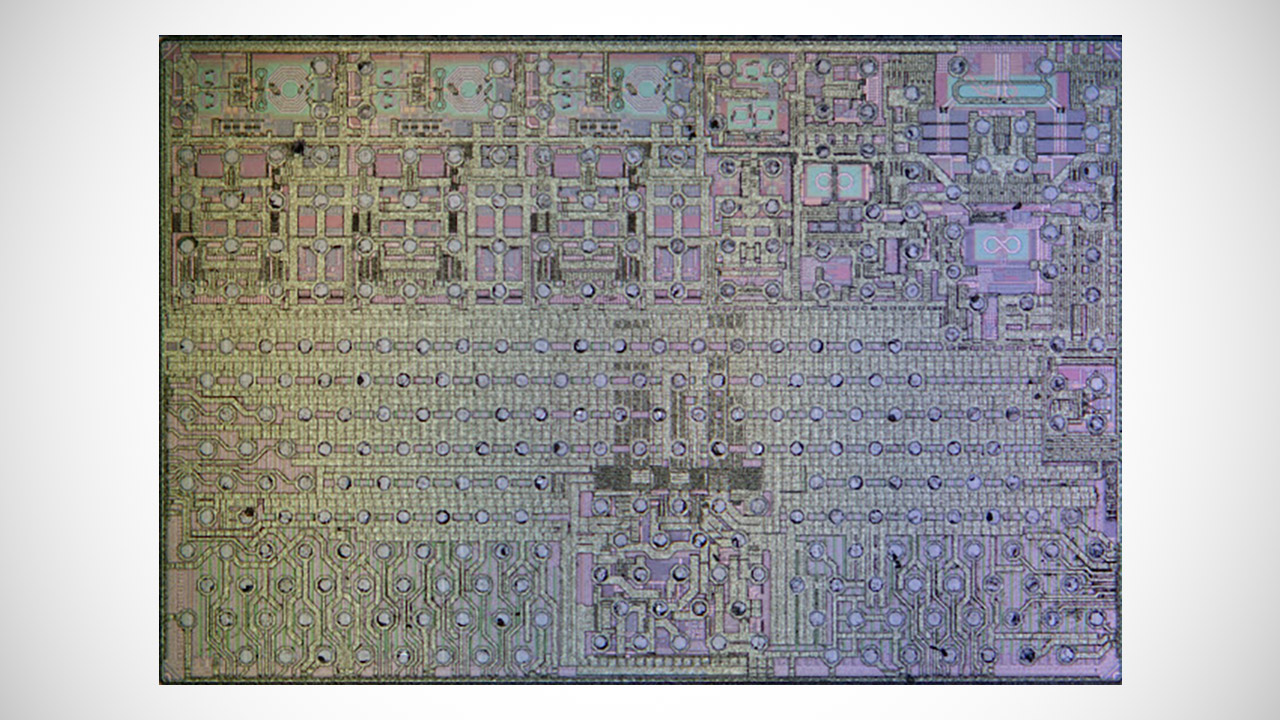
Apple’s U2 ultra-wideband processor, which has been in use for some time, is based on precision finding. It’s a complex component that must measure the time of flight of signals in order to get a reasonably accurate picture of where objects are. In the flesh, it has a variety of arrays tuned across frequencies, as well as inductors and transformers, and bond pads to tie everything together. The board also has two tiny antennas to help it along. The disadvantage right now is that you need a pretty new iPhone to get the most out of the processor.
Other components include a Bosch three-axis MEMS accelerometer chip. When you look down at it, you’ll notice interdigitated comb structures that move anytime there’s movement, and it can detect all of this through capacitance changes. There is also a little SPI flash memory chip that stores the firmware for the device, and that chip presumably has 64 megabits of memory, so all of the important information is crammed into a small area.
[Source]