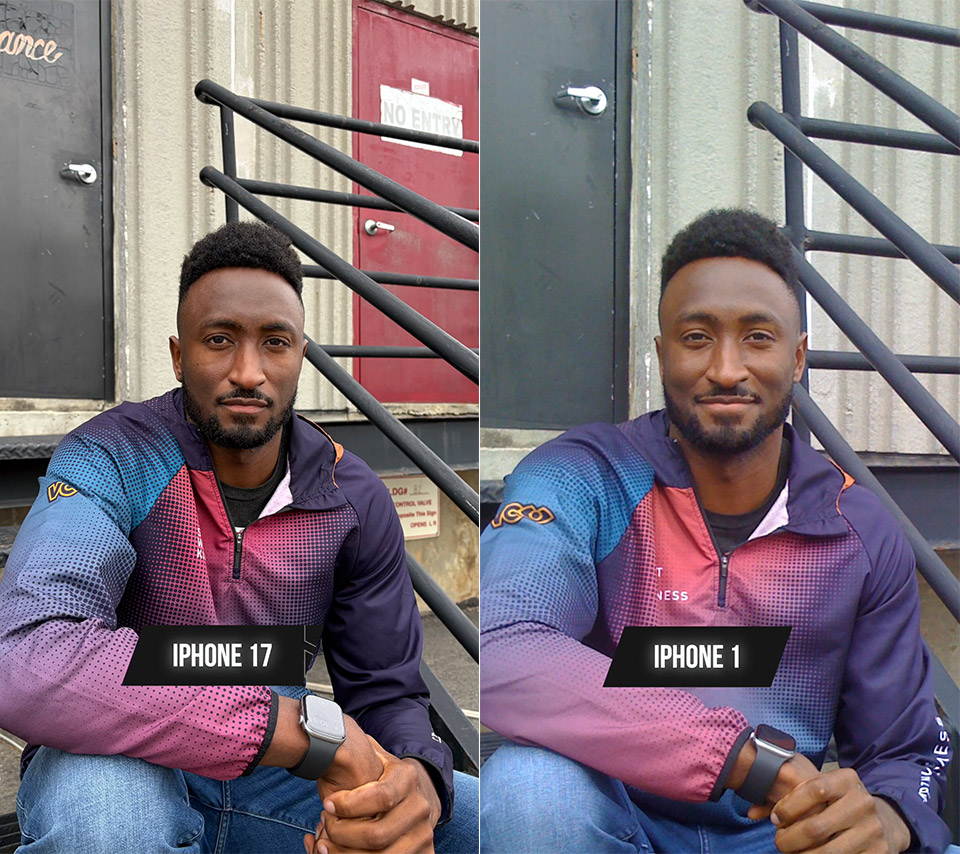
Marques Brownlee, also known as MKBHD, pitted every base iPhone model against each other, from the original iPhone in 2007 to the 2025 iPhone 17. He chose two different places to shoot: a bright outside spot on a sunny day and a dimmer indoor area.
iPhone 1 thru iPhone 17, taking the same photo pic.twitter.com/Y8NUB0lKzd
— Marques Brownlee (@MKBHD) March 27, 2026
Even with optimal lighting, the original 2007 iPhone struggled at first. This one featured a 2 megapixel camera that couldn’t take good photos since they were hazy and grainy, with little detail. The camera hardware in the 2008 iPhone was unchanged from the original. It took a few years for things to improve, with the 2010 iPhone 4 featuring a 5 megapixel camera that was slightly clearer. Then, in 2011, with the 4S, it upgraded to an 8 megapixel camera, and things began to look much better in the sunshine. Casual photos were in good form, but the colors weren’t always perfect, and the images were always a little muted when compared to what we have now.

- Native Tracking With Audio [4] & Lighting [1] – Level up your shots with a DJI gimbal that combines tracking, audio reception [4], and lighting...
- Seamless 360° Pan Rotation – Enjoy 360° horizontal rotation for immersive shots. Intelligent tracking lets you follow subjects freely, and the...
- Direct Phone Connection for Tracking [2] – Instantly connect your phone to the foldable gimbal for quick setup and intelligent tracking. Portable...
The 2016 iPhone 7 Plus marked a significant step forward. This one had dual rear cameras for the first time, a 12 megapixel main one and a 2x telephoto one, which made the phone a lot more flexible and capable of zooming in without sacrificing quality due to the usual digital zoom, but low light remained a major issue, and it took a while to resolve. Then came the 2019 iPhone 11 Pro, which has three sensors and serious image processing magic, allowing it to blend numerous exposures to make photographs look much cleaner. From this point forward, daylight shots looked great, with a far wider spectrum of dazzling highlights and deep shadows. But indoor shots were a completely different story. Under low light, previous models were noisy and blurry, however subsequent versions held their own and smoothed down grain without losing detail.
iPhone 1 thru iPhone 17 vs LOW light pic.twitter.com/nwjkNP4uaB
— Marques Brownlee (@MKBHD) March 30, 2026
According to Brownlee, the differences become much more visible when the light level drops. Even the 2017 iPhone X looked rough inside, with some visible defects. The 2020 iPhone 12 seemed a little too eager to smooth out the edges at times, making things appear artificial. However, by 2022, the iPhone 14 had improved significantly, and things had begun to settle down. Each step forward was due to larger sensors capturing more light, quicker lenses let in more light, and better algorithms ensuring that everything balanced out beautifully.
The iPhone 17 completes the timeline (for now), and when compared to the iPhone 16 from 2024, the differences may not appear to be significant at first glance, but they become clearer upon second look. For starters, the iPhone 17’s main camera can now outperform the iPhone 16 in low light, maintaining sharpness even as the latter struggles. Dynamic range improved significantly, as did white balance, and clarity remained consistent whether taking shots indoors or outdoors.
[Source]