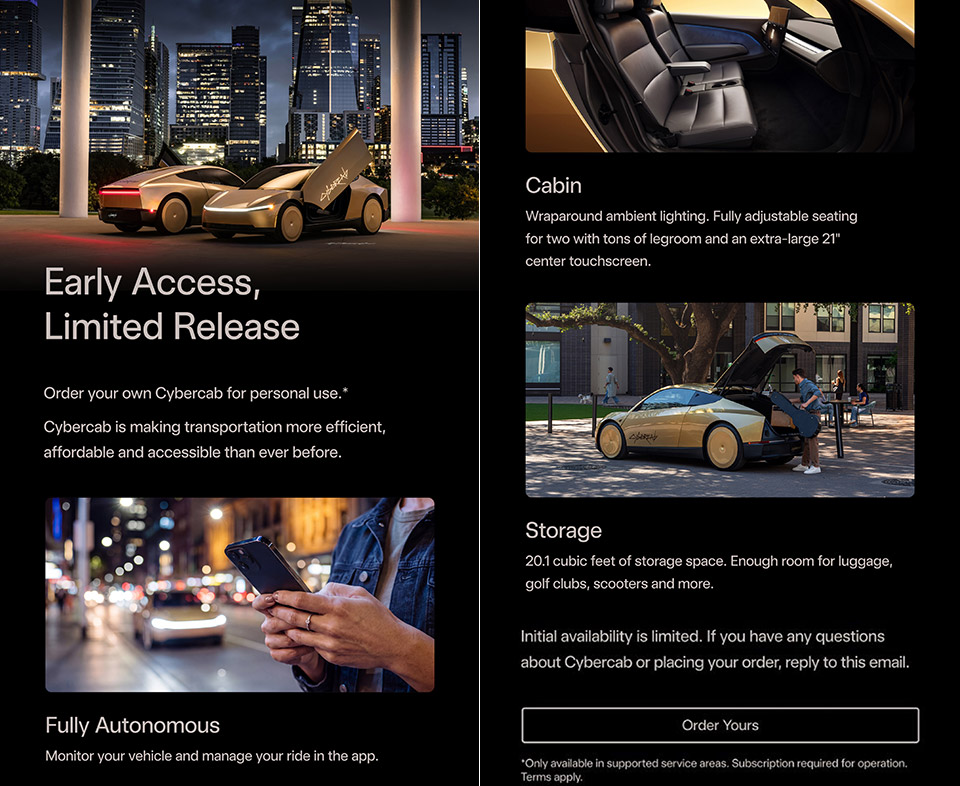
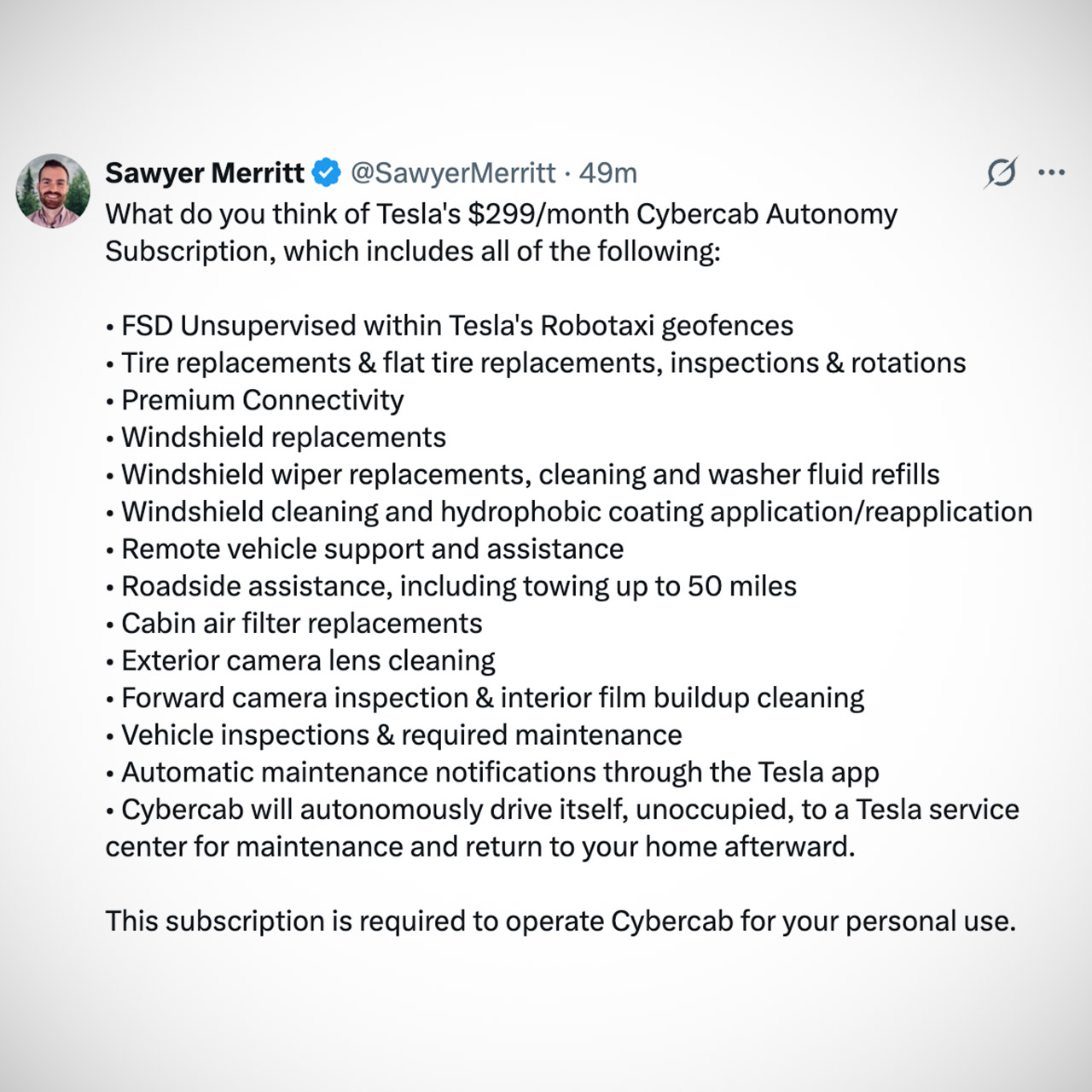
Select customers received invitations on November 13 to order Tesla’s two-seat Cybercab for personal use, with the order page listing a purchase price of $29,990 before taxes and an estimated delivery window of December 2026 in Austin, Texas. A non-refundable $1,000 deposit is due at order. One month of the Autonomy Subscription is included with the purchase. After that, the $299 monthly fee continues until canceled, and Tesla’s fine print states that both the subscription and regular vehicle maintenance are required to operate the car.
Without a subscription, the vehicle will just park; operation is strictly limited to particular service locations and can only be done in what Tesla refers to as Robotaxi zones. Currently, these zones exist in eight cities across two states: Texas and Florida, particularly Austin, Dallas, Houston, Ft Worth, San Antonio, Miami, Orlando, and Tampa. Beyond those locations, consider of them as ‘geofences’, since the Cybercab is converted to an inanimate object with its self-driving capabilities disabled. The early excitement is actually taking place in Austin, where Cybercabs have been making a profit since last September by ferrying paid passengers.

- Remote Controlled Tesla Cybertruck!
- Includes Car and Remote Control! Track/Accessories Sold Seperately!
- 1:64 Scale Diecast Toy Vehicle
The real production model of the Cybercab is a coupe with a beautiful gold finish, butterfly doors that swing open and shut on their own (a great touch), and a 21-inch touchscreen. It also has some ambient lighting to set the ambiance and a rather small cargo capacity of approximately 20.1 cubic feet. What really stands out is the lack of a steering wheel, pedals, side mirrors, and, bizarrely, a back window!
Lofi beats to self-drive to https://t.co/eyaXxUY7Jr
— Robotaxi (@robotaxi) November 10, 2026
Let’s go to the numbers: according to EPA certification records filed in 2026, the curb weight is roughly 3,113 pounds, there’s a single front-wheel drive motor with a 219-horsepower rating, and a 48 kWh battery pack. There’s also a reasonably realistic real-world estimate that it will travel approximately 290 miles on a single charge, however this is subject to change. The Cybercab is based on Tesla’s camera-based technology, which is placed on AI4 hardware and developed at the Gigafactory in Texas.
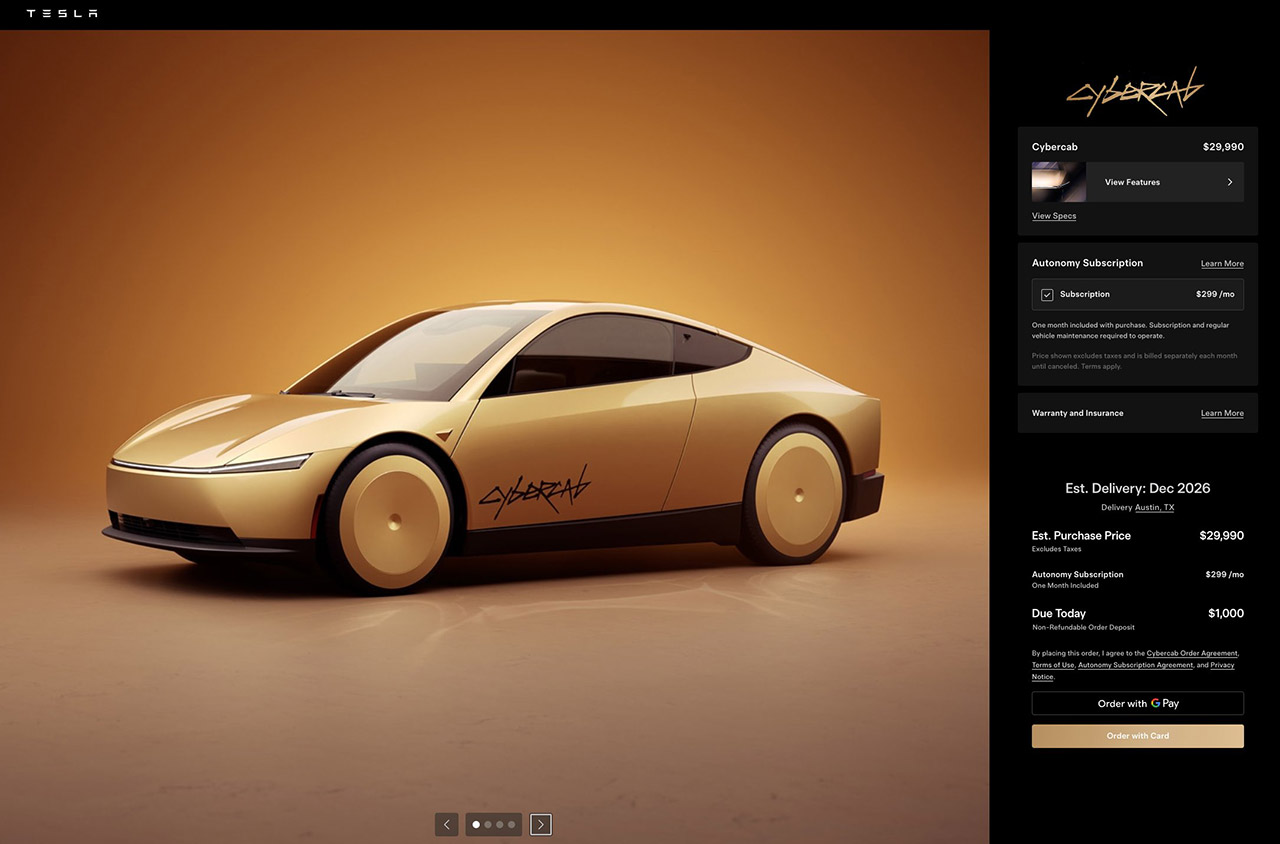
Here’s another catch: even if you do purchase one of these vehicles, you cannot utilize it for commercial ride-hailing purposes. No way. Owners must stick to monitoring their excursions through the app and staying within Tesla’s authorized areas, which are essentially a ‘bubbled’ off environment from which they cannot escape even if they wanted to. If you and two other persons misuse your Cybercab in any manner, and I mean literally, you could face a temporary suspension during which your monthly payments will not be prorated. Hey, you can still charge it with a NACS DC fast charger, but wireless charging pads are still a faraway dream… for now.
The granddaddy of all regulatory challenges that Tesla still has to overcome is how this futuristic vehicle passes federal safety standards in the absence of all those traditional controls. The NHTSA is strongly focused on the Cybercab, and the vehicle will only be produced at a reduced rate until the rules are resolved. It’s worth mentioning, however, that most Cybercabs will likely continue to service the Robotaxi fleet, as this limited sales program is effectively a stepping stone to when they’ll be able to sell to the general public. First in line will, of course, be the early adopters who have already made deposits, with the rest of the country having to wait till service regions grow and output volume increases.