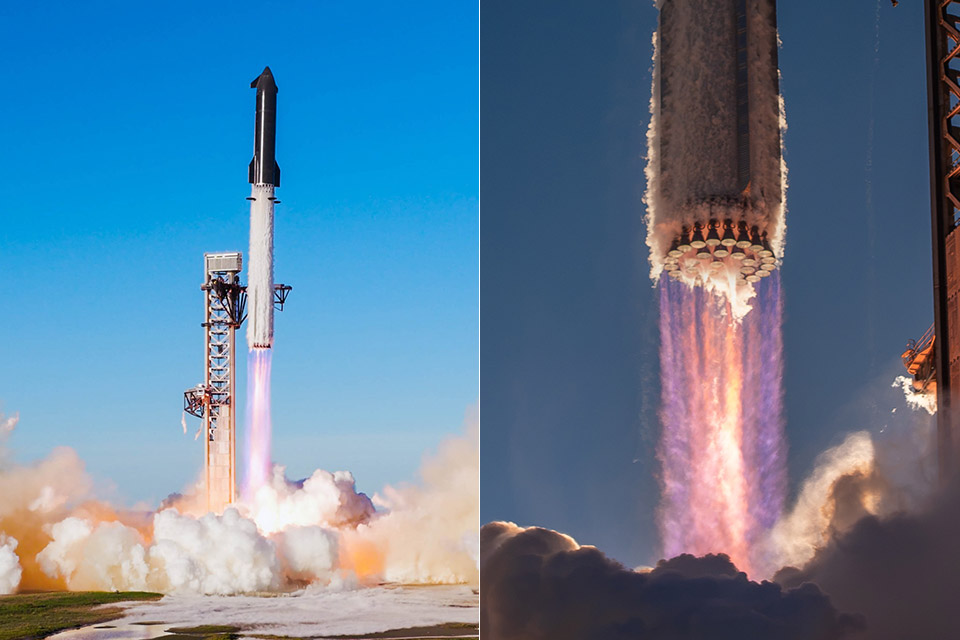
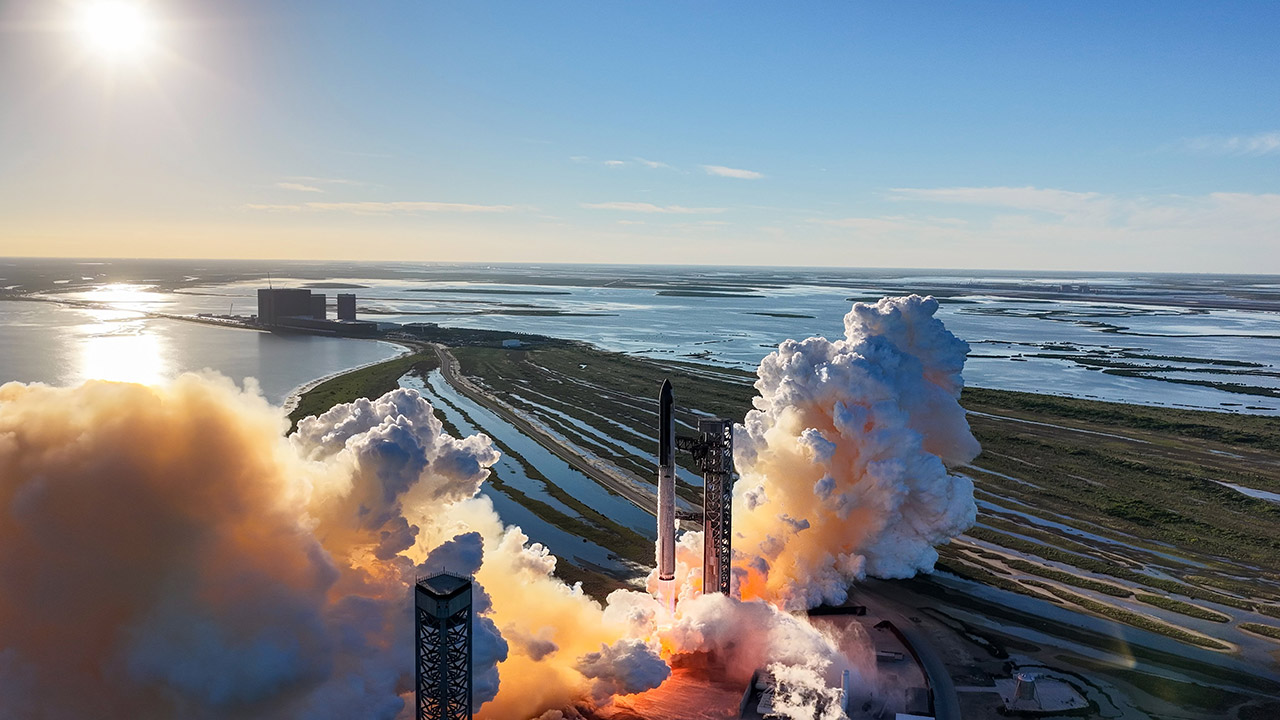
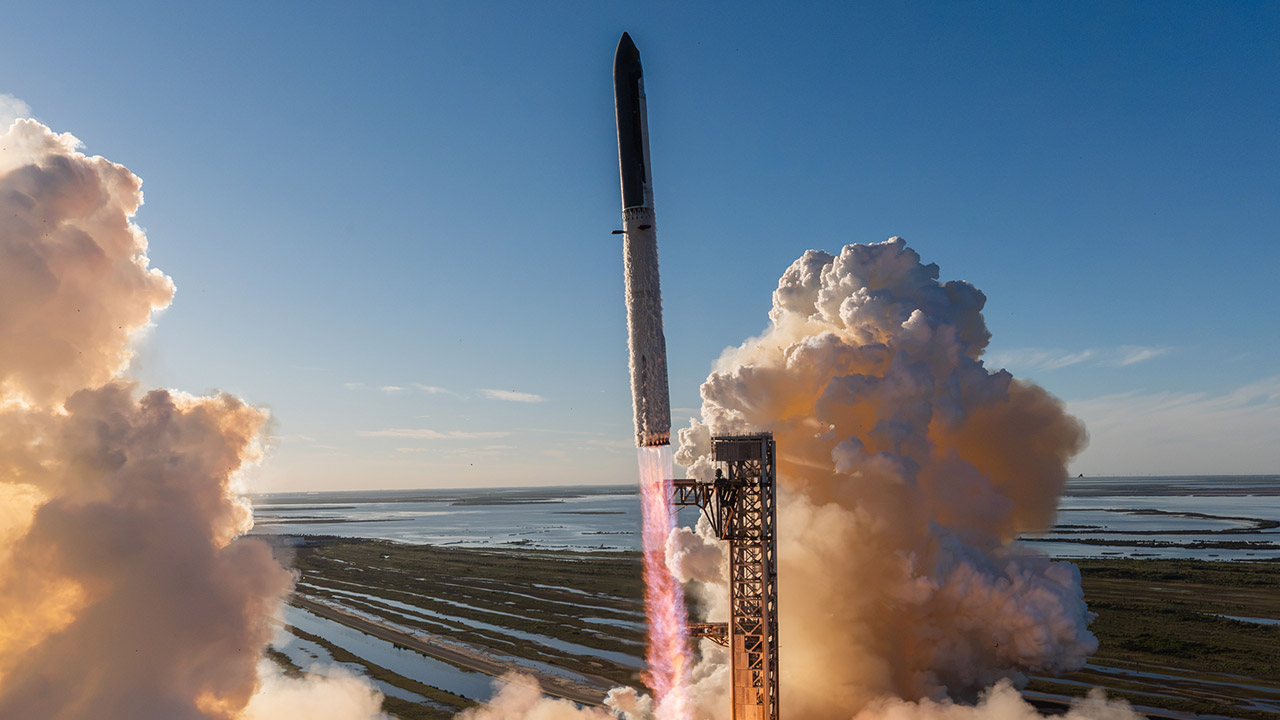
Friday evening light stretched across the Texas coast when SpaceX’s stacked Starship vehicle left Pad 2 at Starbase just after 4:47 p.m. Central. Thirty-three Raptor engines on Booster 22 lifted the full rocket clear of the tower under more than 18 million pounds of thrust, sending a long plume into the fading sky as the sun continued its drop toward the western horizon.
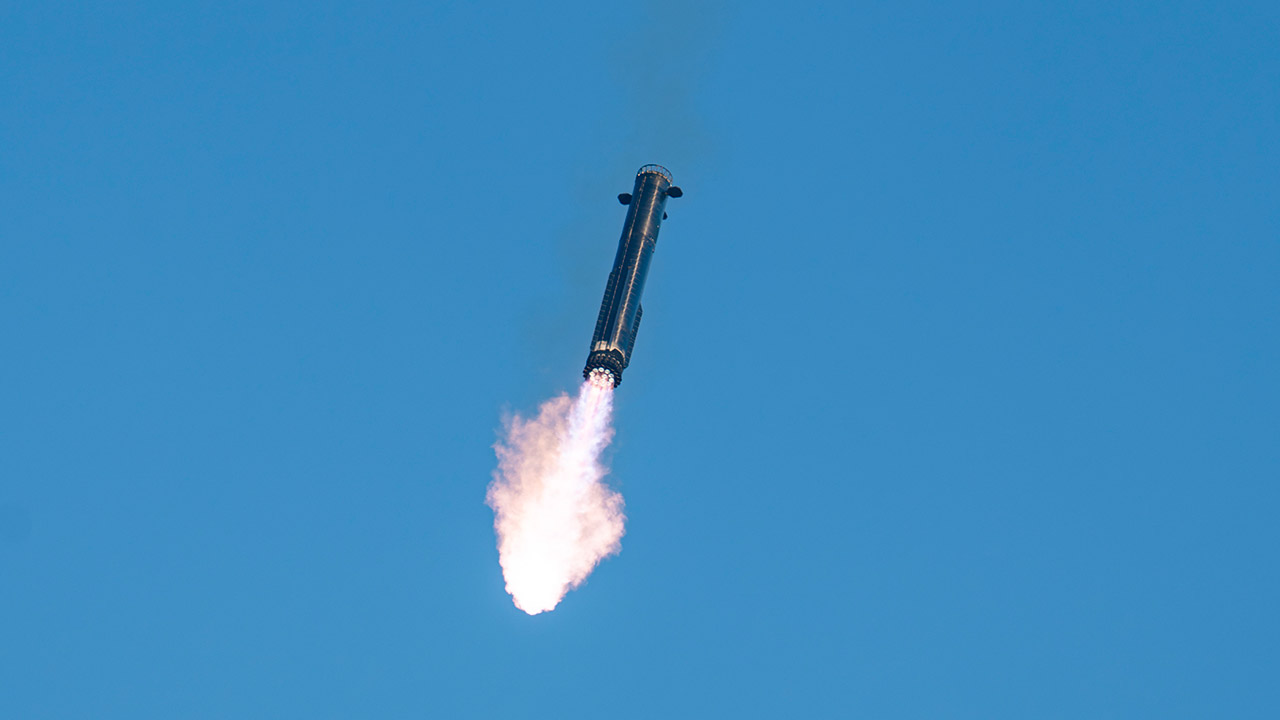
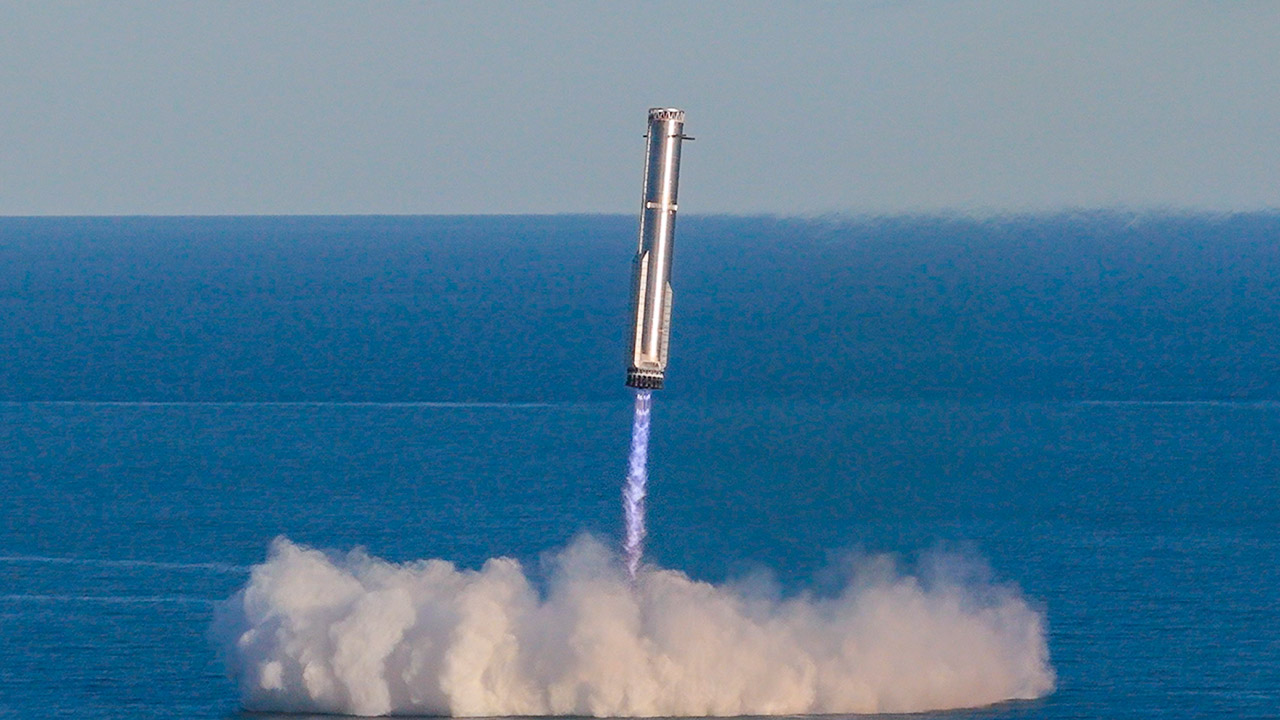
Hot-staging began just over two minutes later, when Ship 42, the one marked with the words ‘Don’t Panic’, fired up its engines and separated cleanly. Booster 22 then flipped and prepared to return to the launchpad, where those extraordinarily heavy vehicles had been captured by the tower arms three times in earlier flights. Controllers later diverted the booster offshore into the Gulf instead. After engine shutdown the vehicle’s flight termination system activated, and residual propellants produced a bright explosion over the water a short distance above the surface.

- BUILD AN OFFICIAL NASA ROCKET – Kids prepare to explore outer space with the LEGO Technic NASA Artemis Space Launch System Rocket (42221) building...
- 3-STAGE ROCKET SEPARATION – Young builders can turn the hand crank to watch the rocket separate in 3 distinct stages: solid rocket boosters, core...
- STEM BUILDING TOY FOR KIDS – This educational rocket kit was created in collaboration with NASA and ESA to showcase the authentic system that will...
Ship 42 simply kept going and did its thing, completing the orbital insertion burn approximately 26 minutes after launch and landing in a beautiful low orbit at around 275 kilometers altitude. That’s when all 26 of the Starlink V3 satellites were finally able to leave ship 42 and enter orbit. Including the ones with cameras, which will take some really fantastic images when they fly down and get to see the heat shield in operation.
Engineers will be keeping a tight eye on Ship 42 for a few weeks, performing routine inspections on items like the re-entry systems and landing gear. That will determine whether the object lands on the tower on Saturday afternoon at 3:20 p.m. central time or splashes down in one of their backup zones over the Pacific or Gulf. Previous testing demonstrated that the tower can catch the boosters perfectly well, but this was the first time the higher stage would be the one returning, so that was the true test.