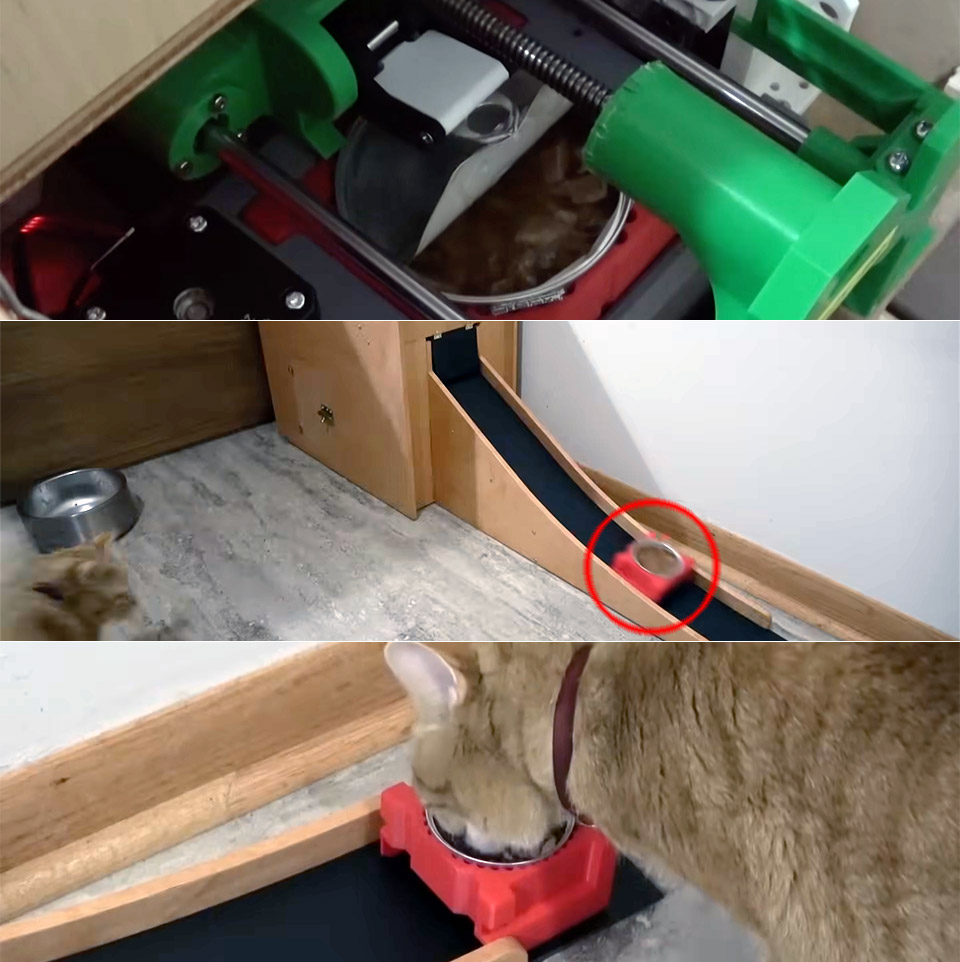
Ben Heckendorn is the man behind some of the wildest and most creative retro gaming mods out there, but now, he’s turned his talents to a much more mundane challenge: feeding his cat, Bud, who due to a health issue requires prescription wet food. His latest invention, an autonomous cat food dispenser, is a work of genius, using 3D printing, precision engineering and clever programming to serve canned meals with military grade reliability.
Bud, Heck’s 4-year-old cat, developed a urinary blockage in September 2024 and prescription wet food was the only option. Standard automatic feeders designed for dry food were now useless. Heck’s sleep was frequently broken since Bud’s 6am meows were getting earlier and breakfast was required before the alarm clock. To get some rest and make sure Bud got the food he needed even when Heck was away he created a device that would open and dispense the wet food on a schedule. And the end result was a device that can hold 6 cans at once, opens them with surgical precision using a mechanical arm, and then drops the contents into a waiting kitty.
- Easy Programmable Feeding Times: Reliably feed your beloved pet at your convenience any time during the day or night; Set between 1-4 meals with...
- Wired or Battery Power: Choose between a fixed wired connection with the 5V adapter USB power cable or a portable 3 D-cell battery-powered(not...
- Voice Record Meal Call: Let your cat hear your voice when it’s mealtime to create a strong bond and set good eating habits; Record up to 10 seconds...
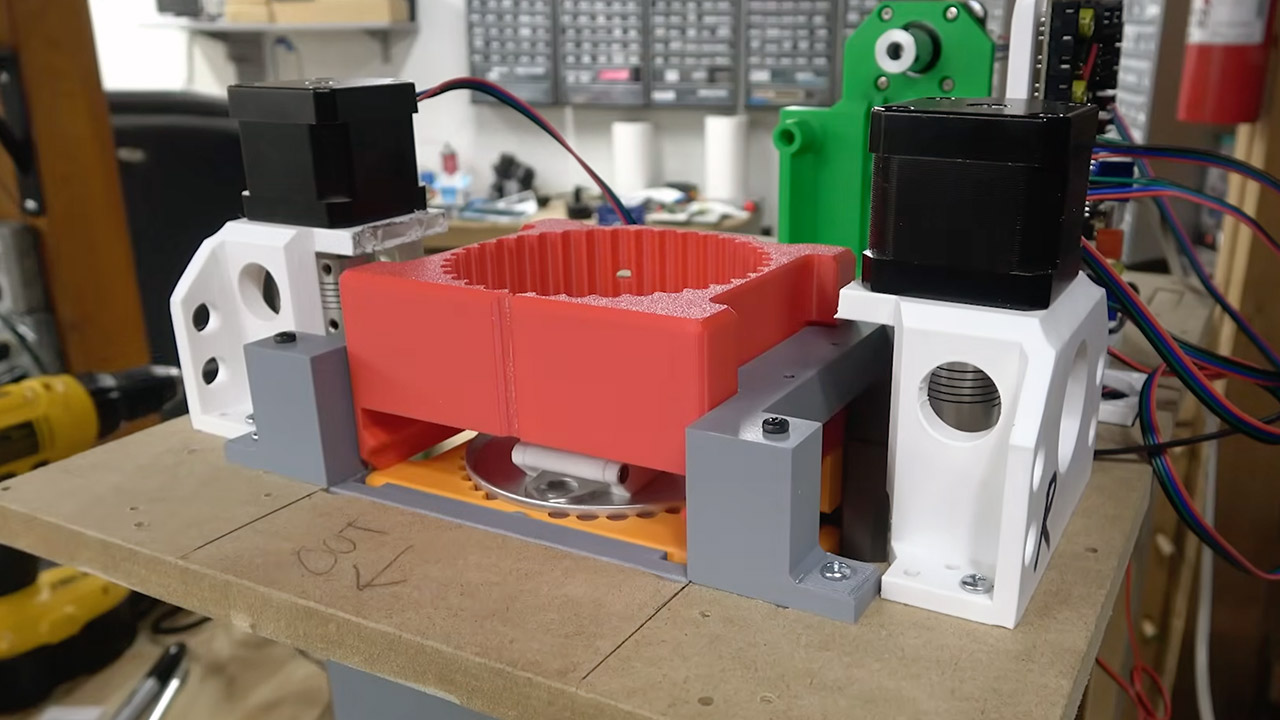
The machine uses a 3D printed can holder system. Each can has a unique printed tab that the machine can grab and open and these can be stacked in a small tower to hold 6 cans or a weeks worth of daily feedings. A Nema 17 stepper motor, the same type found in 3D printers, powers a little piece of metal that slips under the can’s tab, pokes the seal and then pulls it open. The open can is then raised 21mm and lowered down a slope into Bud’s dish. Heck did some simple testing to determine how much force was required to open a can and it turned out to be about 20 pounds which was well within the motor’s capability. He used a fish scale and an improvised setup to do this.
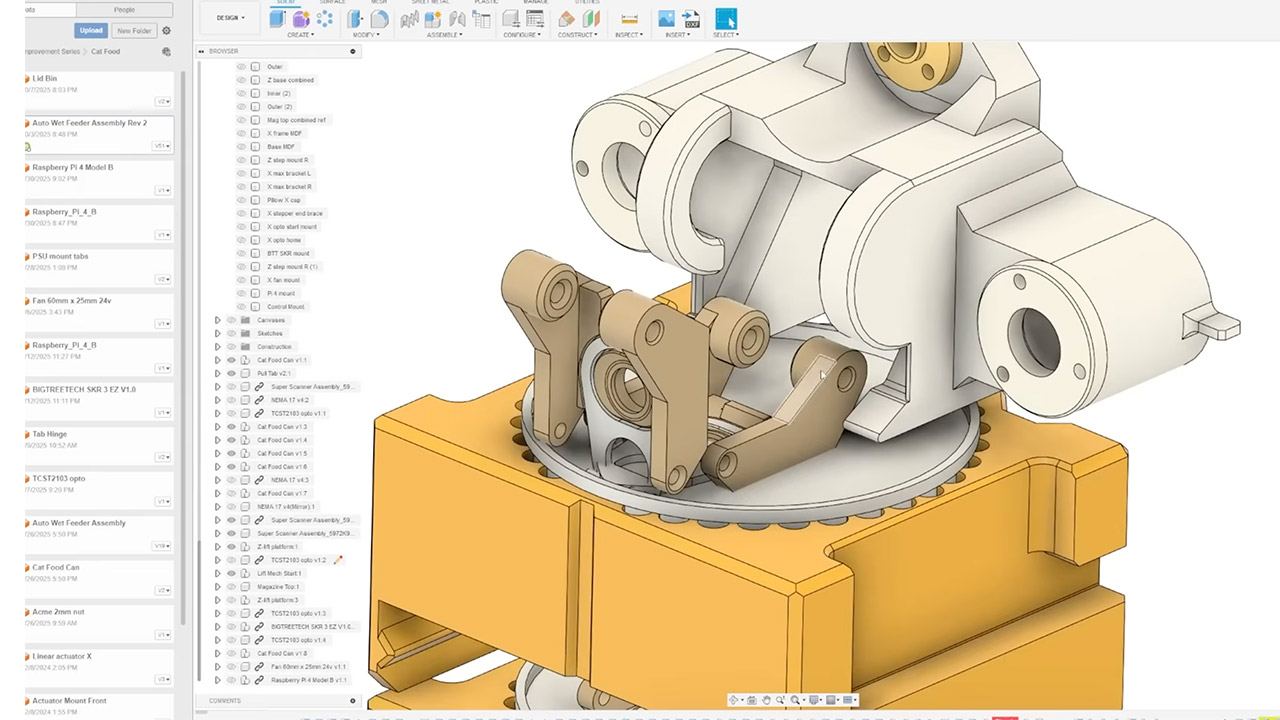
There are two stepper motors that work together to control the vertical movement of the can stack which is essentially a 3D printer’s Z-axis and a TR8x2 Acme threaded rod to give the motor the power to lift and place the cans precisely. The main body of the machine is made of 3D printed parts and MDF panels with several linear rods and IGUS bearings for a smooth experience. Heck powered the whole thing with a Raspberry Pi 5 (upgraded from a slightly faulty Pi 4), a Big Tree Tech SKR 3EZ board and a 24v fan to keep the motors cool during extended use. Heck even has a little opening for empty cans to drop into a bin to keep things tidy.
Heck used Autodesk Fusion 360 to design the whole thing from scratch, making sure every last part fitted together just right. He brought in some AI to lend a hand with the coding, but ultimately, he had to go in and manually fix all the bugs to get it working properly. To make things user-friendly, he came up with a timer-based system for scheduling the can dispensing – you can control exactly how many cans get dispensed and when, by just adjusting some settings on the small screen attached to the machine. But after the first prototype started to wobble and jam, Heck fixed the problem with a nifty Z-homing sequence that sorted out the issue.
He even put the open-source code up on GitHub – it’s there for anyone to play around with or rip it apart and build their own version. Heck deliberately built it using pretty standard parts like Nema 17 motors and a Raspberry Pi, so it should be easy enough for hobbyists to follow along.
[Source]